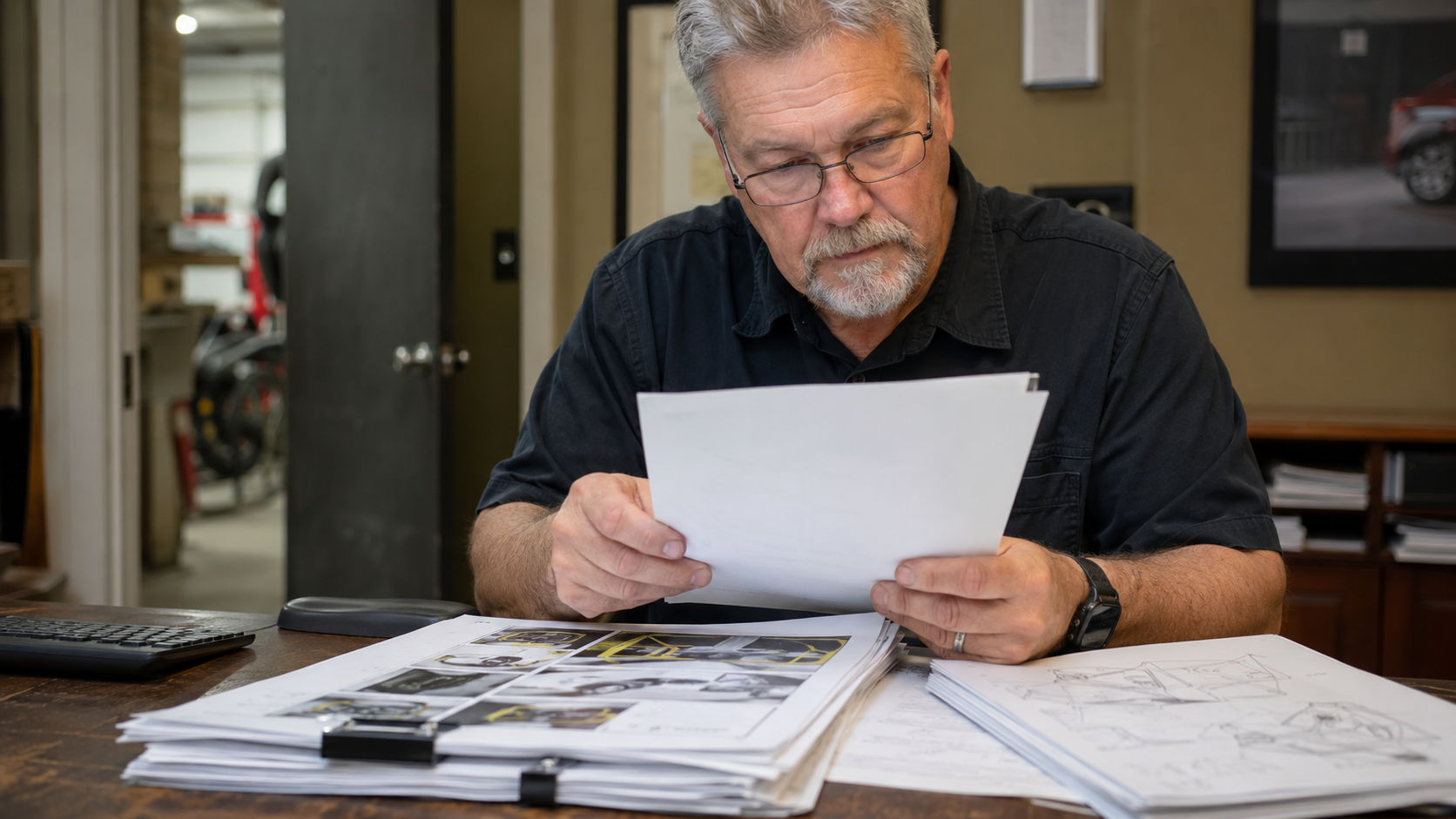
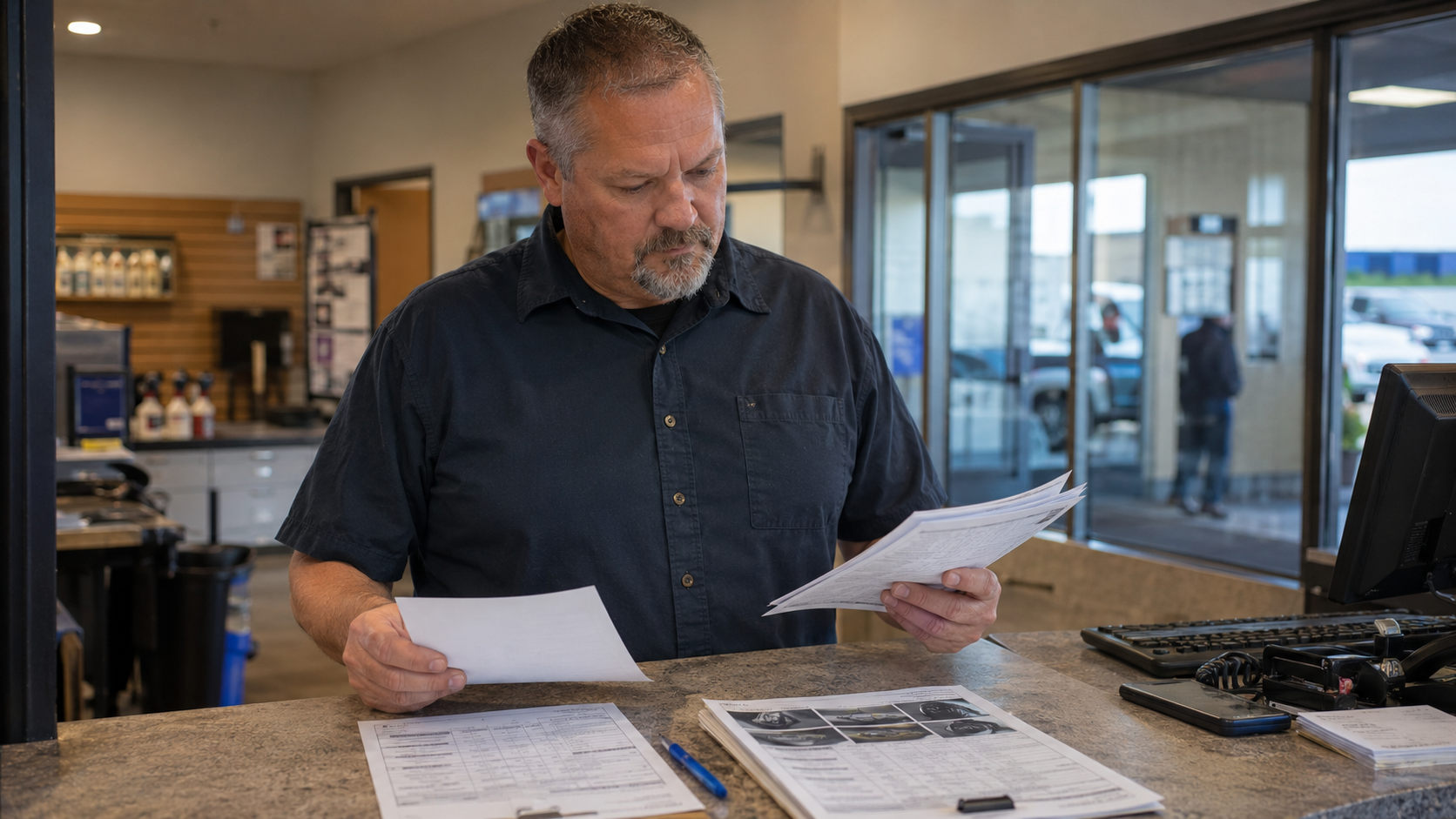
Your auto body supplement denied by insurance is not the end of the conversation. It's the beginning of one. The shops that get paid are the ones who treat a denial as a documentation problem, not a final answer.
According to CCC Intelligent Solutions' 2024 data, over 63% of collision repairs require at least one supplement. The average gap between the insurer's initial estimate and the final approved repair cost runs $1,200 to $1,800. That money doesn't disappear. It goes to shops that know how to claim it, or it stays in the insurer's pocket.
Why Your Auto Body Supplement Gets Denied
Insurance companies don't deny supplements randomly. There's a pattern. The most common reasons a supplement gets kicked back:
The documentation doesn't match the line item. You wrote "blend adjacent panel" but didn't attach photos showing why blending is required.
The OEM procedure isn't cited. If you're charging for a not-included operation and there's no procedure number attached, an adjuster has room to say no.
The supplement was submitted too early. If you're writing a supplement from photos before teardown is complete, you're asking for a partial answer.
The adjuster doesn't have what they need to say yes. This is the most fixable problem on the list.
Aaron Schulenburg of SCRS put it plainly in December 2025: when there's pushback, the first move is requesting the denial in writing, then comparing it against documented OEM requirements and providing clear justification for why each procedure is necessary. That sequence works because it forces the insurer to defend a position with paperwork, not just a phone call.
A supplement package built before teardown is complete is a guess. One built after is a proof file.
Build the Evidence File Before You Submit Anything
The supplement isn't a request. It's a proof package. If you're submitting a dollar amount without the evidence attached, you're giving the adjuster an easy denial.
Photos That Actually Do Work
Not all photos are equal. A wide shot of a damaged quarter panel doesn't prove blend time is required. What you need: close-up photos showing the damage boundary, photos of the undamaged adjacent panel showing the color variation, and photos from multiple angles that show exactly why the repair scope is what it is. On a 2023 Toyota Camry rear quarter with a hard color like Midnight Black Metallic, that photo set is the difference between getting blend approved and arguing about it for two weeks.
OEM Procedures as Line-Item Justification
Every not-included operation on your supplement needs a procedure reference. If you're charging for a pre-repair scan on a 2022 Ford F-150 with a front camera in the grille, you should be able to point to the Ford Workshop Manual requirement for scanning before and after repair. No procedure, no leverage. The DEG database and your estimating platform's P-pages are your starting point. Print the relevant pages and attach them to the supplement file.
Scope Notes in Writing
A short paragraph explaining why the damage requires the additional operations you're requesting is worth more than most shops realize. Three sentences describing what was found at teardown, what OEM procedure applies, and what the consequence of skipping the operation would be. Adjusters can't just say "denied" to a written scope note backed by OEM documentation. They have to engage with it.
The Escalation Sequence When the First No Comes Back
You got the denial. Here's the order of operations.
Step 1: Get It in Writing
If the denial came by phone, that's not a denial. Ask for the written denial with the specific reason. "We don't cover that" is not a reason. You want: the line item they're denying, why they're denying it, and the policy language or estimating guideline they're citing. Without that, you're arguing against air.
Step 2: Respond to the Specific Denial Reason
Once you have the written denial, respond to it line by line. If they said your blend time isn't supported, send the photos. If they said the scan isn't required, attach the OEM procedure. Don't resubmit the entire supplement with a cover letter saying "please reconsider." Address what they denied and why they're wrong about it specifically.
Step 3: Escalate Past the First Adjuster
Most supplement denials live at the field adjuster level. That person has limited authority and sometimes has a queue pressure incentive to close claims. Ask for the supervisor. Do it in writing. Document the date and who you asked. In some cases, that's all it takes. The supervisor has more authority and less pressure to low-ball individual jobs.
Written escalation trails matter when a claim ends up in dispute or goes to appraisal.
Step 4: Involve the Vehicle Owner
The policyholder has standing you don't. If a supplement for a required ADAS calibration on a 2024 Subaru Outback keeps getting denied, the vehicle owner calling their insurer and asking why their car is being returned without a functioning EyeSight system gets a different conversation than your shop does. Coach your customer. Give them the specific procedure name, the dollar amount being denied, and the safety implication. Most customers will make that call.
The ADAS Calibration Problem Is Only Getting Bigger
This is worth its own section because calibration supplements are the fastest-growing fight in the industry right now. CCC data from Q4 2025 shows that 92.1% of pre-repair scans land on the initial estimate, but the majority of calibrations still appear as supplements. In Q3 2025, 35.6% of DRP appraisals included at least one calibration, up from 26.9% the year before. That's a nine-point jump in 12 months.
A Revv benchmark study from December 2025 found that roughly 61% of vehicles arriving for collision repair require some form of ADAS calibration. The industry as a whole is still capturing far less than that on initial estimates. Which means calibration supplements are going to keep coming, and insurers are going to keep looking for ways to cut them.
The defense is documentation sequencing. The calibration requirement needs to be in your repair plan before the vehicle goes into the booth, with the OEM procedure attached, and with the pre-repair scan results showing which systems were flagged. That sequence makes a calibration denial much harder to sustain because you've documented the requirement before anyone can question whether it was actually needed.
CCC also noted in its Q4 2025 Crash Course that the industry is trending toward capturing calibrations on the initial estimate rather than in supplements. Shops that adopt that habit now are ahead of the insurers' next move. When the calibration is on the initial estimate with full OEM documentation attached, there's no supplement to deny. You're not fighting for money after the fact. You're getting it on the first pass.
What Shops That Win Supplements Have in Common
It's not that they're more aggressive. It's that they're more organized. The shops getting supplement approvals at consistent rates have three things in place: a teardown documentation process that produces a complete photo set before the supplement is written, a habit of pulling OEM procedures for every not-included line item, and a written escalation log that tracks every denial and response.
That last one matters more than most shops realize. If you're dealing with the same insurer repeatedly denying the same operations, a documented pattern is ammunition. It supports a formal complaint to your state insurance commissioner. It supports an appraisal clause invocation in states where that applies. And it supports a conversation with the vehicle owner about whether their insurer is handling claims properly.
Tools like Estimate Optimizer™ scan your completed estimate against OEM databases and flag operations that are required but missing from the insurer's initial write-up, which gives you the line-item justification for your supplement before you ever submit it. That front-end documentation work is what separates shops that fight supplements one at a time from shops that rarely have to fight at all.
The Bottom Line
A denied supplement is a documentation gap, almost every time. The insurer said no because they could. The fix is removing their ability to say no with a straight face. That means photos tied to specific line items, OEM procedures attached to every not-included operation, and a written escalation trail that treats the denial as the start of a process, not the end of one. Shops that build this system stop losing money to denials that should never have stuck in the first place.
Ask for the denial in writing with the specific reason and policy language cited. Then respond to each denial reason with targeted documentation: photos for visual operations, OEM procedure printouts for not-included operations, and written scope notes explaining why the work is required. Don't resubmit the whole supplement. Address exactly what they denied and why the denial doesn't hold.
How do I get insurance to approve a supplement for ADAS calibration?
Document the calibration requirement before teardown by pulling the OEM procedure that mandates it for the specific make, model, and damage type. Attach the pre-repair scan results showing which systems were flagged. CCC data from Q4 2025 shows over 92% of scans are on initial estimates but most calibrations still land in supplements, which means adjusters are trained to push back. Your defense is the OEM requirement in writing before the work is done.
Can I escalate a supplement denial past the adjuster?
Yes. Request the supervisor in writing and document the date. Field adjusters have limited authority and often have queue pressure to close files. Supervisors have more authority to approve operations the first adjuster declined. If escalation inside the company doesn't work, involve the vehicle owner: the policyholder calling to ask why their car is being returned without required repairs often produces a different response than your shop gets alone.
How often do collision repairs require supplements?
According to CCC Intelligent Solutions' 2024 data, over 63% of collision repairs require at least one supplement, and the average gap between the initial insurer estimate and the final approved repair cost is $1,200 to $1,800. Independent shops commonly run 2-3 supplements per job. Supplements aren't an exception. They're the standard workflow.
What documentation should I include with a supplement submission?
Every supplement should include: close-up photos tied to each line item being added, OEM procedure references for any not-included operations, pre-repair scan results if the supplement includes diagnostic or calibration operations, and a written scope note explaining what was found at teardown and why the additional work is required. An adjuster who has everything they need to say yes has less basis to say no.