Back to Blog
Estimate Scrubbing

5 Line Items Insurance Companies Cut First (And How to Get Them Back)

7 min read
Share
Auto body estimator at desk reviewing printed estimate with highlighted line items and P-page documentation binder open beside laptop

Insurers don't scrub estimates randomly. They cut the same line items, on the same repair types, over and over. Once you know the five they target first, you can stop chasing approvals after the fact and start building the documentation before they push back.

Why the Same Lines Get Cut Every Time

The estimating databases, CCC ONE, Mitchell, and Audatex, are built on labor values that aren't derived from actual time studies. The DEG (Database Enhancement Gateway), funded by SCRS and AASP, has logged more than 1,000 database corrections from shop-submitted inquiries in 2024 alone. Errors in, underpayments out.

Insurers know exactly which line items are hardest to defend without documentation. They cut those first. If you don't push back with something concrete, the cut sticks. So here's the list.

Auto body estimator at desk reviewing printed estimate with highlighted line items and P-page documentation binder open beside laptop
The shops that win supplement fights aren't more aggressive. They're better prepared before the adjuster pushes back.

The 5 Line Items Insurers Cut Most

1. Blend Time

This is the most contested line item in the industry. SCRS has formally challenged the accuracy of the 50% blend formula for years, stating publicly that the formula doesn't reflect actual labor requirements. Insurers use it anyway because it's the default, and shops accept it because fighting it requires documentation most shops don't have ready.

What gets it back: Pull the P-pages for your platform and note where blend is listed as a not-included operation. Document the adjacent panels involved, the color complexity (three-stage, pearl, tri-coat), and the prep steps required. On a 2023 Honda CR-V with a pearl white finish, that documentation alone changes the conversation.

2. Pre- and Post-Repair Scanning

A Revv benchmark study from late 2025 found that 61% of vehicles arriving for collision repair require some form of ADAS calibration. Scanning is the prerequisite. Insurers still push back on scan charges as a matter of habit, particularly on older vehicles or jobs where the visible damage doesn't involve obvious electronics.

What gets it back: Print the OEM position statement for the specific make and model requiring the scan. Most major manufacturers, Toyota, Ford, GM, Honda, have published statements requiring pre- and post-repair scanning on all ADAS-equipped vehicles regardless of damage location. One page kills the objection.

3. Corrosion Protection

Weld-through primer, cavity wax, seam sealer. These operations are required on any structural repair involving bare metal exposure, and they're almost never included in the initial insurer estimate. The database lists them as not-included on most structural operations. Insurers bet on shops not knowing that, or not documenting it.

What gets it back: The P-pages for your platform explicitly state that corrosion protection is not included in R&R or structural labor times. Print the relevant P-page section, note the specific operations performed, and attach it to your supplement. On a 2021 Ford F-150 with frame sectioning, corrosion protection isn't optional and the documentation makes that clear.

4. Clearcoat on Adjacent Panels

When refinishing a repaired panel, adjacent panels sometimes need clearcoat to maintain color match and protect the finish transition. Insurers flag this as unnecessary or already included. It isn't. The database explicitly excludes it, and the P-pages back that up.

What gets it back: Document the panels affected, the reason clearcoat is required (finish transition, panel proximity, color match), and cite the P-page exclusion. Photos of the repair area showing the adjacent panel relationship are worth including. This is a short supplement item that pays well when it's documented properly.

5. Hazardous Waste Disposal

This one is cut quietly, almost every time, because most shops don't itemize it with enough specificity to defend it. The insurer treats it as overhead. It isn't. It's a line item operation with a real cost tied to specific materials used on specific repairs.

What gets it back: Itemize the materials that generated hazardous waste on that specific RO. Solvents, primers, catalysts, masking materials. Note the disposal method and the regulatory requirement (EPA, state-level). A 2022 Toyota Camry getting a full front clip replacement generates documented waste with documented disposal costs. Write it that way.
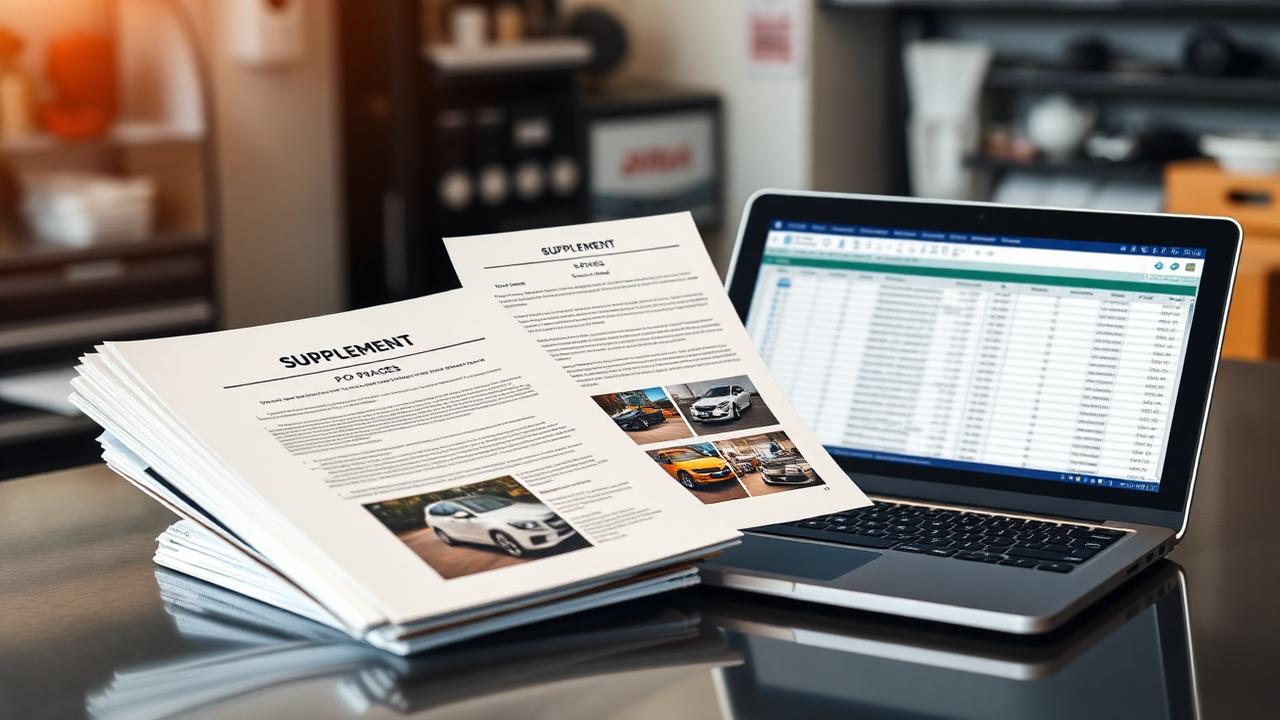
Shop counter with supplement packet including printed P-pages, OEM position statement, and photos clipped together beside an open estimate on a laptop screen
A supplement backed by P-pages and OEM documentation closes faster and pays out more often than one that argues on price alone.

How to Stop Playing Defense

Most shops write the estimate, wait for the insurer to cut it, then argue. That's working backwards. The shops that win these consistently build their documentation before the estimate leaves the building.

For every job, identify which of these five items apply. Pull the relevant P-page or position statement. Attach it to the estimate, not the supplement. You're not reacting to a denial. You're submitting a complete package that removes the adjuster's ability to push back without ignoring documented procedure.

When your estimate is already supported by the manufacturer's position statement and the platform's own P-pages, a cut isn't a disagreement. It's a documented deviation that the insurer has to justify in writing. Most won't bother.

The Bottom Line

Insurers cut the same lines because shops let them. Blend time, scanning, corrosion protection, clearcoat on adjacent panels, and hazardous waste disposal are the five most common targets because they're the hardest to defend without documentation, and most shops don't have it ready. Build the documentation file before the estimate goes out, not after the cut comes back. Tools like Estimate Optimizer™ flag these operations automatically on every RO, so you're not relying on memory or catching them in the supplement after the fact. The insurer's playbook only works if your shop doesn't have one.

Related Articles

Frequently Asked Questions

What line items do insurance companies cut most often on auto body estimates?
The five most commonly removed line items are blend time, pre- and post-repair scanning, corrosion protection, clearcoat on adjacent panels, and hazardous waste disposal. These get targeted because they're hard to defend without specific documentation. Insurers count on shops not having that documentation ready when the estimate is submitted.
How do I get insurance to pay for blend time on a supplement?
Pull the P-pages for your estimating platform and locate where blend is listed as a not-included operation. Document the adjacent panels involved, the paint type (especially three-stage or pearl finishes), and the preparation steps required. SCRS has formally challenged the accuracy of the standard 50% blend formula, and that challenge is documented. Attaching the P-page reference with your supplement removes the insurer's ability to deny without justification.
Can insurance companies refuse to pay for pre- and post-repair scanning?
They can try, but OEM position statements from most major manufacturers require scanning on all ADAS-equipped vehicles regardless of damage location. Print the position statement for the specific make and model and include it with your estimate or supplement. Once it's in writing that the manufacturer requires the scan, the insurer has to dispute the manufacturer, not just your invoice.
Is corrosion protection included in structural repair labor times?
No. The P-pages for CCC ONE, Mitchell, and Audatex explicitly list corrosion protection as a not-included operation on structural labor times. This covers weld-through primer, cavity wax, and seam sealer applied during structural repairs. Include the relevant P-page section with any structural repair estimate to prevent this from being cut.
How do I document hazardous waste disposal for an insurance supplement?
Itemize the specific materials that generated waste on that job: solvents, primers, catalysts, masking materials. Note the disposal method and the applicable regulatory requirement. A general line item labeled 'hazardous waste' gets cut. An itemized breakdown tied to specific materials used on a specific repair is a documented cost that the insurer has to address directly.
Share this article
estimate scrubbinginsurance claimslabor hoursrefinishsupplementsCCC ONEshop owners
Back to Blog
Follow us