Back to Blog
Estimate Scrubbing

Estimate Scrubber vs. Estimate Optimizer: Which Tool Actually Recovers More Revenue?

6 min read
Share
Auto body shop estimator at a workstation reviewing a printed list of flagged estimate line items, coffee cup and repair orders nearby

If you've looked at estimate scrubbing tools for your shop, you already know the category exists. What most shops don't know is that there are two fundamentally different things a tool can give you after it reviews your estimate: a list of what's missing, or a documented case for why you're owed it. In insurance estimate scrubbing for auto body shops, that gap is where thousands of dollars disappear.

What Estimate Scrubbers Actually Do

Scrubbing tools like EstimateScrubber.com and the ATI Estimate Scrubber do something genuinely useful. They compare your estimate against a database of what other shops write on similar jobs, flag the operations that look missing, and hand you a report.

EstimateScrubber.com uses five mathematical models and a fuzzy logic module to run pattern-matching against millions of records from shops across the country. ATI's version cross-references a pre-estimating checklist and flags commonly missed line items like adhesive removal, feather, prime and block, and restoring pinch weld areas. Both tools are designed to catch the things a busy estimator under time pressure is likely to skip.

That's real value. On a 2023 Honda CR-V with moderate rear damage, a scrubber might flag missing operations for plastic media blasting, foam adhesive replacement, and hazardous waste disposal. Operations the estimator probably knew were needed but didn't write. The scrubber tells you what you left out.

Then you submit the supplement. And the carrier reviews it. And approves some, cuts some, and denies the rest. And you fight.

Auto body shop estimator at a workstation reviewing a printed list of flagged estimate line items, coffee cup and repair orders nearby
A flagged list is step one. What you attach to it determines whether the carrier approves or argues.

What Does Your First-Submission Approval Rate Tell You?

Here's a question worth sitting with: What percentage of your supplemented line items get approved on the first submission, without a fight?

Under 70% means you're in the argument phase. You're submitting requests and waiting to see what sticks. Over 80% means your documentation is doing the work before anyone pushes back. That's the line between supplement fighting and Proof Infrastructure.

Sixty-three percent of collision repairs require a supplement after detailed inspection, according to CCC data. That's most of your jobs. If you're winning less than 70% of those on first submission, you're leaving money on every repair order and burning time chasing denials that should never have happened.

Scrubbers don't move that number. They surface what's missing. But the approval rate problem isn't a finding problem. It's a proof problem.

When an adjuster sees a supplemented line item for blend time on a 2022 Toyota Camry door, they don't automatically approve it because you said it's needed. They approve it when the OEM procedure documentation makes denial more expensive than approval. A flagged list doesn't do that. A procedure page with the carrier's obligation written into it does.
The Step Scrubbers Skip in Insurance Estimate Scrubbing

The scrubber vs. estimate optimizer distinction isn't about which tool finds more line items. Both categories catch operations your estimator missed. The distinction is what the output looks like.

A scrubber gives you a list. You still have to build the case for each line item manually, pull the OEM documentation yourself, write the supplement notes, and submit it hoping the adjuster agrees.

The other approach matches your estimate against OEM procedure documentation directly, identifies removed or reduced line items, and attaches the specific OEM procedure pages that create the carrier's legal obligation. The output isn't a flagged list. It's an evidentiary package the carrier is already on the hook for.

That's not a subtle difference. On a 2021 Ford F-150 with a damaged front bumper assembly, the difference looks like this: a scrubber flags missing corrosion protection as a potential add. A documentation-first approach attaches the Ford OEM position statement for corrosion protection on structural repairs, cites the labor time, and presents the operation as an obligation, not a suggestion.

One of those submissions starts a negotiation. The other one ends it.

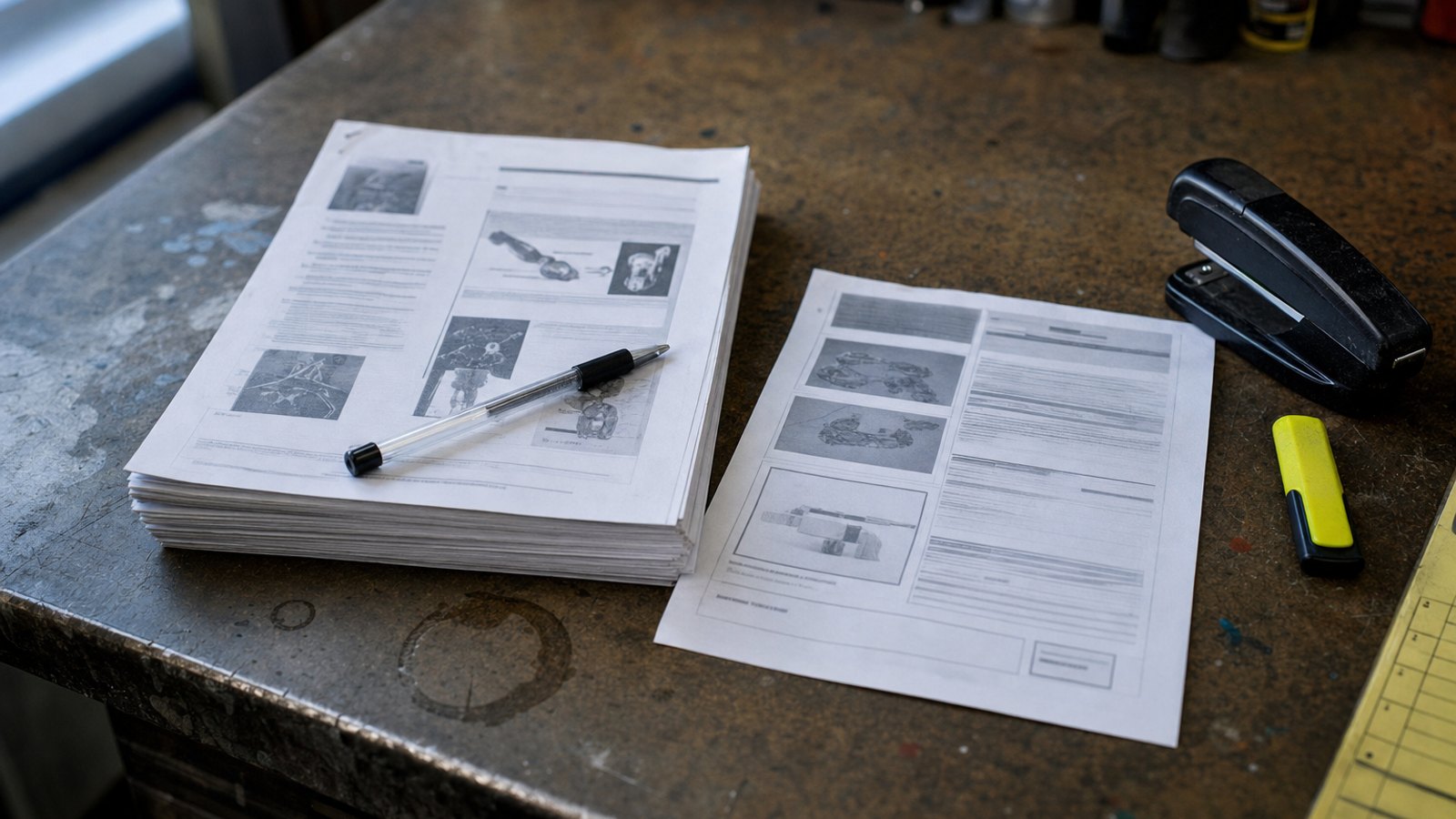
Close-up of printed OEM procedure pages and a supplement packet on a worn shop desk with a stapler and pen
OEM procedure pages attached before submission change what the carrier is reviewing from a request to an obligation.

The Bottom Line

Scrubbing tools built a category around identifying what's missing. That was the right problem to solve in 2010, when shops had no way to benchmark their estimates against what others were writing. The category still exists and it still does what it says.

But the approval rate problem didn't get fixed by flagging lists. Shops with over 80% first-submission rates on their supplements aren't winning because they find more missing items. They're winning because they submit documentation the carrier can't easily deny. Skeeter's Body Shop in Garden City, Kansas hit 99% internal approval on their supplemented operations, not by arguing harder but by submitting differently.

Tools like Estimate Optimizer™ cross-reference estimates against OEM databases, flag every removed or reduced operation, and attach the procedure documentation automatically. The supplement leaves the building as a proof package, not a request. That's the shift. Finding what you're owed has always been the starting point. Making it undeniable is what gets it paid.

Related Articles

Frequently Asked Questions

What is estimate scrubbing for auto body shops?
Estimate scrubbing is the process of reviewing a collision repair estimate against a database of commonly billed operations to find line items that are missing or undervalued. Tools like EstimateScrubber.com and the ATI Estimate Scrubber use pattern-matching across millions of estimates to flag operations your estimator may have skipped. The scrub returns a list of potential additions for the shop to review and supplement.
What is the difference between an estimate scrubber and Estimate Optimizer?
An estimate scrubber identifies missing line items by comparing your estimate against a database of what other shops write on similar jobs. It returns a flagged list. Estimate Optimizer identifies the same gaps but matches them against OEM procedure documentation and attaches the specific procedure pages that establish the carrier's legal obligation. The scrubber gives you a list to argue from. EO gives you a proof package the carrier is already on the hook for.
Why does my supplement keep getting denied even when I know I'm owed the money?
Knowing you're owed the money and proving it are two different things. When a supplemented line item arrives without OEM documentation attached, the adjuster can approve, cut, or deny based on their own judgment. When the same line item arrives with the specific OEM procedure page that requires it, denial becomes harder than approval. Most supplement denials are documentation gaps, not billing errors.
What is a good supplement approval rate for an auto body shop?
A first-submission approval rate above 80% indicates your documentation is doing the work before the carrier can push back. Below 70% means you're in an argument cycle where supplements come back partially approved or denied, requiring follow-up rounds. The industry-wide first-submission approval rate is significantly lower than 80% for most shops not using OEM-backed documentation on their supplements.
How does insurance estimate scrubbing auto body shops use to fight denials?
Shops that win more on first submission focus on attaching OEM procedure documentation to each supplemented operation rather than submitting line items and waiting to negotiate. When the supplement includes the specific OEM procedure page that requires the operation, the carrier's denial position weakens. The goal is to make every supplemented line item a documented obligation before the estimate leaves the building.
Share this article
estimate scrubbingsupplementsOEM proceduresrevenue recoveryinsurance claimsshop ownersCCC ONE
Back to Blog
Follow us