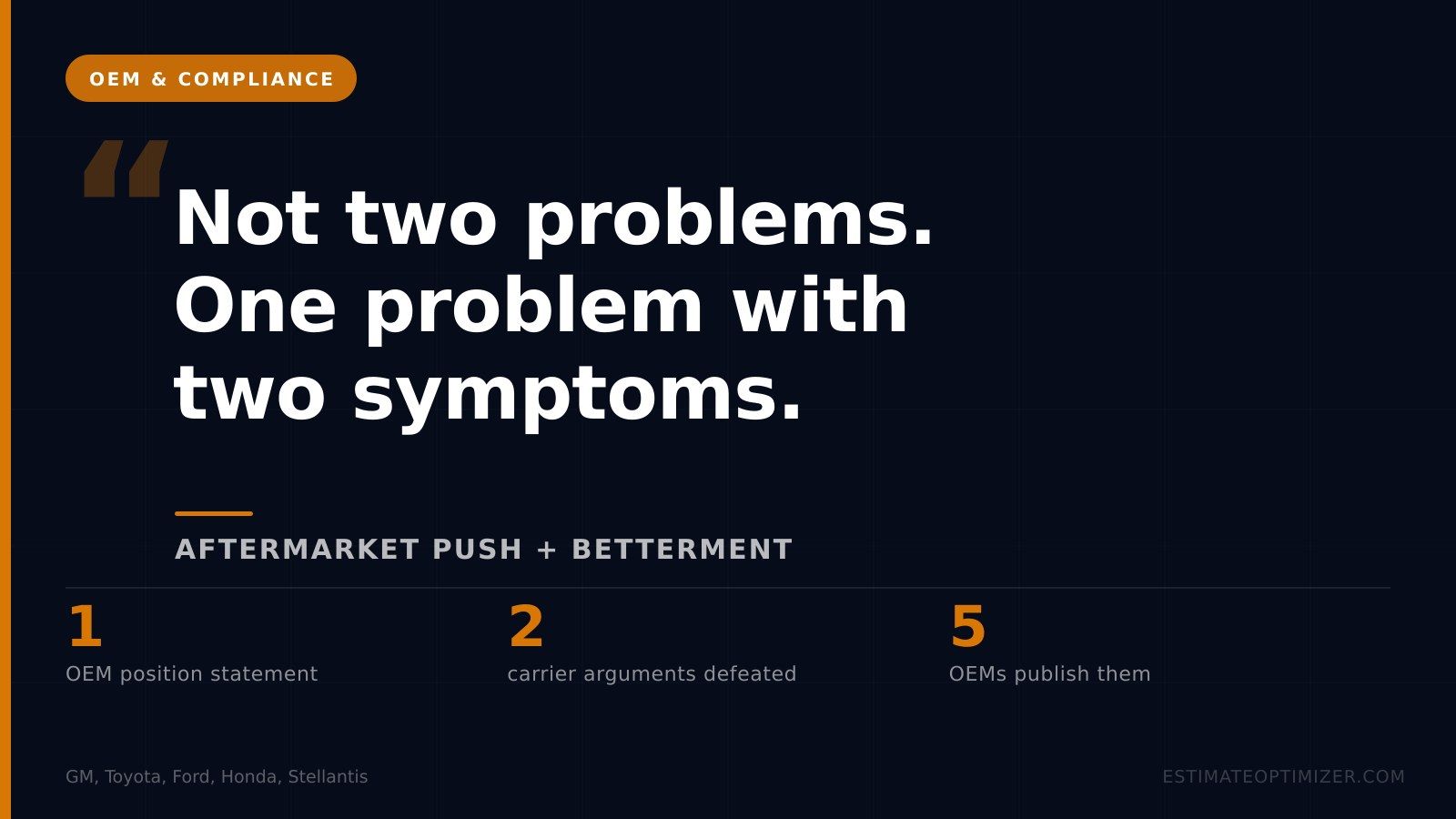
The OEM vs aftermarket parts insurance betterment deduction squeeze is a two-punch combination carriers run on the same claim. First, they push an aftermarket sensor or structural component. Then, when you install the OEM part anyway, they apply a betterment deduction. Both arguments rest on the same false premise: that using the OEM part was a choice your shop made, not a requirement the manufacturer imposed.
Why Aftermarket Substitution and Betterment Are the Same Argument
We covered the betterment deduction mechanism in this week's pillar post on how OEM documentation ends betterment claims. The short version: betterment applies when a repair improves the vehicle beyond its pre-loss condition. When an OEM procedure or position statement requires a specific part and prohibits alternatives, no improvement occurred. The repair restored the vehicle to manufacturer spec.
The aftermarket substitution push from carriers runs on identical logic. If the carrier can establish that an aftermarket sensor or bumper reinforcement is "equivalent," they can justify specifying it on the estimate and pushing back when you install OEM. Your counter-argument is the same: the manufacturer says it is not equivalent. And the manufacturer's documentation, not the carrier's opinion, governs what is required for a safe repair.
When you have that documentation in the file, both arguments collapse at once.
The GM Statement That Changed the Aftermarket Argument in 2026
When was the last time you attached a manufacturer's parts position statement to a line item before submitting? If you can't name the last time, that's where the carrier is finding room to push aftermarket substitution and apply betterment deductions.
In June 2026, General Motors revised its parts position statement to state that GM "does not support and strictly prohibits the use of salvage, recycled/used, or non-Genuine aftermarket parts" on Chevrolet, Buick, GMC, and Cadillac vehicles. The statement covers ADAS sensors, supplemental restraint systems, bumper fascias on ADAS-equipped vehicles, and windshields with embedded camera systems.
That matters on a 2024 GMC Sierra with active safety assist. The radar sensor in the front grille is covered by that prohibition. If a carrier specifies an aftermarket sensor on the estimate for that Sierra and the shop installs it, GM's warranty on the entire active safety system is voided for any future failure involving that sensor. The shop carries that liability. The carrier doesn't.
But the position statement also closes the betterment argument. If the shop cannot legally install any other part, the OEM part is not an upgrade. It is the only repair. You cannot be charged betterment on a part you were required to install.
Toyota's sensing restraint system position statement makes the same argument on a different platform. Ford's inflatable safety belt system has its own prohibition on aftermarket hardware. Stellantis ADAS bumper cover statements on park sensor and blind spot monitoring systems carry equivalent language. Every one of those is a documented counter-argument sitting in a database most shops never pull during estimate writing.