ADAS calibration not covered by insurance is now one of the most common billing disputes in the industry , and it's getting worse. As of mid-2025, 65% of collision repairs require at least one ADAS calibration. Yet 77% of shops report that insurers push back on these charges at least some of the time. That gap is coming out of your pocket.
This isn't a technology problem. It's a documentation problem. Insurers aren't going to volunteer payment for work they don't understand and that you haven't proven is required. This post breaks down why they push back and exactly what your shop needs to do to stop absorbing these costs.
Why Is ADAS Calibration So Commonly Denied?
Start with the adjuster on the other end of your supplement. A lot of them have been in the business since before ADAS was on any vehicle they dealt with. They approved thousands of bumper repairs without ever thinking about radar sensors. Now you're telling them a front bumper replacement on a 2023 Honda CR-V requires $400–$600 in calibration, and they don't understand why. That's not an excuse. That's the problem you have to solve.
Three denial patterns show up over and over:
The "not required" play. The adjuster claims the calibration is excessive or optional. They're not citing anything. They're hoping you drop it. The fix is attaching the OEM position statement that mandates calibration for that specific repair scope on that specific vehicle.
The "scan is enough" play. They approve a basic diagnostic scan and call it done. Clearing a DTC is not calibration. A radar sensor that's been physically shifted by a bumper impact doesn't self-correct when you clear an error code. These are two different procedures, and your documentation needs to spell that out clearly.
The documentation gap play. They ask for justification you haven't provided. Pre-scan results, post-calibration confirmation, OEM procedure reference, photos of setup , if any of those are missing, they have an easy out. The claim sits. Or it gets denied.
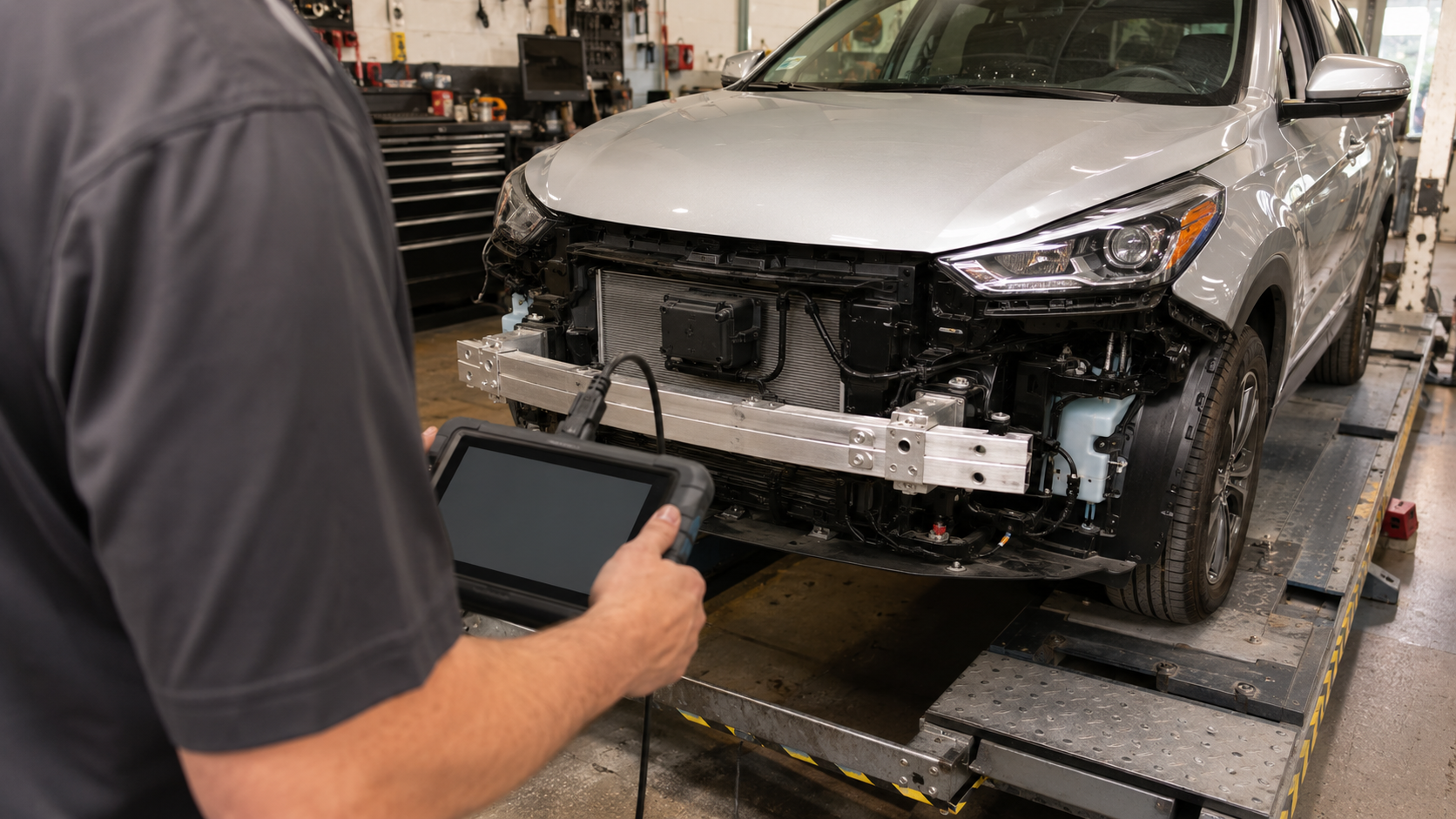
A pre-repair scan showing active DTCs is the first line of documentation , without it, the insurer has no baseline to approve calibration against.
What the Numbers Actually Say Right Now
This problem is accelerating. Caliber Insights tracked actual repair data through 2025 and found that by Q2 of this year, 65% of collision repairs required an ADAS calibration. That's up from 53% in Q4 2024. The average model year of vehicles entering shops is pushing into 2018–2019, and those vehicles have significant ADAS penetration already. When the fleet ages into 2023 model years, Caliber's data projects that figure climbing past 95%.
FMVSS 127 , the federal rule finalized in 2024 , requires automatic emergency braking, including pedestrian AEB, on all new passenger cars and light trucks by model year 2029. That mandate makes AEB standard on virtually every vehicle entering shops within a few years. Which means calibration requirements on your ROs aren't going away. They're compounding.
Meanwhile, industry estimates suggest roughly 75% of required ADAS calibrations are currently being missed across the industry. Some of that is workflow failure. Some of it is shops absorbing the cost rather than fighting for it. Both outcomes hurt your shop.
Which Repairs Trigger Calibration , and Why This Matters for Your Estimate
You can't build a defensible supplement if you don't know what triggers calibration requirements on a given vehicle. The short list, by repair type:
Windshield Replacement
The forward-facing camera is typically mounted to or directly behind the windshield. When you pull the glass, you disturb the camera mount. Calibration is required. Some OEMs now specify that only OEM glass be used on ADAS-equipped vehicles , using aftermarket glass on those models can void the calibration entirely and give the insurer another denial point. Know the position statement for the vehicle before you write the estimate.
Front Bumper, Grille, or Fascia Work
Radar sensors for adaptive cruise and automatic emergency braking live behind the grille or in the fascia. A 2022 Toyota RAV4 that takes a front-end hit at 15 mph doesn't need to have a visibly damaged radar unit to have a misaligned one. The physical forces of the impact are enough. Any front-end repair on an ADAS-equipped vehicle needs a pre-scan and a post-repair calibration in the documentation, period.
Rear Bumper and Side Mirror Work
Blind spot monitoring, rear cross-traffic alert, and lane departure systems use sensors mounted in the rear bumper and side mirrors. A 2021 Ford F-150 with a rear impact, or a 2023 Subaru Outback with side mirror damage , both trigger calibration requirements that insurers routinely try to carve off the estimate.
Suspension, Alignment, and Wheel Work
This one surprises customers and sometimes adjusters. ADAS systems use the vehicle's geometry as a reference plane. Change the wheel alignment, alter ride height, or put on a different tire size , and the cameras and sensors are now pointing at a slightly different part of the world than the OEM calibrated them for. Calibration required. Document it.
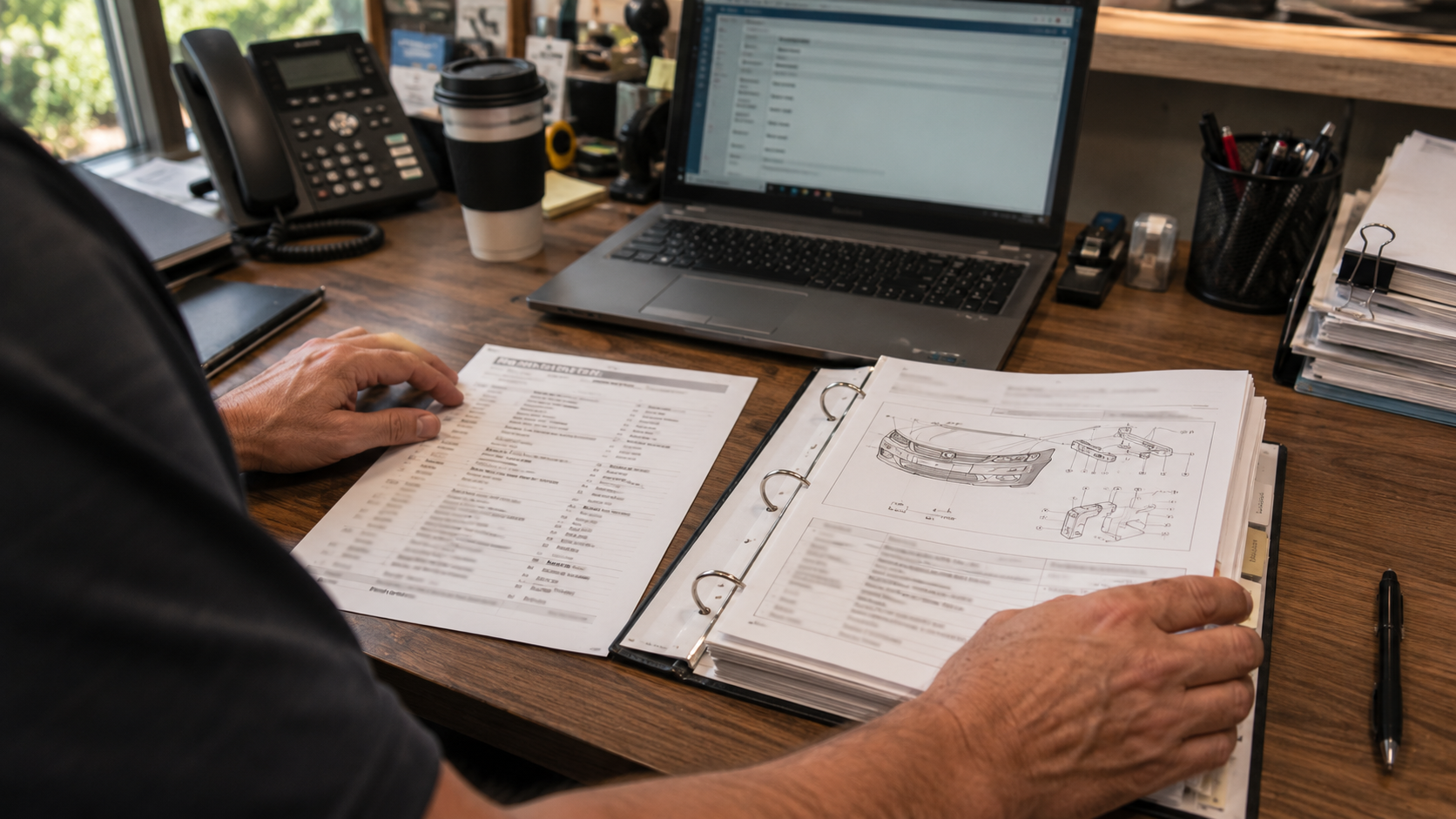
The documentation stack that gets calibration approved: pre-scan DTCs, OEM position statement, calibration type required, and post-repair confirmation.
How to Build a Calibration Claim That Gets Approved
The shops that consistently get paid for ADAS work aren't fighting harder. They're documenting better. Here's the stack that removes an adjuster's ability to deny legitimately required calibration.
Pre-Repair Scan First
Before anything else on the vehicle, run a full pre-repair scan and document every active DTC. This establishes the baseline state of the ADAS systems before your shop touched the car. If you don't have this, you have no documented starting point , and the insurer can claim the calibration was unrelated to the repair event. This scan printout goes in the claim package, not in a drawer.
OEM Position Statement, Vehicle-Specific
Pull the OEM procedure for that specific year, make, and model. Not the general brand position statement , the procedure for that VIN's repair scope. Insurers claim calibration is "not required" because they're hoping you can't prove otherwise. The OEM procedure document proves otherwise. Attach it. Reference the specific procedure number in your supplement narrative.
Calibration Type and Setup Documentation
Static calibration (done in-shop with calibration targets) and dynamic calibration (done on the road at a specific speed) are different procedures with different costs. Document which type the OEM requires for this vehicle and repair scope, and photograph your setup: target positioning, equipment used, measurements taken. Adjusters who approve static calibration on one vehicle and question it on another are creating inconsistency your photos will call out.
Post-Repair Scan and Confirmation
After calibration is complete, run a second scan. Document that the DTCs are cleared and the systems show no active faults. Include before-and-after scan results in the claim package. This is your proof the work was done correctly , and it's the piece most shops skip that gives insurers room to question whether calibration was actually performed.
Written Denial Documentation
If an adjuster denies the calibration charge, get the denial in writing. Ask them to state what documentation would be required for approval. That written exchange creates accountability and sometimes triggers an immediate reversal , because the adjuster knows a documented denial of an OEM-required procedure creates a paper trail. If the denial stands, your customer needs to know their insurer is preventing a safety-required repair. Customers advocating to their own carrier often get a different result than shops do.
The Liability Side of This Nobody Talks About Enough
There are cases working through courts right now involving shops that performed collision repairs and sent vehicles back to customers with ADAS systems that weren't calibrated. One case cited by Repairer Driven News involved a Nissan where the forward collision warning system had been disturbed in a minor collision. The OEM documentation required calibration. The shop didn't have the tools. The system failed in a secondary accident. The outcome was catastrophic.
Litigation from missed or improperly performed calibrations is rising. Industry attorneys tracking this area have described roughly a dozen active cases nationally at any given time, with more expected as ADAS penetration increases. Shops are liable even when they sublet calibration to a third party , the theory is the same as any other sublet: you're responsible for the quality of work performed on the vehicle under your RO.
The documentation that gets you paid is also the documentation that protects you if something goes wrong. Pre-scan, OEM procedure, calibration setup, post-scan confirmation. That stack serves two purposes: billing and defense.
The Bottom Line
ADAS calibration isn't a line item insurers get to debate on properly documented repairs. It's a safety procedure mandated by the vehicle manufacturer, and the OEM position statement says so in plain language. The shops getting paid consistently aren't winning arguments with adjusters , they're building claim packages that leave nothing to argue about.
Pre-scan before the car is touched. OEM procedure attached to the supplement. Calibration type documented with photos of the setup. Post-scan confirmation after the work is done. That's the standard. Anything short of it gives the insurer a reason to cut the line item, and they will take that reason every time.
Tools like Estimate Optimizer™ flag ADAS calibration requirements on your estimates automatically, cross-referencing the repair scope against OEM procedure databases , so you're not manually researching every VIN and hoping the insurer doesn't notice what you missed.
The 2029 AEB mandate is coming. By the time every new vehicle entering your shop has mandatory emergency braking, the shops that figured out ADAS documentation now will be billing it consistently. The shops that didn't will still be absorbing it.
Does insurance have to pay for ADAS calibration after a collision repair?
Yes, when the calibration is required by the vehicle manufacturer's documented repair procedures for the specific repair performed. Insurers must cover OEM-mandated procedures as part of a proper repair. The key is documentation: you need the OEM position statement for that vehicle, a pre-repair scan showing system status, and post-calibration confirmation. Without that paper trail, insurers will routinely deny or delay payment.
Why do insurance companies deny ADAS calibration charges?
Insurers deny ADAS calibration charges for three main reasons: the adjuster doesn't understand why it's required for that repair scope, the shop hasn't provided OEM documentation proving it's mandatory, or the documentation package is incomplete. According to a 2025 industry benchmark report, 77% of shops experience insurer pushback on calibration charges at least some of the time. That pushback largely goes away when shops attach the OEM position statement and a complete pre/post scan package to the supplement.
What repairs require ADAS calibration?
Any repair that disturbs an ADAS sensor or camera can require calibration , including windshield replacement, front bumper or fascia work, rear bumper repair, side mirror replacement, suspension work, and wheel alignment changes. The exact requirement depends on the vehicle's year, make, and model, and the OEM procedure for that specific VIN. A pre-repair scan will identify active ADAS-related DTCs and the OEM position statement will specify whether static or dynamic calibration is required.
What happens if a shop skips ADAS calibration after a repair?
A shop that skips required ADAS calibration faces both revenue loss and significant liability exposure. Litigation from missed or improperly performed calibrations is rising nationwide, with cases involving forward collision warning, lane departure systems, and automatic emergency braking failures resulting in secondary accidents. Shops remain liable even when calibration is sublet to a third party. Skipping calibration because an insurer won't pay for it doesn't eliminate your shop's responsibility for the repair.