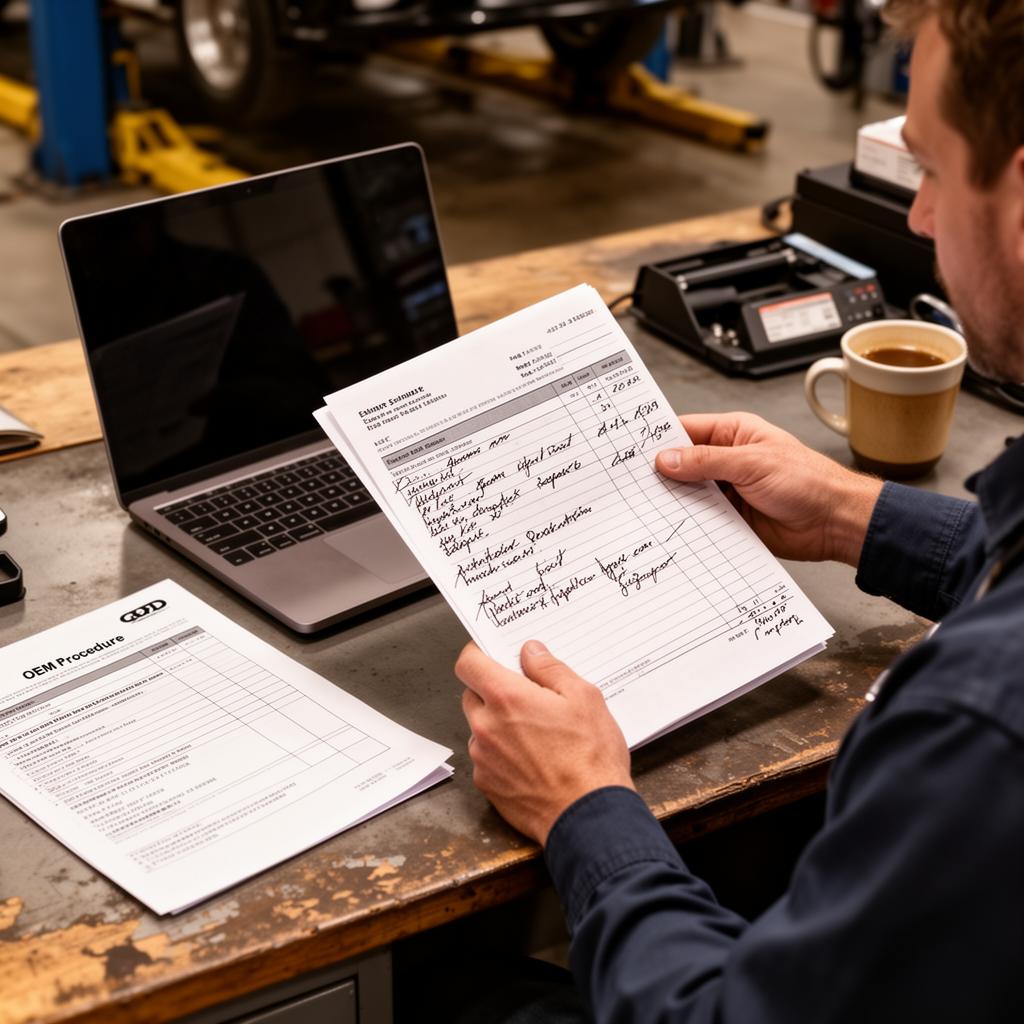
The insurance estimate that just landed in your queue is probably missing OEM procedures. Not because the adjuster forgot. Because the estimating software default settings are configured to leave them out, and no one at the carrier is going to raise their hand and remind you to put them back in. The result: you do the work, absorb the cost, and send the car out the door having performed procedures that were never on the estimate.
Research from RepairLogic shows shops uncover an average of $151 in previously missed operations per repair order when using OEM procedure research tools. That's not a rounding error. Across 200 ROs a month, that's $30,200 sitting on the table every 30 days.
Why OEM Procedures Not Included in Insurance Estimates Is a Systemic Problem
Estimating software is built by companies that serve both shops and insurers. The default configurations in CCC ONE, Mitchell, and Audatex are not neutral. They're calibrated toward the insurer's cost objectives. OEM-required procedures that fall outside the included operations list don't auto-populate. They require the estimator to research and manually add them, which takes time most shops don't have.
The Automotive Service Association put this plainly in their OEM procedures position statement: estimating databases do not currently account for the time spent researching OEM repair procedures, even though that research is necessary and critical to a proper repair. You're expected to do the work for free and then bill for only what the software already had loaded.
Insurers have known about this gap for decades. That's not an accident. A procedure that doesn't appear on an estimate is a procedure that won't generate a supplement request, which means it won't generate a payment. The shop absorbs the cost. The insurer keeps the difference.
The procedures that generate the most disputes are the ones that require research to find. That is exactly why they stay off insurer-written estimates.
The $31.5 Million Reason You Can't Ignore This
In 2017, a Dallas jury awarded $31.5 million in damages against John Eagle Collision Center for failing to follow Honda's OEM repair procedures on a 2010 Honda Fit. The shop had adhesive-bonded the roof instead of weld-bonding it as Honda required, because the insurer wouldn't pay for the OEM method. Two years later, the car was in another accident. The roof didn't absorb the impact the way it was engineered to. The vehicle was engulfed in fire. The occupants survived with catastrophic injuries.
Here's the part that gets buried in the coverage: the shop argued it was following insurer direction. The jury didn't care. The shop did the repair. The shop signed off on the car. The shop paid.
The DRP contract your shop is operating under almost certainly includes an indemnification clause that protects the insurer if something goes wrong. Read it. If you skip an OEM procedure because the carrier wouldn't pay, and that vehicle is later in another accident, you are the one with exposure. Not the adjuster who denied the line item. You.
This isn't a hypothetical risk confined to structural repairs. Nearly half of all U.S. shops miss required post-repair ADAS calibrations, according to Revv's director of partnerships Joel Adcock. The average lawsuit or settlement in those cases runs between $200,000 and $1 million or more.
The Three Categories of Procedures That Disappear From Estimates
ADAS Calibration
According to CCC Intelligent Solutions Q3 2025 data, about 61% of vehicles arriving for collision repair require some form of ADAS calibration. But only 35.6% of DRP estimates include a calibration line item. That's a gap of more than 25 percentage points between what vehicles need and what insurers are writing. On a 2023 Toyota RAV4, a rear bumper replacement triggers required backup camera and radar calibration. On a 2022 Honda CR-V, a windshield replacement requires front-facing camera recalibration. These aren't optional. They're in the OEM repair procedures. They're also not on the estimate the insurance company sent you.
Getting paid requires documentation, not argument. Cite the OEM position statement. List the specific calibration procedure from the manufacturer's repair manual. Submit the pre-scan and post-scan results. Revv's 2025 benchmark study found 77% of shops face insurance pushback on ADAS claims at some point. The shops getting approved are the ones leading with manufacturer documentation rather than shop opinion.
Single-Use Parts
RepairLogic data shows shops uncover an average of $31 in additional single-use parts per repair plan when using automated detection. Drill bits, cavity wax, seam sealers, weld-through primer, plastic rivets, clips, and fasteners that OEM procedures require to be replaced rather than reused. These aren't glamorous line items. They're also not included in insurer-written estimates by default.
On a 2021 Ford F-150 aluminum body repair, the OEM procedure lists specific weld-through primer requirements and single-use fasteners that are required for a structural repair. On a 2020 Chevrolet Silverado, the bed liner fasteners are single-use. On virtually any newer Honda or Toyota with rear bumper damage, there are brackets and clips that cannot be reused. The OEM says so. The estimating database doesn't add them automatically. You have to know to look.
Structural and Sectioning Operations
This is where the liability exposure and the revenue exposure converge most directly. OEM procedures for structural repair specify cut locations, weld types, and sectioning restrictions that are not captured in standard estimating database labor times. A 2022 Ram 1500 with B-pillar damage has OEM language that prohibits sectioning certain reinforcements entirely. Only full component replacement is allowed. If an insurer writes a repair time that assumes sectioning is acceptable and your shop performs the repair that way, you own that decision regardless of what the estimate said.
The flip side: when you document the OEM procedure requiring full replacement rather than sectioning, you have the justification for a supplement that increases the RO value, in some cases significantly. The procedure research that protects you legally is the same research that recovers revenue on the supplement.
Teardown is where OEM procedure research pays off: what the estimate didn't anticipate, the disassembly will reveal.
What It Looks Like When the Audit Catches What You Missed
A Utah estimator with over 20 years of experience ran a rear-end collision estimate through an OEM procedure audit on a Toyota Camry. The damage appeared straightforward: rear bumper cover, lower fascia, possible exhaust contact. She and her blueprinter had reviewed the car multiple times.
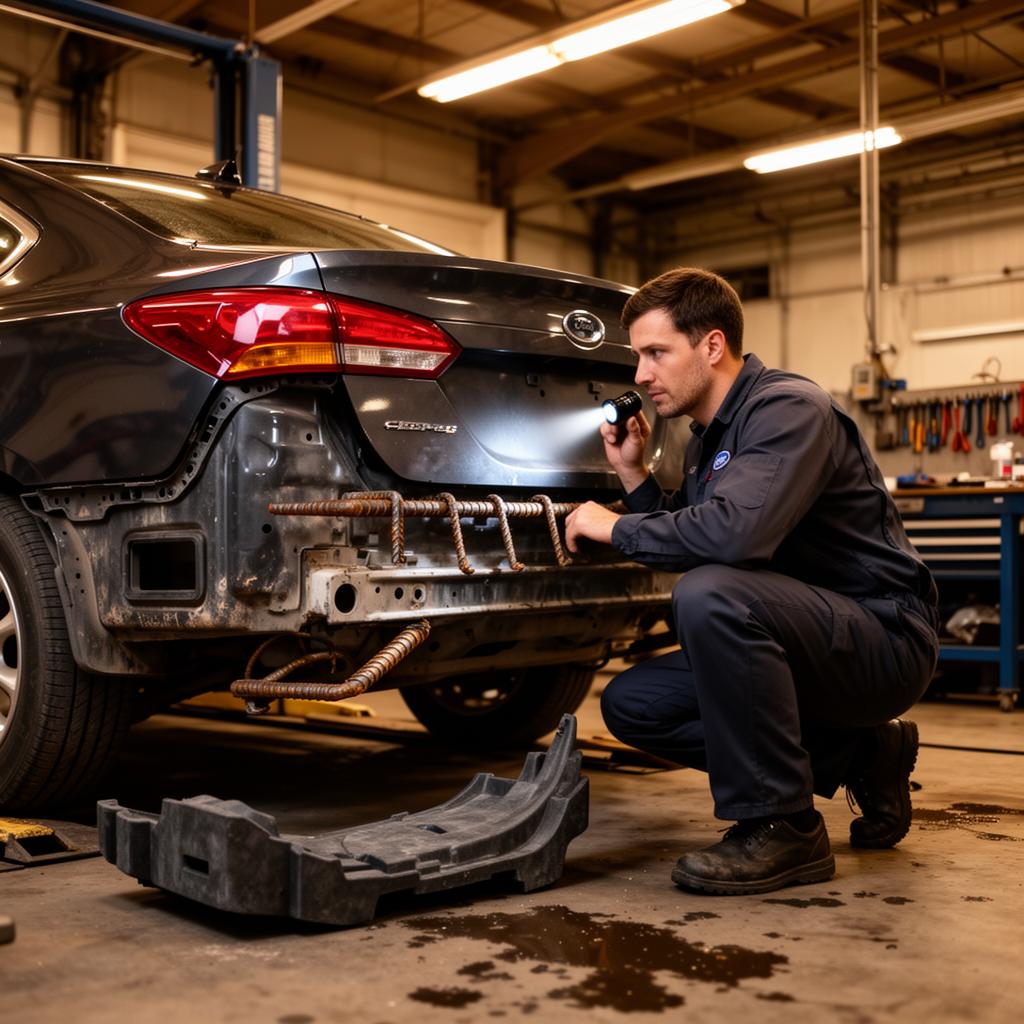
The audit flagged a hairline crack in the bumper absorber and noted the possibility of rear body panel damage behind it. She was skeptical. She looked again. Nothing obvious. She pulled the absorber anyway.
The rebar was bent. The rear body panel was bent. There was $2,500 in legitimate repairs that would have left the shop with the car out the door before anyone knew. The car would have gone back to a customer with unrepaired structural damage.
This is not a story about a bad estimator. This is a story about what OEM procedure research catches that experienced eyes miss on visual inspection. The crack in the absorber was the signal. Without the audit cross-referencing what should have been checked, that signal never triggered the teardown that found the real damage.
How to Build OEM Procedures Into Your Estimating Process
The shops getting paid for OEM procedures are not doing anything exotic. They're doing the research and documenting it before the adjuster has a reason to push back.
Start with every repair that involves structural components, glass, bumpers, or anything touching a sensor or camera. Pull the OEM repair manual before you finalize the estimate. Look specifically for: required scan procedures before and after the repair, single-use part designations, sectioning restrictions and required weld types, and calibration requirements triggered by the repair.
When you add a line item based on OEM procedures, attach the source. The page from AllData. The manufacturer position statement. The OEM procedure number. Adjusters who question procedures they don't understand will not question the same procedures when you attach the manufacturer's documentation and make clear that the vehicle owner's safety depends on it being done correctly.
The DEG database and SCRS's Blueprint Optimization Tool are free resources that capture missed operations and flag estimating database errors. Use them. If your estimating software has a line item wrong, the DEG database has a record of it, and that record is your documentation when the insurer pushes back.
Tools like Estimate Optimizer™ cross-reference your estimates against OEM procedure databases automatically, flagging missing calibration requirements, single-use parts, and structural operation gaps before the car moves into the bay, so the supplement conversation happens before the work, not after.
The Bottom Line
OEM procedures not included in insurance estimates is not a documentation problem. It's a business model problem on the insurer's side, and a revenue and liability problem on yours. The procedures get left off estimates because leaving them off saves the carrier money. You perform them anyway because leaving them off would put a customer in an unsafe vehicle. The only question is whether you get paid for them.
The shops getting paid have stopped treating OEM procedure research as optional post-estimate work and started treating it as part of the blueprinting process. The research that protects you from a John Eagle scenario is the same research that adds $151 to your average RO. Those aren't two different tasks. They're one.
What OEM procedures do insurance companies most often leave off estimates?
ADAS calibration is the most commonly omitted procedure: about 61% of vehicles need some form of calibration after a collision, but only 35.6% of DRP estimates include a calibration line item according to CCC Q3 2025 data. Single-use parts like clips, fasteners, weld-through primer, and cavity wax are also routinely excluded. Structural operations with OEM-specific requirements — cut locations, weld types, and sectioning restrictions — are frequently underwritten or written without reference to what the manufacturer actually requires.
Can an insurance company require me to skip OEM repair procedures?
No insurer can legally force you to perform a repair in a way that violates safety standards, and they cannot indemnify themselves from the consequences if you do. The John Eagle Collision Center case established that the shop, not the insurer, bears liability for the repair. Many DRP contracts include clauses that protect the carrier if a repair goes wrong. If you skip an OEM-required procedure because an adjuster denied the line item, you own that decision if the vehicle is later in another accident.
How much money are shops losing by not billing for OEM procedures?
RepairLogic data shows shops uncover an average of $151 in previously missed operations per repair order when using OEM procedure research tools, plus an average of $31 in additional single-use parts per repair plan. Across a shop doing 150 to 200 repairs a month, that's $22,650 to $36,400 in monthly revenue sitting uncaptured. The actual figure varies by shop volume and vehicle mix, but the gap is consistent across the industry.
What documentation do I need to get an insurer to pay for ADAS calibration?
Lead with the OEM position statement or repair procedure that requires calibration as part of the specific repair being performed. Include the vehicle-specific procedure number, pre-scan and post-scan results, documentation of the calibration equipment used, and any OEM technical service bulletins that apply. Revv's 2025 benchmark study found 77% of shops face insurance pushback on ADAS claims. The ones getting approved submit documentation before the adjuster has time to form an objection, not after a denial.