Back to Blog
Labor Rate Disputes

Your Carriers Aren't Different. Your Rate File Just Isn't Built for Your State.

6 min read
Share
A printed letter with one line circled in red on a shop desk, next to a calculator, a rotary phone, and a stack of invoices

In CRASH Network's third-quarter 2025 survey of 300 shops, reported in November 2025, about one in four said an insurer was paying them a lower labor rate than it had in January, and State Farm was the insurer named most often. The explanation was almost always the same: that's the rate for your market. Ask which market, and what data the number is based on. Most shops never get that far, because nobody at the shop has ever pulled the auto body labor rate by state documentation that already exists for exactly this fight.

The Rate Cut Notice Doesn't Care What State You're In

The cuts are real, and they are not isolated to one region. One shop's State Farm rate dropped from $60 to $55 an hour, an 8.3% cut. Another shop reported two rounds in the same year: $74 to $70, then $70 to $65, a cumulative cut of about 12%. A third shop had USAA cut their rate from $72 to $68. About a dozen other shops in the same survey named carriers beyond State Farm making the same move. None of these numbers came with a survey attached, and none of the shops that reported a cut said they were given a documented reason for the specific figure.

SCRS flagged the pattern at the Collision Industry Conference in November 2025: carriers are moving away from paying a rate based on what shops in the market actually charge, toward a rate the carrier itself calls reasonable, without defining reasonable, without a documented survey, and without justification sent to the shop. That's not a negotiation. That's a number handed down with no paper behind it, and it's landing in nearly every region of the country at once.

A 2024 GMC Sierra 2500 with a bent frame rail can run 38 documented structural labor hours on its own. Spread an 8% rate cut across a repair order like that, and the shop loses hundreds of dollars before a single supplement conversation even starts. Run that math across a month of structural work and the number stops being a rounding error.
A printed letter with one line circled in red on a shop desk, next to a calculator, a rotary phone, and a stack of invoices
A rate cut notice rarely arrives with a survey or methodology attached.

What's Backing Your Posted Rate?

Here's the part that should bother you more than the cut itself. CCC's own 2026 Crash Course report found the mean labor rate across all labor types rose 2.9% industry-wide in 2025, the slowest increase since 2021, but still a rise. The same report put total cost of repair at $4,818 and showed calibrations now appear on 28.3% of repairable estimates, and each one adds its own fee to the repair. Repairs are getting more complex and more expensive to perform correctly. If the documented national trend is up and your specific carrier's letter says down, those two facts don't agree. One of them is wrong, and it's worth finding out which one before you accept the number.

Run this test on your own shop. Can you name the specific source behind your posted rate right now, in one sentence? If your answer is "that's what we've always charged" or "that's what the DRP contract says," you're in red territory. You have a number with no file behind it, and a carrier can overrule a number like that with a phone call. If your answer points to a specific survey, a state filing, or a documented market report, you're in green territory. You have something a carrier has to argue against instead of announce around.

A 2023 Subaru Outback with an EyeSight calibration adds documented calibration and body labor hours on top of the base repair. Multiply a few unexamined dollars an hour across that labor pool, across every vehicle like it that comes through the shop in a year, and the red-zone number stops looking small.
Auto Body Labor Rate by State: What Three States Already Have on File

Three states already confirm this kind of documentation exists in some form, and shops rarely check for it. California's fair claims regulations (CCR 2695.81 and 2695.82) set a standardized auto body labor rate survey for insurers that choose to base payments on a survey, and those surveys are filed with the state's Department of Insurance. Rhode Island requires every insurer with 1% or more market share to file prevailing labor rate reports for each shop classification directly with the state's Department of Business Regulation, every year, by September 1.

Massachusetts went further. Its Auto Body Labor Rate Advisory Board published a full report in December 2025, built from 476 usable shop responses and data from 16 of the 17 insurers with at least 1% of the market, together writing 95% of the state's auto policies. The numbers are public: insurers reported paying body and refinish labor around $49 an hour, while shops' own posted rates averaged $68 an hour. The board itself adopted no recommendation, but one economist's individual submission, attached to the report, proposed a fair rate centered on $83 an hour. That gap between paid, posted, and proposed is sitting in an official state report that any shop in Massachusetts can read today.

Call your own state's department of insurance and ask one question: is there an auto body labor rate survey or filing requirement on the books? That's a single phone call or email, not a research project. If the answer is yes, request the filing. If the answer is no, you still have a legitimate fallback. NABR's LaborRateHero is free, searchable by zip code, and shows posted shop rates, not a number a carrier invented. Pair that with SCRS and CRASH Network's published survey data. None of this requires calling a competitor to compare notes, which creates real antitrust exposure for both shops. It requires requesting a record that already exists.

Estimate Optimizer™ applies the same standard to the operations side of the file: every audit ties each recommended operation to its OEM procedure and a copy-and-paste line note, so the estimate and the rate both rest on documents instead of opinions.

None of this guarantees a carrier reverses a cut on the spot. What it does is change what the conversation is about. A phone call built on "that's not fair" is an opinion a carrier can dismiss in thirty seconds. A letter built on a state filing number, a published survey, or a documented market report is a specific claim the carrier has to respond to on the record. Those are two different conversations, and only one of them tends to end with a different outcome.

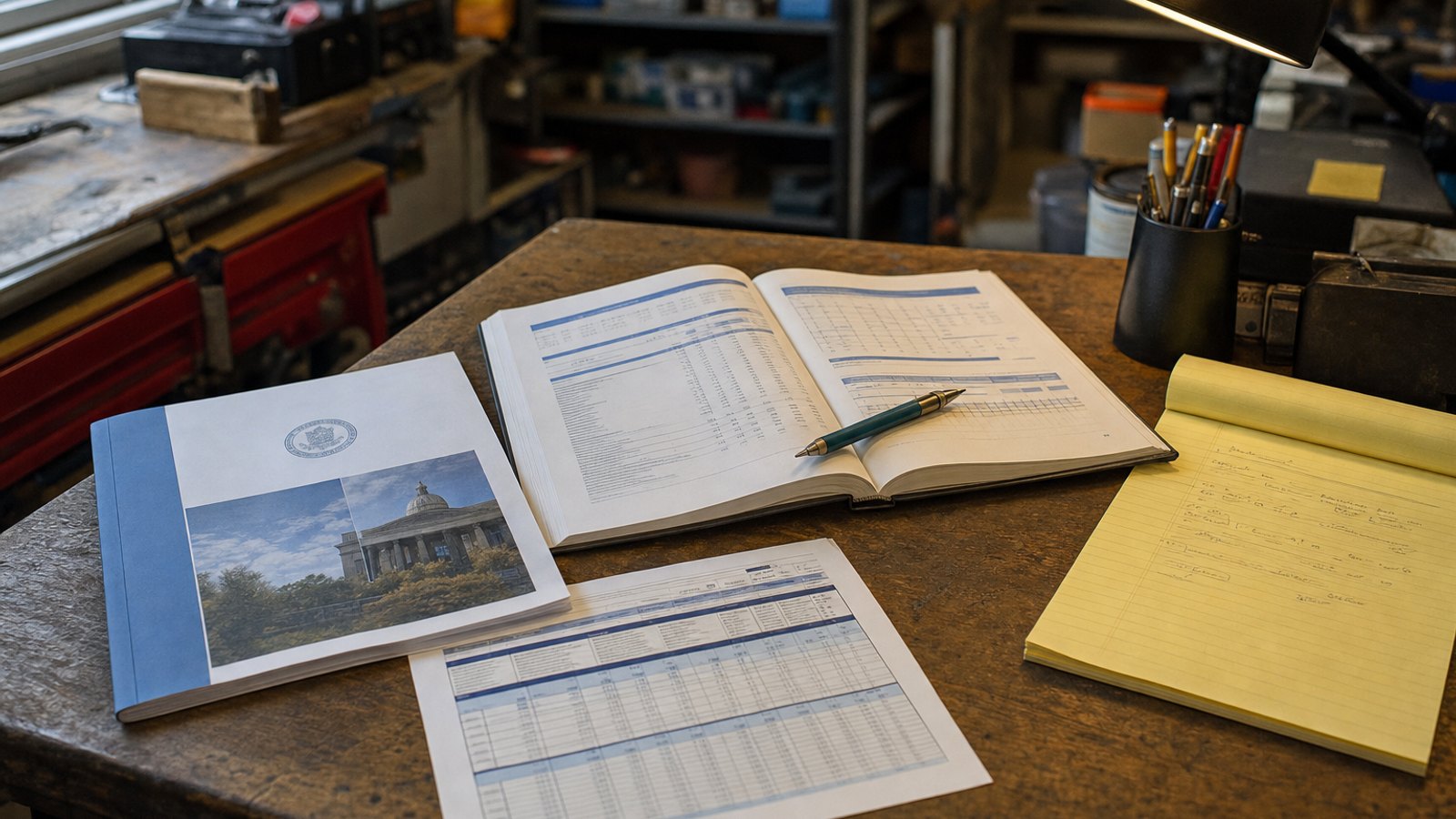
A state government labor rate report with its data tables open on a shop desk, beside a printed rate sheet and a legal pad of notes
Massachusetts publishes its labor rate survey data; most shops have never asked if their own state does the same.

The Bottom Line

A carrier cutting your rate is not a verdict on your market. It's a bet that you won't ask where the number came from. Some states already have an answer on file, and three of them have put real numbers in writing: California's standardized survey, Rhode Island's annual filing, Massachusetts's full public report. Every shop has a free fallback available regardless of which state it operates in. The shops losing ground on labor rate aren't losing an argument. They're not showing up to one.

Related Articles

Frequently Asked Questions

Does my state track auto body labor rates?
Some states do. California sets a standardized labor rate survey for insurers that choose to use one and has those surveys filed with the state, Rhode Island requires insurers with 1% or more market share to file prevailing labor rate reports every year, and Massachusetts publishes a full advisory board report with insurer-paid and shop-posted rate data. Check your own state's department of insurance directly to see if a similar requirement exists where you operate.
How do I find out what insurance companies are paying for labor rates in my area?
Start with your state's department of insurance to see if it requires a labor rate survey or filing. If it doesn't, use NABR's free LaborRateHero tool to search posted rates by zip code, and reference published CRASH Network and SCRS survey data. Never call competing shops to compare rates directly. That creates antitrust exposure for everyone involved.
Why did my insurance company cut my labor rate without warning?
In CRASH Network's third-quarter 2025 survey of 300 shops, about one in four said an insurer was paying a lower labor rate than it had in January 2025, and State Farm was the insurer named most often. SCRS has described carriers moving away from paying what shops in the market actually charge, toward an undefined rate the carrier calls reasonable, without a survey or justification attached. The cut usually isn't backed by a documented market study, which is what makes it worth challenging.
Is it legal for insurance companies to lower my shop's labor rate?
Generally, a carrier decides what it is willing to pay, and the rules differ by state, so check with your state's department of insurance or an attorney for your situation. Some states do put labor rate data on record: Rhode Island requires annual insurer labor rate surveys, California sets a standardized survey that insurers who use one must follow and file, and Massachusetts published a state board report in December 2025. If your carrier cites a "market rate" without a documented source, you can request the documentation behind it.
Can I compare labor rates with other shops to figure out what's fair?
No. Contacting competing shops to discuss or compare pricing creates serious antitrust exposure under the Sherman Act for every shop involved. Use documented, neutral sources instead: NABR's LaborRateHero, where shops submit their own posted rate to a public aggregator, plus CRASH Network and SCRS published surveys, and your state's labor rate filings if one exists.
Share this article
labor ratesinsurance claimsshop ownerscollision repairauto bodyindependent shops
Back to Blog
Follow us