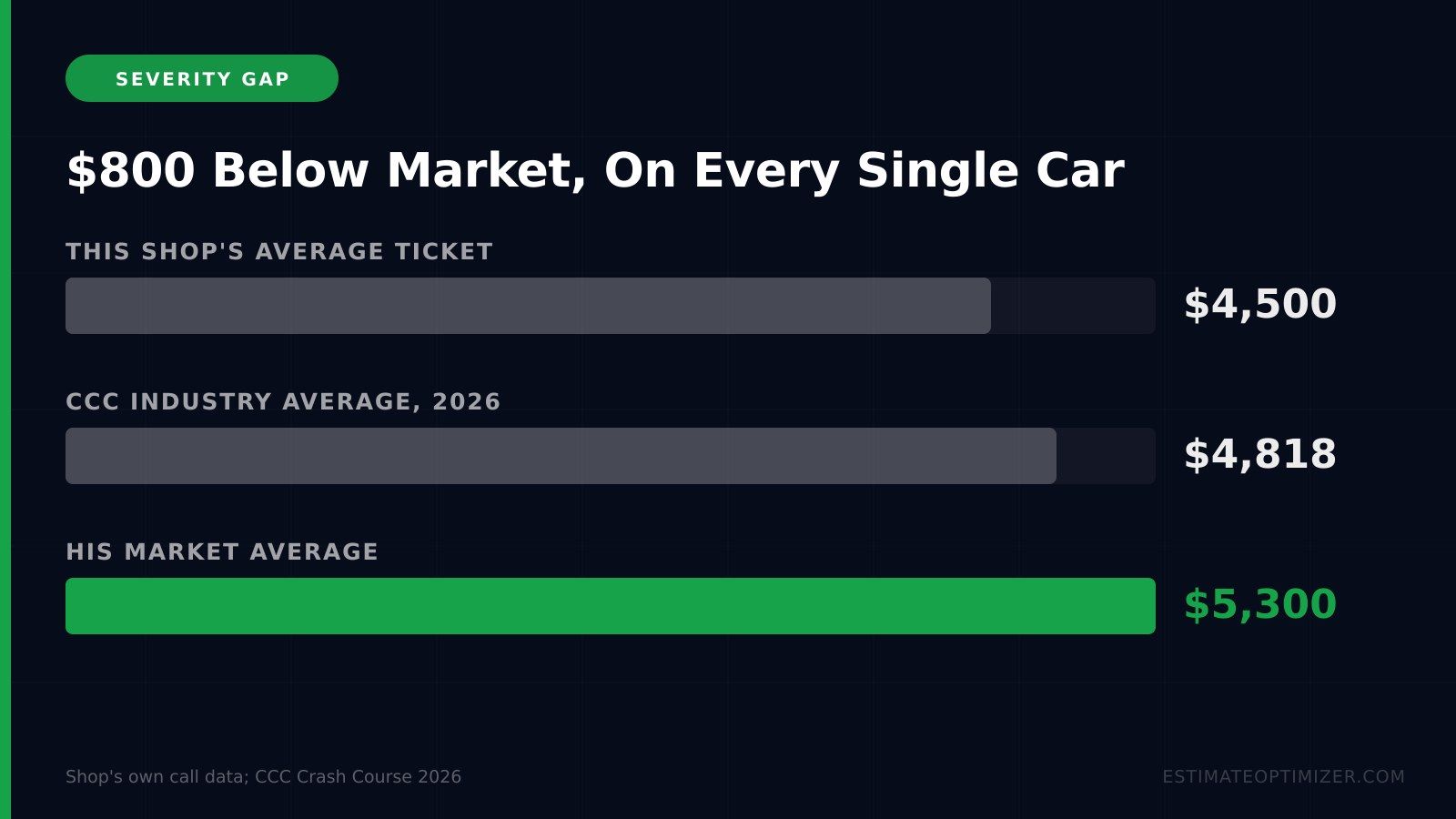
Tim, a shop owner in Edmonton, Alberta, has a collision shop average estimate severity gap of $800 per car. His average ticket is $4,500. His market average should be $5,300 to $5,400. At 40 cars a month, that's $32,000 to $36,000 a month leaving the building. That's $384,000 a year. Not a typo.
His car count is fine. His market is flat. He's not losing customers. It's a documentation problem, not a volume problem.
He's not alone.
When the Gap Isn't About Cars, It's About Capture Rate
The instinct when revenue is flat is to look at car count. Are we getting enough cars in? Is the phone ringing?
But Tim's phone is ringing. His shop runs 40 to 50 cars a month on an 80% DRP book. That's not a volume problem.
The gap is per-car. And per-car gaps don't close by adding cars. They close by capturing what's already in the estimate.
We covered the DRP compliance workaround in Monday's post. The restricted line items, the recapture categories, the documentation that makes them stick. That's one piece of the severity gap. But it's not the whole picture.
The bigger piece is the operations that never made it onto the estimate in the first place. Not restricted by the contract. Just missed.
The Collision Shop Average Estimate Severity Gap by the Numbers
CCC Crash Course 2026 puts the industry average repair cost at $4,818. That's the average across all repairable claims. Tim's $4,500 is below it. His market's $5,300 group average is well above it.
That spread isn't random. Shops at the top of their market's severity range are capturing operations that shops at the bottom are not. ADAS calibrations. Single-use fasteners. Refinish not-included operations. Structural sealer. Corrosion protection procedures that are in the P-pages but never make it to the estimate.
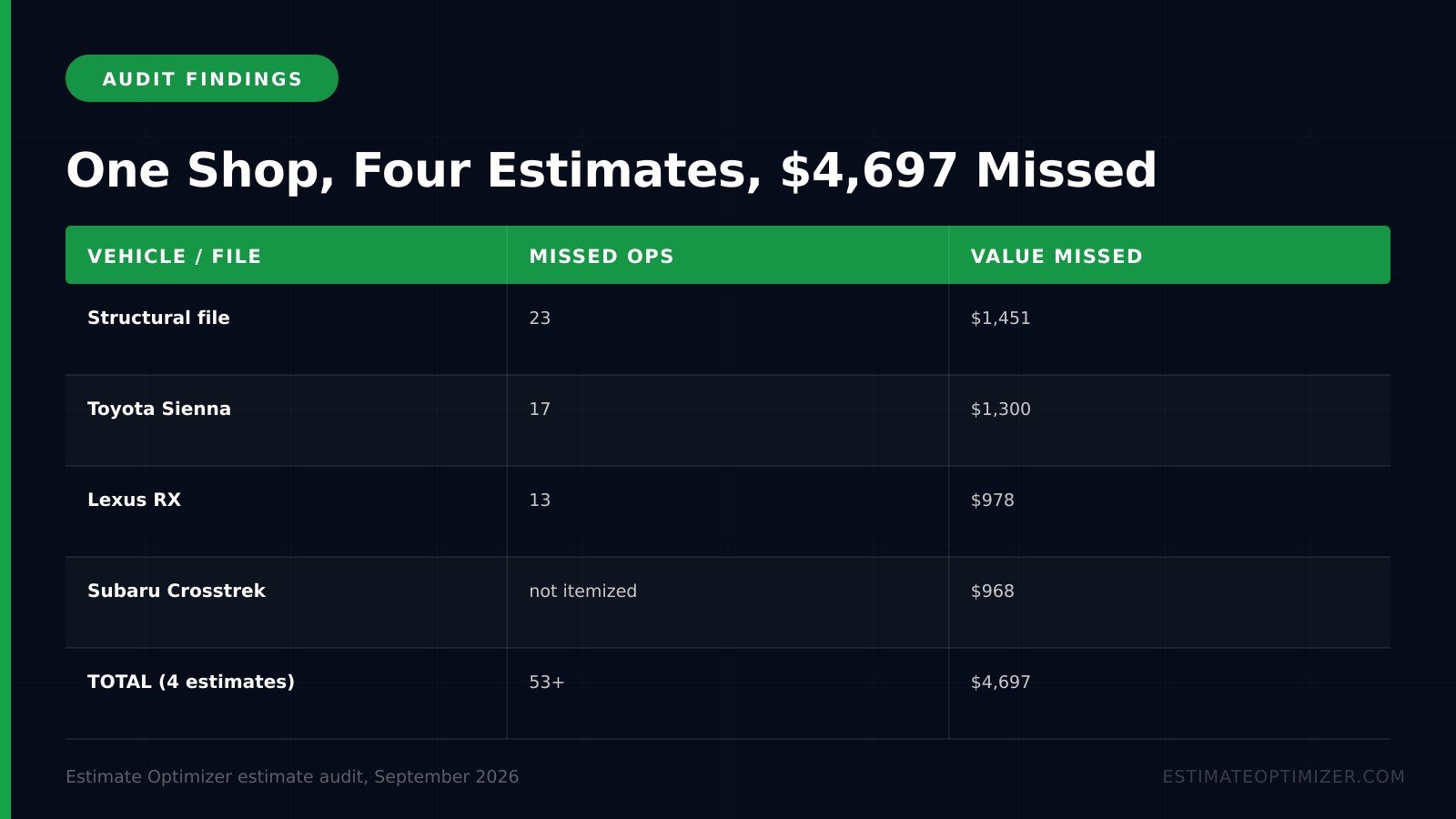
Across 244 repair orders audited, the average shop was missing $1,062 per estimate. Not because the work wasn't done. Because the documentation wasn't there to put it on the bill.
On a 40-car-per-month shop, $1,062 per estimate is $42,480 a month. That's higher than Tim's gap. Which means some of what's dragging his average down is capture rate, not market rate.
Ask yourself: what's your average ticket right now? If it's more than $500 below your market average, that is a documentation problem. Not a market problem, not a volume problem.