The letter shows up in your inbox on a random Tuesday. Effective next month, your insurance company lowered labor rate for your shop from $72 to $62 an hour. No negotiation. No phone call. Just a new number, applied to every claim they send your way.
If you've never gotten that letter, you know a shop that has. CRASH Network's fall 2025 Collision Industry Business Perspectives survey found 1 in 4 of 300 responding shops reporting at least one insurer was paying a lower labor rate than it was in January 2025. A July 2025 Fender Bender poll found 57% of 230 shops said State Farm had reduced their labor rates without explanation. This is systemic, it's aggressive, and it isn't slowing down.
Why Insurers Are Cutting Rates Right Now
Let's talk about what they're saying versus what's true.
State Farm generated a $4.6 billion auto underwriting gain in 2025 and announced a record $5 billion dividend in early 2026. It's filing for premium reductions in California, Louisiana, and Florida. Claim frequency is down. So why cut your labor rate?
Because the window is open. When an insurer's loss ratio improves, its internal incentive shifts toward protecting margin, not passing relief to shops. The math is simple. If a large insurer pays $10 per hour less on a million repairs, and each repair averages 30 hours, that's $300 million back on their books. Meanwhile, a 2025 Subaru Outback with front-end damage and ADAS calibration still takes the same 30 hours whether they reimburse at $72 or $62. The work isn't less complex. The math is just worse for you.
Aaron Schulenburg, executive director of SCRS, told the Collision Industry Conference during SEMA week in November 2025 that the rate-cutting is systemic, occurring across nearly every state and region. This isn't one carrier testing one market. It's a coordinated squeeze during the most profitable stretch the industry has seen in years.
The excuse most insurers offer is "prevailing rates" or "market-based pricing," without showing you the data. Some use surveys like State Farm's "half-plus-one" method, which was challenged in federal court for allegedly deleting responses from shops charging above a self-defined market rate. You can't verify what they won't show you.
When the letter shows up, the first thing to understand is this. They're not cutting your rate because they have to. They're cutting it because they can.
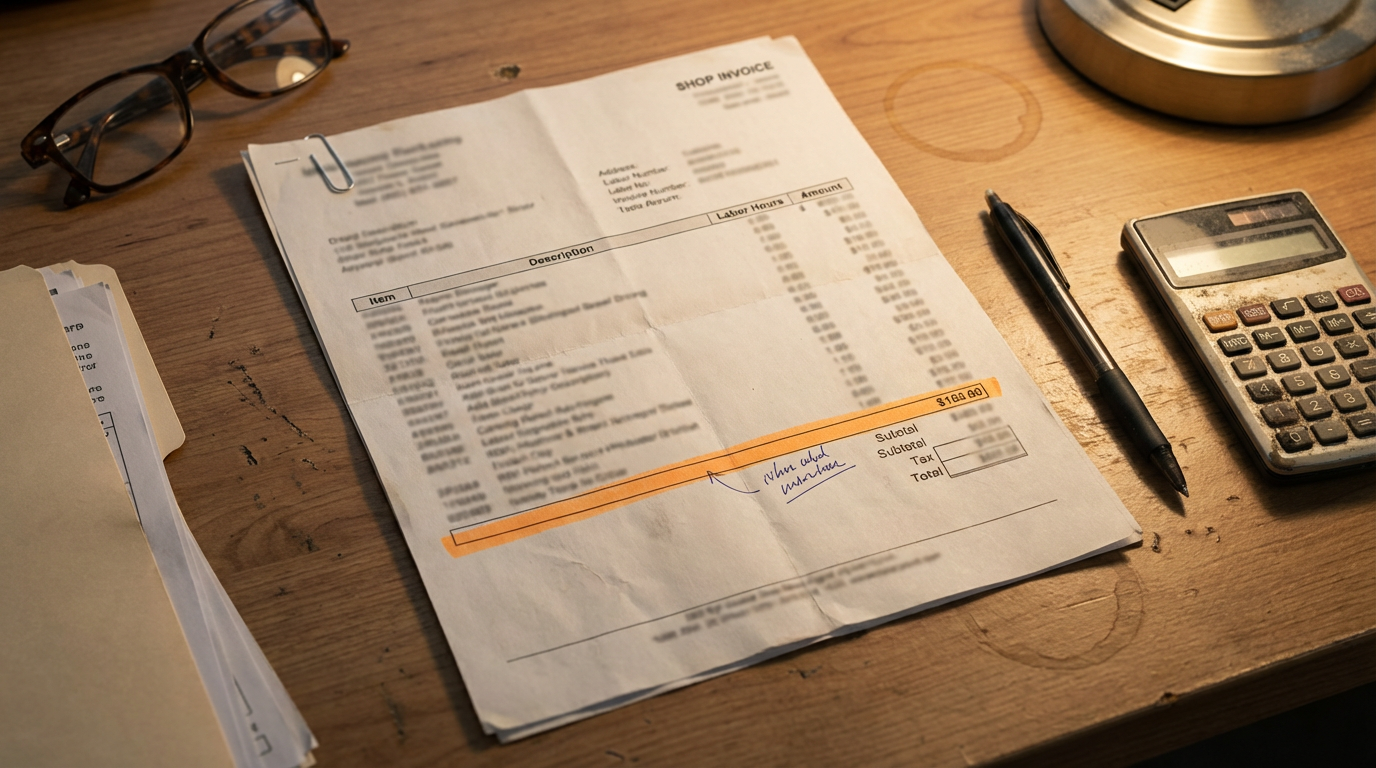
A two-line labor rate letter that costs a shop six figures a year if accepted without pushback.
The First Move: Don't Touch Your Posted Rate
When most shop owners get a labor rate reduction letter, their first instinct is to quietly update the default rate in CCC ONE, Mitchell, or Audatex so their estimates match what the insurer will pay. Stop. That is the single most expensive click you can make in this whole fight.
Your posted labor rate is your price. The insurer's rate is a reimbursement position. Those are two different things, and treating them as the same is what got the industry into this mess.
When you change your rate in the platform to match the insurer's number, three things happen at once. You've told every market-data scrape that your shop's rate just dropped. You've erased the visible deficiency on the estimate, so the customer has no idea there's a gap. And you've made the insurer's job easier on the next shop down the street, because your lower posted rate is now part of their "survey data."
Tim Lobsiger writes the rule plainly in his Fender Bender column: change the insurer's rate back to your rate on every estimate, and every supplement. Supplement three, four, or five. Make them override you each time. It's friction, it's annoying, and it works. Every time they have to manually reduce your rate, there's a record of it.
This matters for customer-pay work too. If your door rate is $67 because you've been matching the insurer, you're leaving money on every uninsured job, every upgrade, and every third-party claim. Raise your posted rate to what the skilled-labor market actually supports, and let the insurer come argue with it.
Document the Gap, Don't Erase It
When the insurer pays less than you billed, you have two options. You can adjust your invoice down to match their payment and move on. Or you can show the unpaid balance on the invoice and keep the deficiency on the books.
Option one feels easier in the moment. The RO closes, the customer gets their car, and you stop thinking about it. But you've just voluntarily written off labor you actually performed. Multiply that by a couple hundred repairs a year, and you've turned a rate cut into a gift.
Option two is harder for about ten minutes longer. You issue the invoice at your posted rate. You receive the insurer's payment. You leave the remaining balance visible as "insurance deficiency" or similar line. The customer gets a copy. You get a paper trail.
Here's what that paper trail does for you. It documents a specific dollar gap on a specific job on a specific date, tied to a specific insurer and claim number. It becomes evidence if you file in small claims court. It becomes exhibit material if your state association files a regulatory complaint or backs a labor rate bill. And if your customer pursues the unpaid balance against their own policy, they have a clean invoice showing what was charged versus what was paid.
Tom Franklin, a longtime collision industry consultant, and Barrett Smith of Auto Damage Experts both make the same argument. If you accept the reduced payment as payment in full, you've just confirmed that the insurer's rate is accurate. Their whole "prevailing rate" argument depends on shops taking whatever they're offered. Stop confirming their thesis.
This is a discipline thing. It takes slightly more effort at the counter. The shops that maintain this discipline build cases. The shops that don't, fund the insurer's next earnings report.
Every deficiency line on a closed invoice becomes evidence if the fight escalates to small claims or a DOI complaint.
Answer the Customer Before the Insurer Does
Here's the part most shops get wrong. The labor rate fight isn't really between you and the adjuster. It's between the adjuster's version of the story and your version, as told to the customer.
Whoever reaches the customer first usually wins the framing. Insurers know this. When a customer calls in their claim, the adjuster or call center rep is trained to say something like, "If the shop charges more than our rate, they're overcharging, and you may be responsible for the difference." That one sentence does a lot of work. It puts you in the "greedy" bucket before the customer has walked in your door.
You don't counter that by badmouthing the insurer. You counter it with policy language.
Most auto policies say the insurer will pay what is "reasonable and necessary" to repair the vehicle. Not "what we decide." Not "what our competitor shop accepts." Reasonable and necessary. Your job is to show the customer that your rate is supported by the realities of their repair. A 2024 Toyota RAV4 with a structural pull and OEM pre-scan requires specific equipment, current training, and documented procedures. Their policy says the insurer has to cover that. If there's a gap, it's between your customer and their insurer, not between you and your customer.
A working script for the intake conversation:
"Your policy covers a reasonable and necessary repair. Here's what's necessary on your vehicle, and here's why. My rate reflects what it actually costs to do this work correctly. If your insurer pays less than that, we'll document the gap on your invoice, and you'll have the paperwork to take back to them."
That's not confrontational. It's clear. The customer now understands three things: their policy protects them, your shop is doing its job, and any gap isn't your invention. When the adjuster calls them later, the narrative is already set.
Escalation When They Refuse to Budge
Holding your posted rate and documenting the gap gets you about 80% of the way there. For the other 20%, you need an escalation ladder.
Use Published Rate Data to Back Your Position
When an insurer claims your rate is above "prevailing," ask them for the data. Actual data. The survey methodology, the responding shops, the date range. Most won't provide it, because the answer is uncomfortable for them.
Meanwhile, get your shop listed in public-facing rate databases. National AutoBody Research's LaborRateHero.com lets you document your rate publicly and see what your neighbors post. The Massachusetts Auto Body Labor Rate Advisory Board's 2025 report cited NABR data pointing to $100.44 per hour as the minimum sustainable reimbursed rate for safe, compliant repairs. If an insurer is paying you $65, they're paying roughly 65% of what the math actually supports.
Small Claims and Assignment of Proceeds
When a specific claim is egregiously underpaid, small claims court is on the table. Greg Melartin of Matt's Body Shop in Spring Valley, MN took Progressive to small claims after the insurer underpaid a job by $416.57 and refused to match his $76 hourly rate. He won. He used Labor Rate Hero data to support his rate.
Phil Mosley of Valley Paint and Body in Amelia, OH has taken insurance companies to court 12 times since 2006 over underpayment, and won every case. He uses the Assignment of Proceeds form, recognized in courts across the U.S., to pursue the insurer directly instead of leaving the customer stuck in the middle.
Small claims isn't the right move on every unpaid hour. It's for the cases where the underpayment is documented, the customer will sign an AOP, and the pattern is clear enough to be worth the time.
Keep Your Carrier Survey Rates Current
This one is strategic. If you've been on State Farm's Repair Facility Survey at $65 per hour for four years, and your actual posted rate is now $85, update the survey. Your rate in their system is what they use to defend their "prevailing market rate" position. Leaving it stale is unilateral disarmament.
Update your survey whenever your technician count, your stall count, or your cost of doing business changes. Never discuss rates with competing shops while you do it. That's antitrust territory, and it's not a fight worth picking.
The Bottom Line
Insurance companies are cutting labor rates in 2026 because the industry is profitable, because shops have historically accepted the cuts, and because every shop that quietly absorbs a rate reduction becomes a data point that justifies the next one.
You have more leverage than you think. Your posted rate is yours. Your invoices can document what your shop actually charged versus what the carrier actually paid. Your customer is on your side once they understand what's in their policy. And when the underpayment is clear, courts in most states are more sympathetic to shops than most owners realize.
The only thing insurers need in order to keep doing this is for shops to silently take the cut. Don't be that shop.
Tools like Estimate Optimizer™ scan every estimate and supplement against carrier-paid rates, flag the deficiency line by line, and build the deficiency documentation for you, so you're not chasing it by hand on every RO. Whatever you use, use something. The shops keeping records are the shops winning this fight.
Can an insurance company just lower my labor rate without my agreement?
Yes and no. If you're on a DRP contract, the insurer can propose a rate change and you can accept, renegotiate, or leave the program. If you're not on a DRP, the insurer can set its own reimbursement position, but it cannot force you to lower your posted rate. Your rate is your price. Their number is what they'll pay. Any gap becomes the policyholder's responsibility under their policy.
What should I do when State Farm or another insurer reduces my labor rate?
Don't change your posted rate in CCC ONE, Mitchell, or Audatex to match. Keep writing estimates at your actual rate, document the gap on every invoice as an insurance deficiency, and explain the policy reality to your customer at intake. If the underpayment is significant and the customer agrees, an Assignment of Proceeds form lets you pursue the deficiency directly.
How do I prove my labor rate is reasonable if the insurer challenges it?
Use published data. National AutoBody Research's LaborRateHero.com documents posted rates by region. The Massachusetts Auto Body Labor Rate Advisory Board's 2025 report referenced $100.44 per hour as the minimum sustainable rate for safe, compliant repair. Your own posted door rate, charged consistently to customer-pay work, is also evidence. Insurer 'prevailing rate' surveys are rarely transparent and have been challenged in federal court.
Do I have to change my rate in CCC ONE to match the insurance company's rate?
No. Your rate in the estimating platform is your rate, not the insurer's. Changing it to match their reimbursement position creates three problems: it erases the visible deficiency on the estimate, it feeds lower data back to market-scrape systems, and it effectively tells the insurer their rate is accepted as yours. Keep your rate posted. Make them reduce it on their side every time.
Can I charge the customer the difference when insurance underpays the labor rate?
In most states, yes, depending on the policy language and state regulations. The customer's policy typically says the insurer will pay what is reasonable and necessary, not whatever the insurer decides. If there's a gap between your billed rate and the insurer's payment, the remaining balance is generally owed by the policyholder. Some customers pursue the insurer directly; an Assignment of Proceeds form lets your shop pursue it instead.