We covered the root problem in this week's auto body labor rate by state post: carriers are cutting rates without a documented reason, and most shops have never checked whether their own state tracks this data. Here's what an insurance labor rate state filing looks like when one exists, and exactly what to do when it doesn't.
What an Insurance Labor Rate State Filing Looks Like
Massachusetts is the clearest example on the books right now. Its Auto Body Labor Rate Advisory Board spent 2025 surveying the state: 1,497 registered shops were contacted, 476 usable responses came back, and 16 of the 17 insurers with at least 1% of the market, together writing 95% of the state's auto policies, reported their numbers too. The final report, published December 2025, is public record.
The numbers inside it are specific. Insurers reported paying body and refinish labor around $49 an hour, in a range from $43 to $55. Shops' own posted rates averaged $68 an hour, with a median of $65. The board itself adopted no recommendation, but one economist's individual submission attached to the report proposed a fair rate centered on $83 an hour. Three numbers, one report, all documented: what carriers say they pay, what shops charge, and what one economist's submission called fair.
Rhode Island works differently but gets to a similar place. Every insurer with 1% or more market share has to file prevailing labor rate reports for each shop classification directly with the state's Department of Business Regulation, every year, by September 1. California's fair claims regulations set a standardized labor rate survey for insurers that choose to base payments on a survey, and those surveys are filed with the state's Department of Insurance. Three states, three different mechanisms, the same underlying fact: a documented labor rate number exists somewhere outside the shop's own invoice stack.
A 2022 Honda CR-V needing a quarter panel and blend on the adjacent door isn't an unusual repair order. At a $49-an-hour paid rate versus a $68-an-hour posted rate, the gap on that single job runs into real money before parts are even discussed. That's the gap a filing like Massachusetts's puts in writing, instead of leaving it to a phone call between a shop and an adjuster who has no incentive to split the difference.
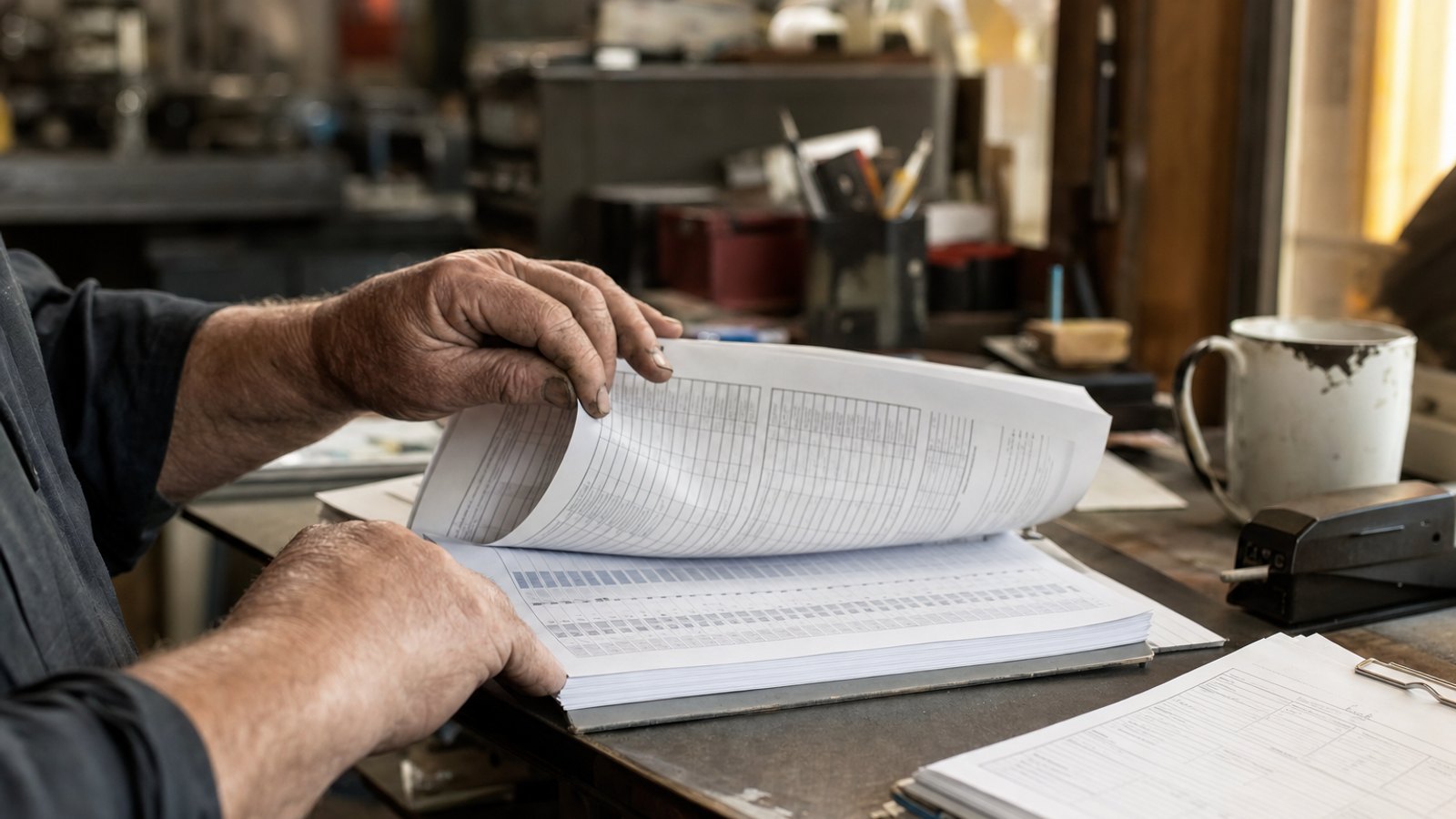
Have You Ever Asked Your State This Question?
Here's the self-diagnostic. Have you ever called your state's department of insurance and asked, directly, "does this state require insurers to survey or file auto body labor rates?" If you haven't, you're not alone, and you're also not in a position to know whether a filing like Massachusetts's or Rhode Island's already exists for your market. That's red territory: an unanswered question, not a documented no.
If you have asked and confirmed there's no filing requirement in your state, you're not stuck. You've moved to a different, equally legitimate source, which puts you in green territory the moment you use it consistently. The red zone isn't "my state doesn't have a filing." The red zone is never having asked the question at all, and running every rate conversation on memory and frustration instead of a document you can point to.
Write the question down and call this week. One phone call to a state DOI consumer line, or one search of your state's insurance department website for "auto body labor rate survey," tells you which category your shop falls into. That single call is the entire first step. Everything after it depends on the answer.