Learning how to avoid auto body supplements starts with the first file. Skeeter says his first supplement was approved in under 10 minutes with full OEM documentation.
Can You Avoid Auto Body Supplements on the First Estimate?
Skeeter's Body Shop in Garden City, Kansas, sent its first supplement with full OEM documentation attached. By Skeeter's account, it was approved in under 10 minutes. The file made the argument before anyone had to make one.
Supplements are common across the industry, and they don't all come from the same place. Some of the difference comes from the car. Some of it comes from what the first estimate carried when it left the building.
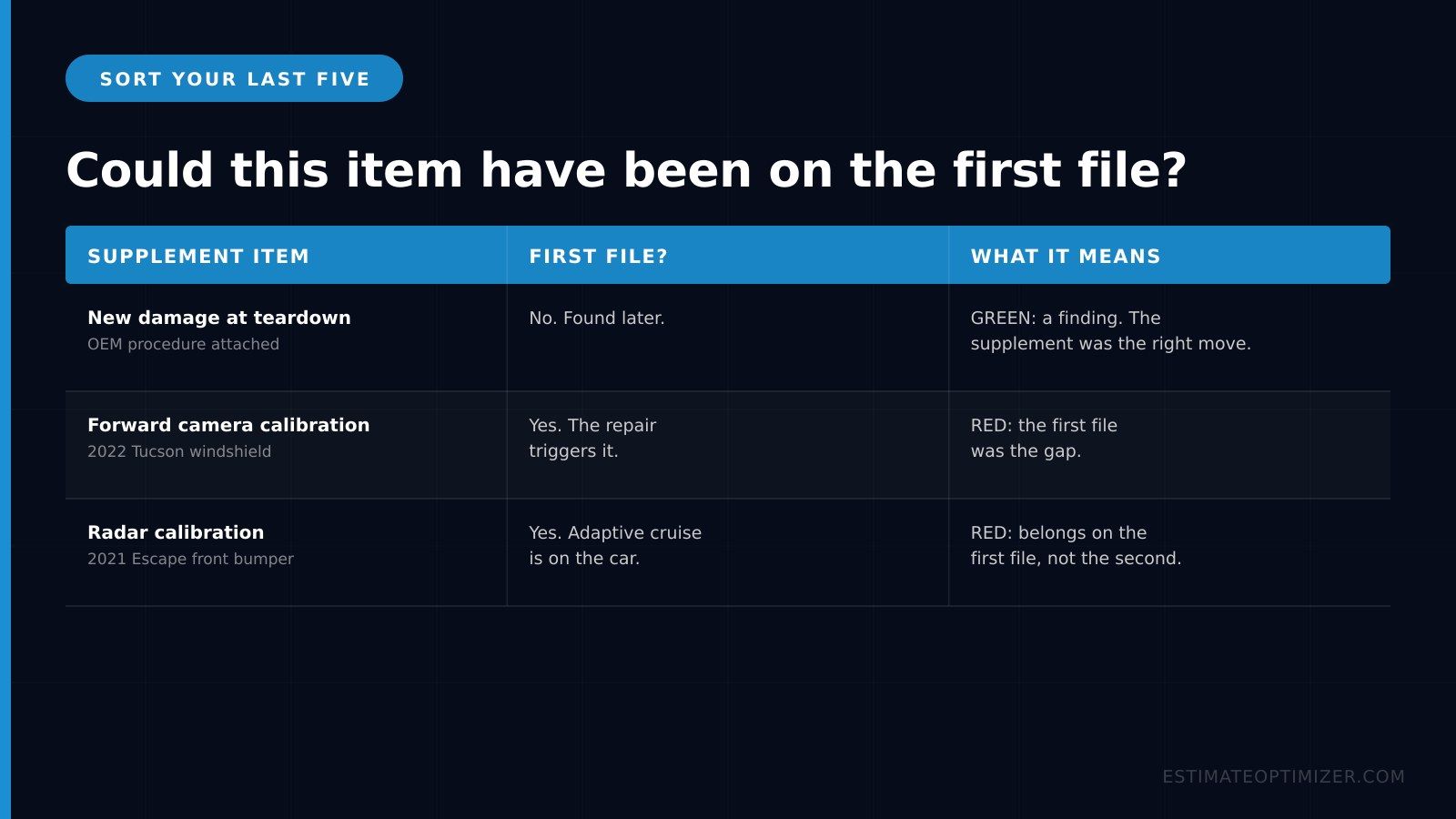
Skeeter's first supplement was the complete file, sent once. Picture a 2022 Hyundai Tucson with a windshield replacement. The estimate has the glass and the trim. If the forward camera calibration and its OEM procedure aren't on that estimate, the supplement is the first time anybody writes the operation down.
The dollars matter, but the reason matters more. A supplement for work the first file should have carried asks the adjuster to reconsider. A supplement for new damage found at teardown is a finding. Only one of those is easy to defend.

Where Does Your Shop Sit on the Supplement Scale?
Take the last five supplements your shop sent. For each one, ask a single question: could this item have been on the first estimate? If yes, the first file was the gap. If no, the damage showed up later, and the supplement was the right move.
Now line them up on a scale. Green means every supplement had a reason you could have documented on day one, such as new damage found at teardown with the OEM procedure attached. Red means most of them were items the first file should have carried.
Red items are the part of your supplement cost your shop can control. Every back-and-forth on a supplement also costs estimator time on the phone and in the file, and that time never shows up on a repair order. Where do you land?
Keep a simple list of each supplement, the reason, and whether it was on the first file. Review it monthly. The pattern shows which operations keep slipping, and that tells you where to tighten the write-up.