Back to Blog
Supplement Process

I Stopped Writing Estimates for Adjusters. Here's What Changed.

5 min read
Share
A shop owner's hands turning through a thick four-page printed estimate on a workbench with handwritten notes visible in margins beside each line item

I was writing collision repair estimates for an insurance adjuster and couldn't sleep at night. What are they going to say? What are they going to change request? That loop runs in your head at 11pm when you should be done for the day.

We got into this because we love vehicles. Love people. Want to fix cars right. And somehow we ended up spending half our mental energy dreading a phone call from someone who wasn't in the shop, didn't see the damage, and has every financial incentive to cut our bill.

That's not a way to live.

The F-150 That Changed How I Write Every Estimate

There was a Ford F-150. $5,900 job. Kept getting pushback.

Not denial. Pushback. The kind where they don't say no outright, they keep asking questions, kicking it back, waiting for you to give up and take less.

I decided to do something different. I spent two hours on that estimate. Every single line item got a note. Not a short note. A full explanation tied to the OEM procedure, the vehicle spec, the documented reason why that operation was required on that specific repair for that specific truck. Four pages. Detailed.

I sent it to State Farm.

Never heard back. Just got the payment.

I stood there looking at the check thinking, no kidding.
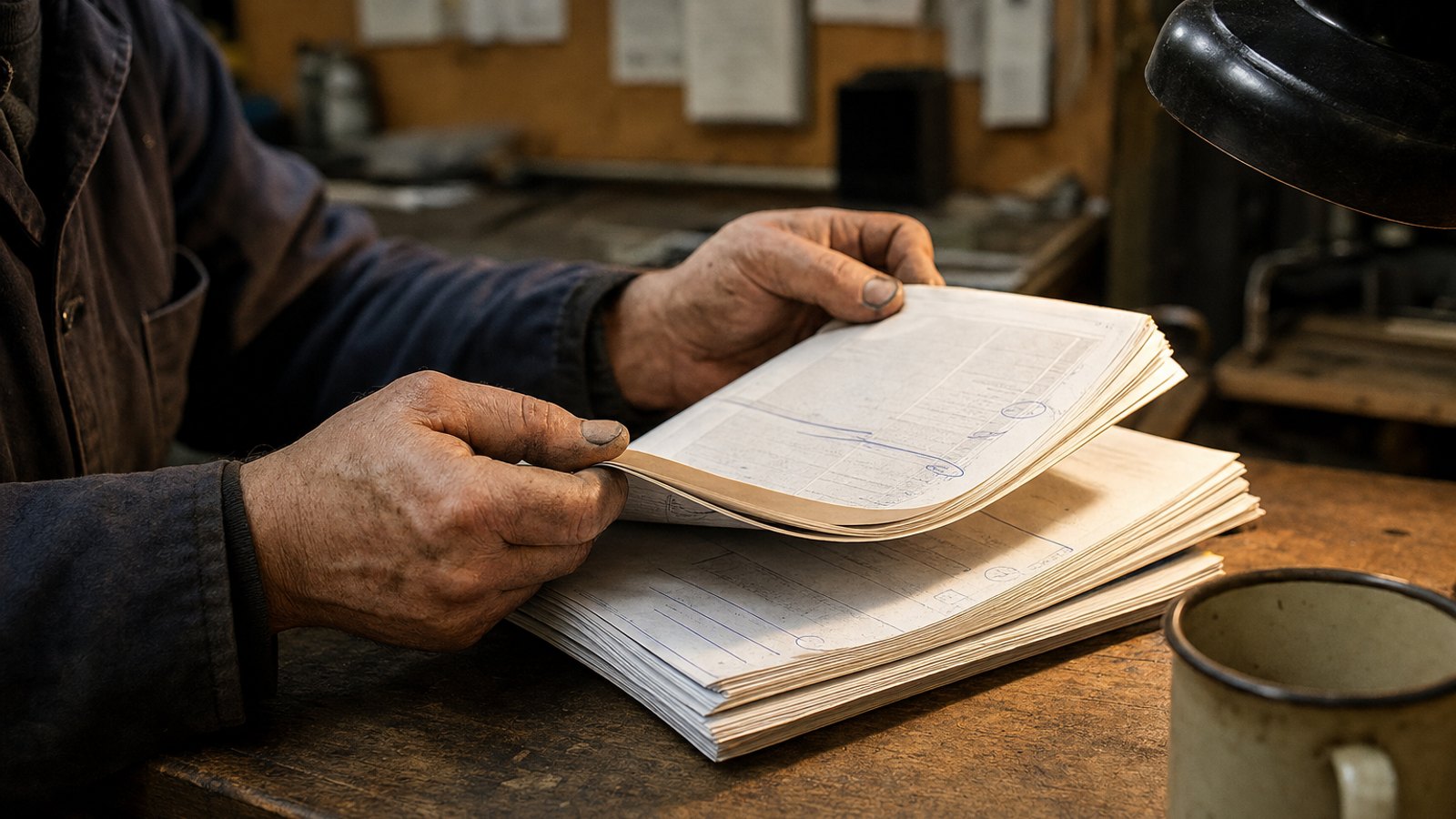
A shop owner's hands turning through a thick four-page printed estimate on a workbench with handwritten notes visible in the margins beside each line item
Two hours on one estimate. Every line documented. The check came without a word back.

Then I Did It on a Tesla. Same Result.

$7,900 job. I wrote it the same way. Every operation tied to documentation. Every procedure cited. Not for the adjuster. For a judge who had never seen a collision repair estimate before and needed to understand why every line was there.

Full approval. First submission.

That was the moment I understood what I had been doing wrong for years.

I had been writing estimates for adjusters. Writing them to be understood by someone who already knew the shorthand, who would skim the totals and argue the details. Writing them to be negotiated.

When you write for a judge, you write to stand. Every line has to hold up to someone who knows nothing about writing collision repair estimates for insurance adjusters and can only judge whether the documentation justifies the charge. That's a completely different document.

The adjuster doesn't have to approve it because they like you. They approve it because they can't argue with it.

What the Shift Actually Requires

It takes longer on the front end. That two hours on the F-150 felt like a lot. After you do it a few times, you build a system and it comes down. You get faster at pulling procedure citations, faster at writing line notes that hold up, faster at the whole thing.

But the real cost isn't time. It's the belief that your documentation needs to be that thorough.

Most estimators write for speed. Write for the adjuster who will understand the shorthand. Write with the assumption that anything missing will come up in the supplement and that's fine. That assumption is where the money goes.

Every supplement round is a documentation gap in the original file. Every pushback call is a line without a note. Every reduced payment is an operation without a cite.

I've talked to shop owners who are still in that loop. They know the work is right. They know the charge is fair. But they can't prove it fast enough to matter. That's not a knowledge problem. That's a documentation problem. And a documentation problem has a documentation fix.

None of that has to happen. The whole fight starts with what you send them the first time.

A lone shop owner sitting at an estimating workstation late at night with a single desk lamp illuminating a printed repair estimate and an open laptop displaying technical documents
The sleeplessness stops when the file is built to hold up, not built to get through.

The Bottom Line

Every estimate is a legal document. I know that sounds dramatic until you've had one go to arbitration or watched a carrier pull a $31.5M verdict out of an OEM procedure violation. When you write it for an adjuster, you're writing it to be negotiated. When you write it for a judge, you're writing it to stand. The carriers know the difference. The shops that sleep well at night know the difference too.

When did you realize the documentation was the actual fight? What was the job that changed how you think about it?

Related Articles

Frequently Asked Questions

Why do collision repair estimates get pushed back by insurance adjusters?
Most estimates get pushed back because line items lack documentation that justifies the charge to someone unfamiliar with the repair. When an operation is entered without a note or OEM procedure citation, the adjuster has no obligation to approve it and every incentive to question it. Documentation removes the question before it gets asked.
What does it mean to write an estimate for a judge instead of an adjuster?
Writing for a judge means every line item is documented as if the reader has no background in collision repair and needs to understand why that operation is required for that specific vehicle. OEM procedure citations, photo evidence, and specific line notes replace shorthand. The result is a file the adjuster cannot argue with, not one they are expected to understand on trust.
How do line notes improve supplement approval rates?
Line notes tie each operation to a documented requirement, removing the adjuster's ability to question whether the operation was necessary. Operations with OEM procedure citations tied to the specific vehicle get approved at a significantly higher rate on first submission. Most supplement rounds exist because the original estimate lacked these notes.
How long does it take to write a properly documented collision repair estimate?
The first time you write a fully documented estimate it takes longer, sometimes two to three hours for a complex file. After building a documentation system with templates for common operations and pre-pulled OEM procedure references, the same file comes down to 20 to 30 minutes. The front-end investment is real. The back-end reduction in supplement rounds pays it back quickly.
Is writing detailed collision repair estimates worth the time if the carrier might still deny?
Yes. A well-documented estimate shifts the burden of proof to the carrier. They must document their reason for denial against a specific OEM citation, which is a different legal and procedural position than questioning an undocumented line. Properly documented files also provide the foundation for formal dispute, arbitration, or DOI complaints if the carrier denies documented, OEM-owed work.
Share this article
supplementsshop ownerscollision repairinsurance claimsOEM proceduresestimate scrubbingrevenue recovery
Back to Blog
Follow us