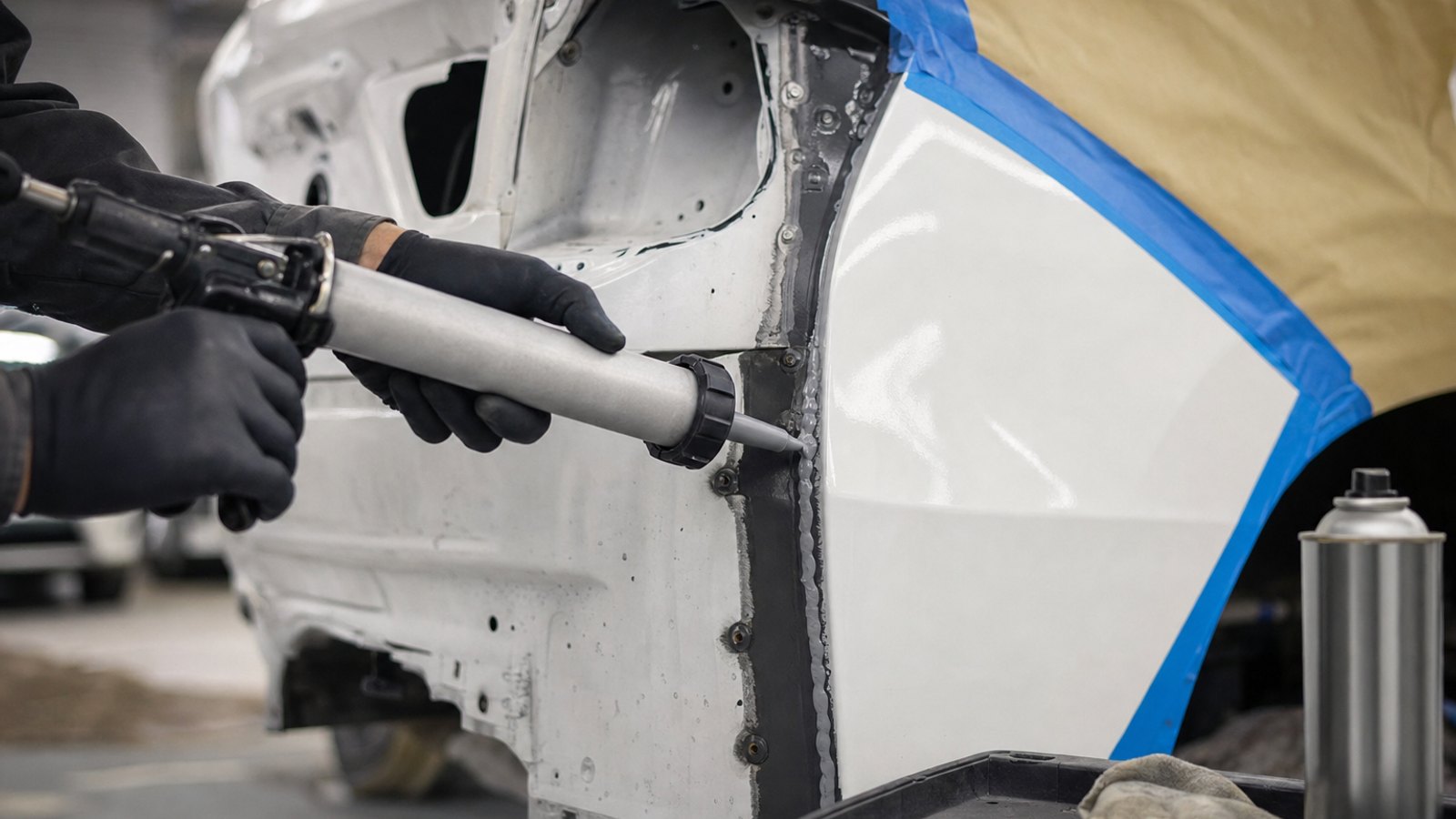
The CCC ONE default not-included operations list is one of the most expensive settings most shop owners have never looked at. Your estimator isn't always making a judgment call when they leave a line off the estimate. Sometimes the software already made it for them.
We covered the structural reason for this in yesterday's post on incomplete estimates. This post goes one level deeper: five specific operation categories where CCC ONE defaults to not-included, what each one is worth, and what it looks like to bill for them correctly.
What the P-Pages Actually Say About Software Defaults
The MOTOR Guide to Estimating, the P-pages, is the document that defines what is and isn't included in CCC ONE's labor times. It is publicly accessible through the DEG (degweb.org) and through SCRS. The SCRS Guide to Complete Repair Planning documents over 800 not-included operations referenced across the major estimating platforms.
Most of these are not obscure procedures. They are standard operations that happen on almost every structural repair. The problem is that the P-pages are rarely read front to back. Estimators learn by doing, and what the software produces is treated as what the job costs. The operations that never appear on screen are the ones that never get billed.
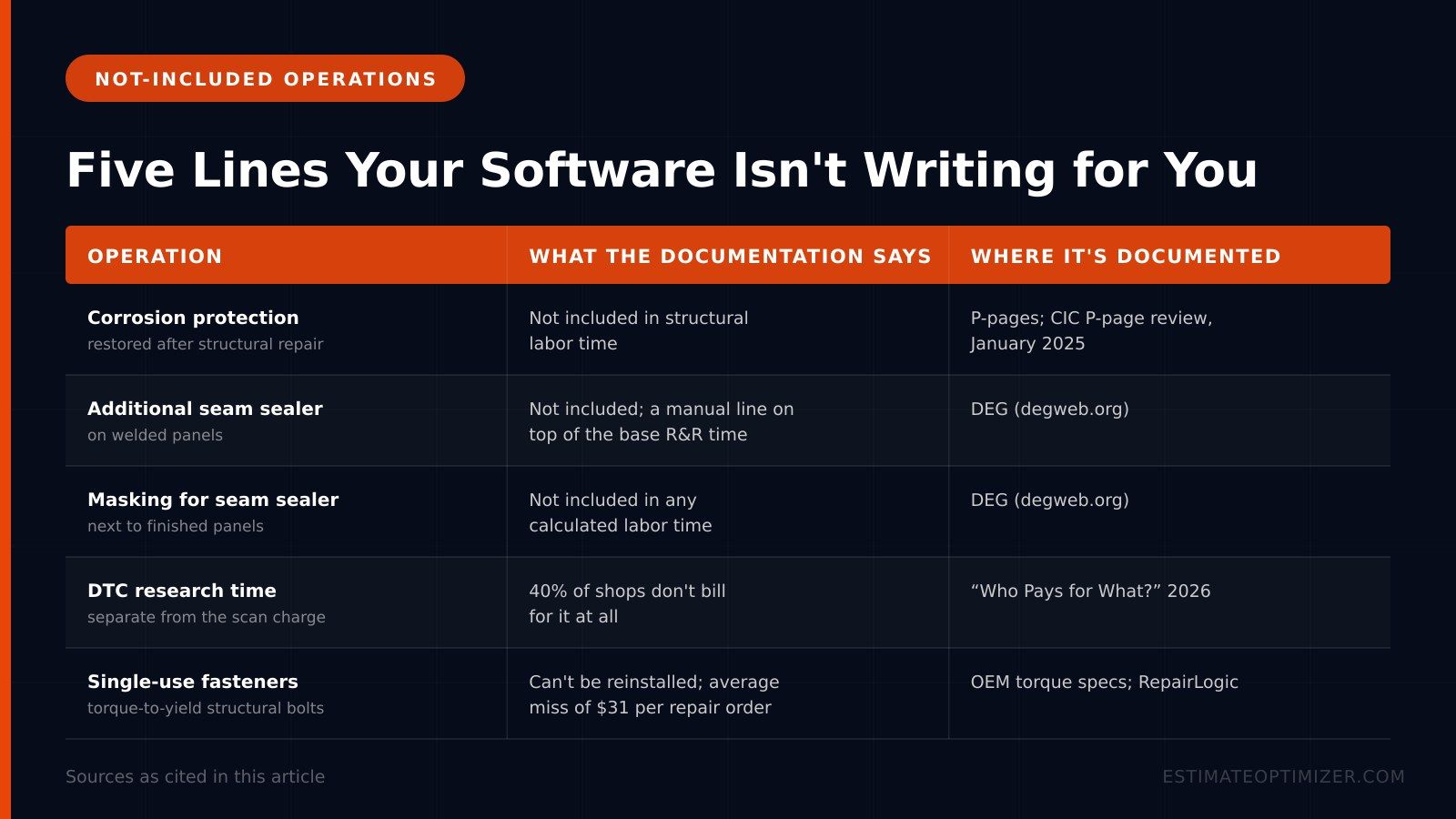
Here are five categories where the P-pages are explicit and where shops consistently leave money on the table.
Five Lines Your Software Isn't Writing for You
Corrosion protection application. The P-pages are unambiguous: restoring corrosion protection after structural repair is not included in the structural labor time. CIC's January 2025 review of P-page updates confirmed this language remains current across the CCC system. On any panel that gets welded, cut, or bare metal exposed, the corrosion protection step is a separate billable operation. On a 2022 Nissan Sentra with a rear quarter panel replacement, that's a line your estimator has to add manually. The software won't put it there.
Additional seam sealer on welded panels. The DEG has published this one explicitly: additional seam sealer on welded panels is not included. The P-pages language is specific. Replacing seam sealer that was removed with the part is addressed in the base time. Any additional seam sealer, meaning the OEM-specified application on the new panel or weld seam, requires an on-the-spot evaluation and a manual line entry. This is separate from, and in addition to, the base R&R time. Shops that don't add it are donating it.
Masking for seam sealer application. The DEG also documents this one. When seam sealer is applied to areas adjacent to a finished panel, masking is required to protect the finish. That masking operation is not included in any calculated labor time. It is a third separate line that most estimates never show.
DTC research time. The 2026 "Who Pays for What?" survey found that 40% of shops are not billing for DTC research time at all, separate from the scan charge. Of those who do bill it, only 21% get paid always or most of the time by the eight largest national insurers, but 46% get paid at least some of the time. The shops not billing for it are getting paid exactly that: nothing. On a 2024 Kia Telluride with multiple fault codes after a front-end collision, researching those codes is documented time that can be billed. It doesn't appear on a standard estimate unless someone adds it.
Single-use fasteners on structural components. Any OEM that publishes torque-to-yield bolt specifications, and most do, classifies those fasteners as single-use. They cannot be reinstalled after removal. The part cost is typically in the $15 to $40 range per fastener, but a structural repair involving subframe components can have eight to twelve of them. RepairLogic data puts the average miss at $31 per repair order. Add them up across a week of work and you'll see a number that shouldn't be zero.