Back to Blog
Estimate Scrubbing

Your Estimator Has 20 Years of Experience. The Software Still Scrubs the Estimate.

6 min read
Share
A gray-haired veteran collision estimator frowning at a printed repair estimate at a cluttered shop counter, with a front-damaged pickup in the bay behind him.

Why did insurance cut my repair estimate again, on a file your most experienced estimator wrote line by line, the same way he's written five thousand files before? If that question is sitting in your inbox this week, the twenty years didn't fail. The documentation did.

Every shop owner has an estimator he trusts with his eyes closed. He catches the hidden damage behind the bumper the greenest tech walks right past. He knows the blend formula is wrong before he even opens the estimate software. None of that stops the scrub. Experience tells him what's wrong with the car. It has never been the thing that gets the carrier to pay for it.

Why Did Insurance Cut My Repair Estimate When My Estimator Did Everything Right?

Walk into the estimating software and the scrub isn't waiting for a human adjuster to disagree with your estimator. It's already built into the defaults before anyone on the carrier side looks at the file.

Take a 2020 Chevrolet Silverado 1500 with frame rail damage. Your estimator calls for the OEM-required measuring and pulling procedure on the first pass, because he's done a hundred Silverados and knows exactly what that repair needs. CCC ONE's default labor time for that line doesn't carry the citation, the photo, or the measurement printout. So the line goes out looking like a judgment call instead of a documented requirement. The carrier's system doesn't scrub it because it doubts your estimator. It scrubs it because nothing in the file proves the number is correct.

The same thing happens with your most seasoned guy and your newest hire. The software doesn't have a field for "this estimator has been right about this exact call for fifteen years." It has a field for whether the line carries a citation. That's the whole mechanism, and it runs on every file that passes through it, no matter whose name is on the estimate.

That's the part twenty years of trade knowledge can't reach. The software doesn't know how long your estimator has been doing this. It only reads what's attached to the line.
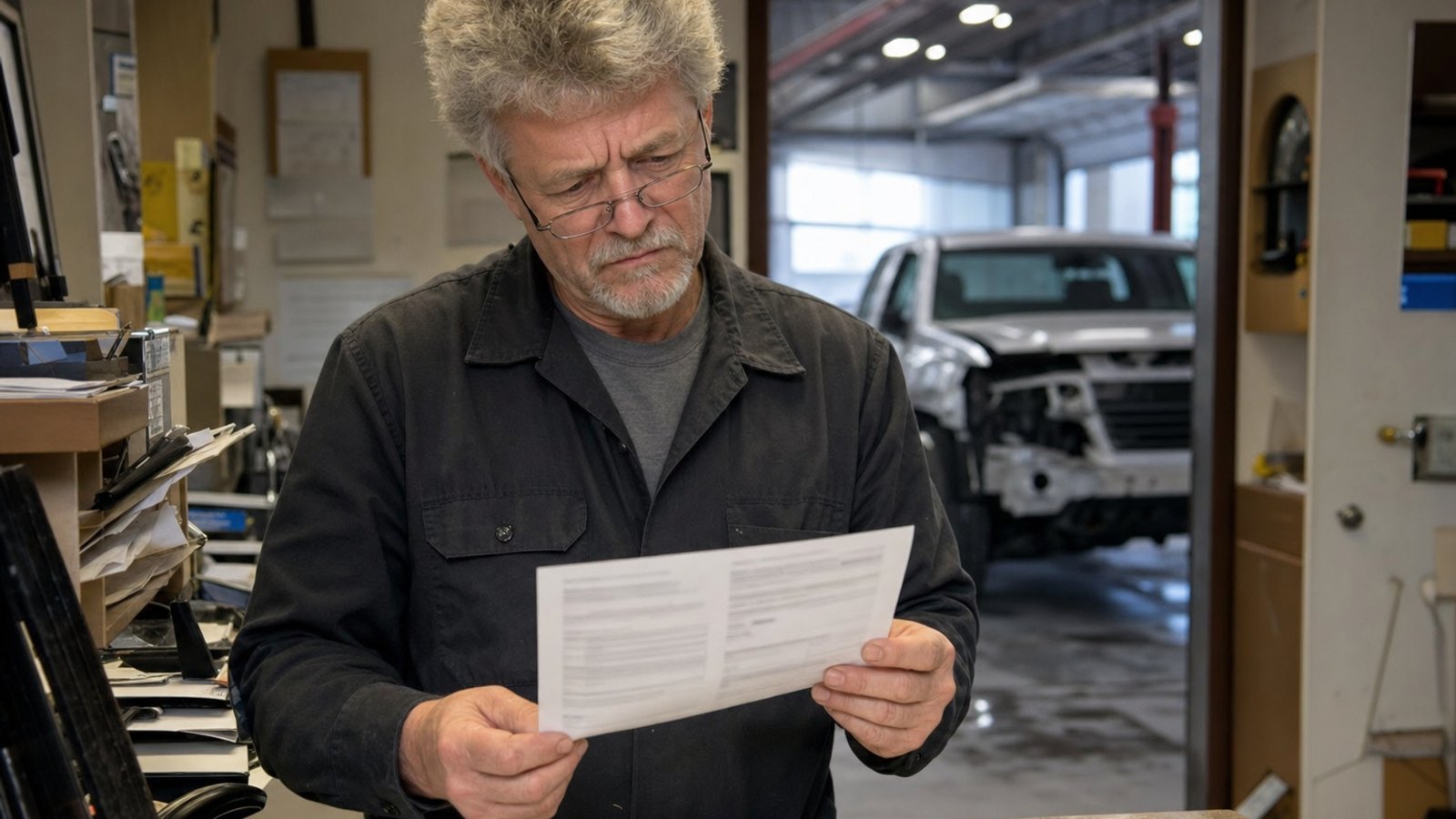
A gray-haired veteran collision estimator frowning at a printed repair estimate at a cluttered shop counter, with a front-damaged pickup in the bay behind him.
A veteran estimator's call still gets scrubbed when the line leaves the building without a citation attached.

What Twenty Years in the Trade Doesn't Fix

Across the 288 estimates in EO's own audit data, the average works out to about $989 in potential additional repair dollars identified per estimate (as of Oct 24, 2026). That number doesn't track how long the estimator has been in the trade. It tracks whether the OEM citation, the photo, and the line note made it into the file before the estimate left the building.

Single-use parts alone average $31 missed per repair order according to RepairLogic data, and that's not a knowledge gap. Most estimators with any tenure know a given fastener is single-use the moment they touch it. The gap is between knowing it and proving it on paper where the carrier's system can see it.

Supplements are routine after teardown. A supplement isn't automatically a sign your estimator missed something the first time. When the same lines keep coming back for proof, it's a sign the first submission wasn't built to stand on its own.

Zoom out past any one shop and the pattern holds. Across the system-wide audit data, 288 estimates turned up 4,441 missed operations and $284,849.24 in potential additional repair dollars identified (as of Oct 24, 2026). That's not 288 estimators who didn't know their trade. It's 288 files that went out the door without the proof attached to back up what the estimator already knew.

Here's the number that tells you where you stand. What's your shop's first-submission approval rate, the percentage of supplements and line items that get approved without a fight on the first try? Under 70% is red territory, no matter how many years are on your estimator's resume. Over 80% is green by a common industry benchmark. For comparison, about 90% of flagged operations get approved for EO shops that follow the line-addition training and send us their pushback and denials. That gap has nothing to do with talent in the shop and everything to do with what's in the file before it's submitted. If your shop's number is sitting under 70%, it's tempting to blame the adjuster you're dealing with that day. Start with the file before you start with the phone call.
How to Stop the Software From Scrubbing What Your Estimator Already Got Right

Your estimator's read on the car is still the starting point. Nobody is replacing that. But the read only survives contact with the carrier's system if it comes with proof attached, not if it rides on his reputation.

Take a 2022 Honda CR-V in for front-end work. Your estimator knows on sight that the adjacent rear door panel needs a blend to match. He's right, and he's been right about this a hundred times. If that line goes out as his call, it gets scrubbed as an opinion. If it goes out with the OEM refinish procedure cited, a photo of the panel transition, and a line note explaining why the blend is required on this specific repair, it reads as a documented requirement instead of a judgment call.

Skeeter's Body Shop in Garden City, Kansas got its first supplement approved in under ten minutes. The estimators who build its files are skilled, but speed like that doesn't come from skill alone. It comes from a file that carried the OEM citation, the photo, and the line note before it ever reached an adjuster's desk.

That's the whole shift. Stop treating your estimator's knowledge as the thing that wins the argument. Start treating the file he builds as the thing that does. Tools like Estimate Optimizer™ scan the estimate against OEM procedure databases and attach the citation and the photo automatically, so the proof travels with the line whether or not the estimator who wrote it ever gets on the phone with the adjuster.

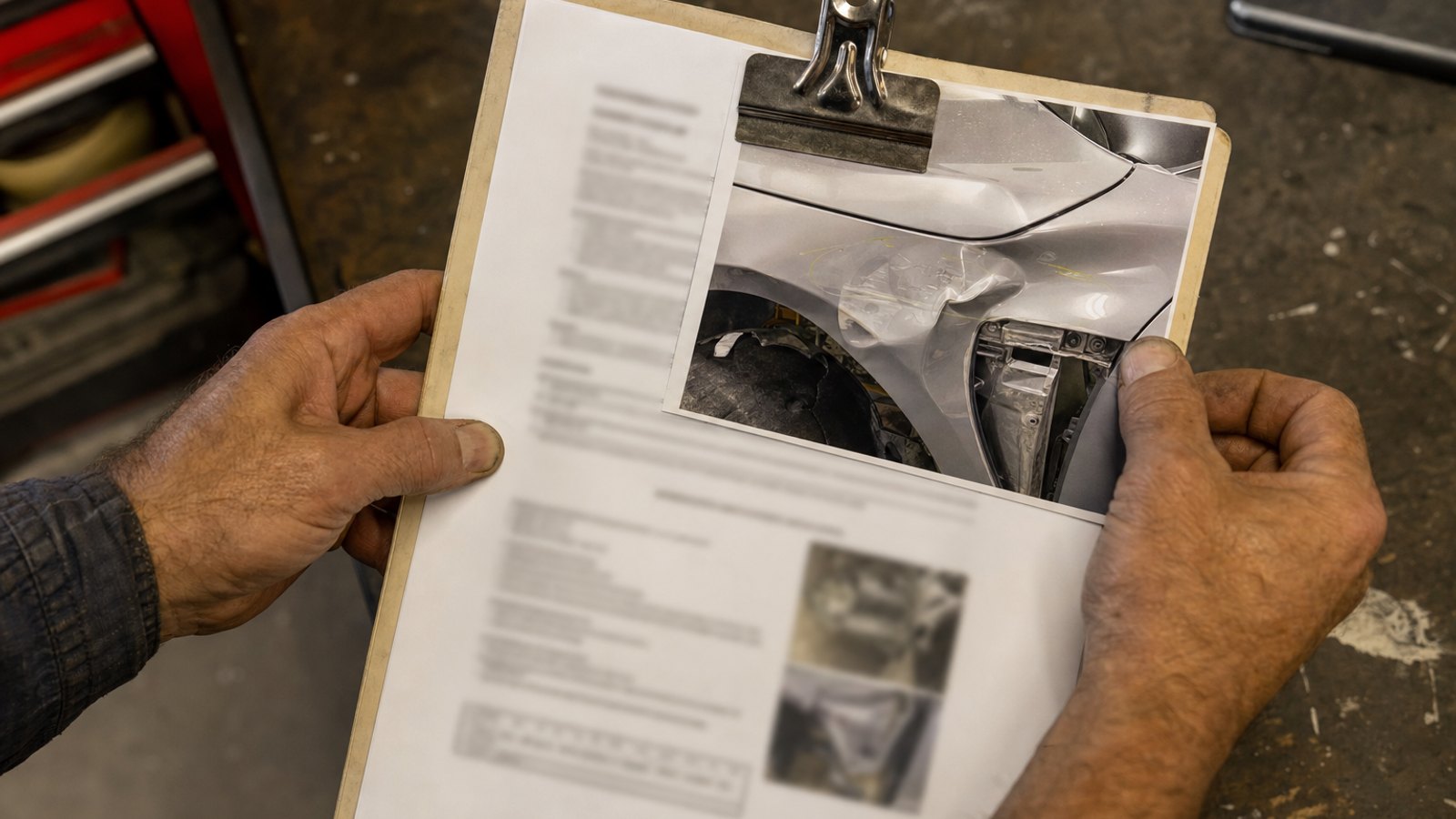
Close-up of a collision estimator's weathered hands holding a clipboard with a repair procedure page and a clipped photo of a damaged silver fender.
The OEM citation and the photo are what make an experienced estimator's call survive the scrub.

The Bottom Line

Experience still matters. It's how your estimator spots the damage before anyone else in the building does. But spotting the damage and proving it to a system that scrubs by default are two different skills, and only one of them survives the scrub. Twenty years teaches a man what's wrong with the car. The file is what gets him paid for fixing it right.

Related Articles

Frequently Asked Questions

Why did insurance cut my repair estimate if my estimator has been doing this for twenty years?
Insurance estimating software defaults to removing or reducing operations that aren't backed by proof, not by estimator experience. CCC ONE and Mitchell apply the same default rules to every file regardless of who wrote it. The fix is attaching the OEM citation, a photo, and a line note before submission, not relying on the estimator's reputation.
Does a more experienced estimator get fewer line items cut from an estimate?
Not by itself. Experience helps your estimator spot what the car needs, but the estimating software scrubs lines based on whether proof is attached, not on who wrote the estimate. Shops with decades of combined estimating experience still see the same default removals until the documentation changes.
Why does CCC ONE remove line items even when the estimator wrote them correctly?
CCC ONE's default labor times and not-included lists apply the same way to every estimate, correct or not. If a line doesn't carry an OEM citation or supporting photo, the system treats it as unproven and flags or removes it. That default behavior runs independent of the estimator's skill level.
What's the real difference between what my estimator knows and what insurance will pay for?
Your estimator's knowledge tells you what the car needs. What insurance pays for depends on what the file proves. Those are two different things, and documentation, not expertise, is what closes the gap between them.
How do I stop insurance from cutting the same line items every time?
Attach the OEM procedure citation, a photo of the damage or condition, and a line note explaining the requirement before the estimate goes out, not after a denial. For shops that follow Estimate Optimizer's line-addition training and send back their pushback and denials, about 90% of flagged operations get approved.
Share this article
estimate scrubbinginsurance claimsCCC ONEMitchellshop ownerscollision repairauto body
Back to Blog
Follow us