Back to Blog
Estimating Platforms

What the P-Pages Actually Say: Reading the Not-Included List Before It Costs You

5 min read
Share
Printed P-pages from MOTOR Guide to Estimating spread open on a cluttered shop estimating desk beside a coffee cup and pen

The P-pages name every operation that isn't in your estimate's labor time. That list exists before the job starts. Most shops don't read it until after the carrier pushes back.

What "Not Included" Actually Means on Your CCC ONE Estimate

When you covered how CCC ONE's defaults are structured in this week's piece on the platform's P-page system, the point was this: "not included" isn't a carrier decision. It's a published definition. The MOTOR Guide to Estimating, which powers CCC ONE labor times, explicitly documents what each time calculation covers and what it doesn't. Those exclusions are not hidden. They're in writing, available through the DEG at degweb.org and through the SCRS at scrs.com.

Here's what that looks like in practice. On a RAM 2500 with aluminum liftgate damage, the platform's default output covers the structural repair time. What it does not cover: the corrosion protection sequence required for aluminum-to-steel contact points, the trial fit operations to verify camera alignment and liftgate fitment before final installation, the camera R&I for the rear backup system, the jamb refinish on the liftgate opening, and roughly a dozen related operations that Stellantis OEM procedures call out specifically for this vehicle on this repair.

That shop documented 16 missed operations total. They were on their fifth supplement round. The adjuster wasn't inventing obstacles. The estimate never named what the job required.
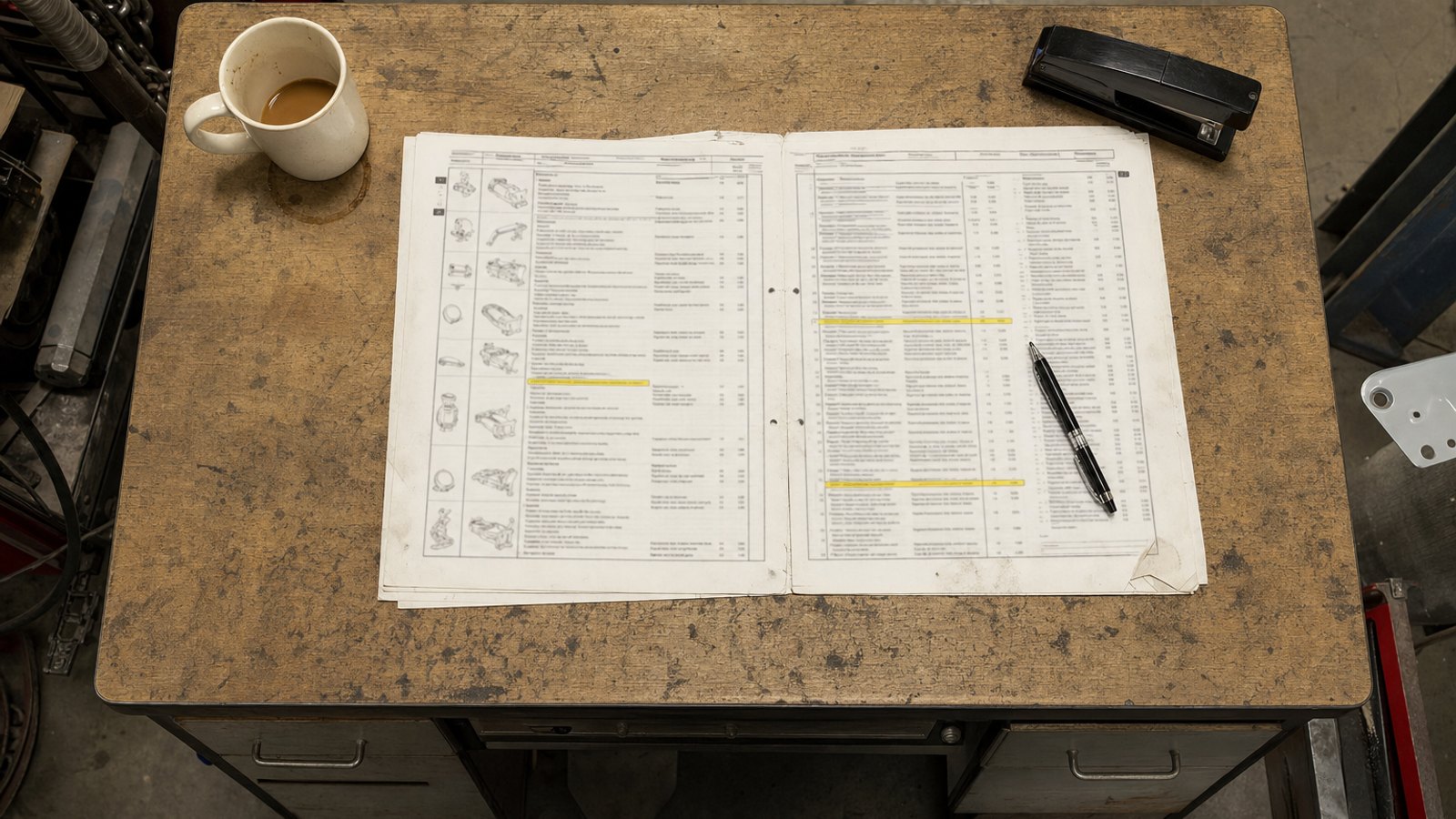
Printed P-pages from MOTOR Guide to Estimating spread open on a cluttered shop estimating desk beside a coffee cup and pen
The P-pages are a published document. Most shops treat them as background reading instead of a billing checklist.

How Many Supplement Rounds Does It Take Before You Get Paid?

Pull any repair order from the last 30 days. Count the number of supplement rounds before the carrier paid. Each additional round after the first is a P-page category your estimate didn't name on first submission.

One round is normal. Two rounds usually means hidden damage surfaced during teardown. Three or more rounds on a job with known damage up front is a documentation problem. The work was always required. The estimate just didn't say so with the vocabulary the P-pages define.

The SCRS Guide to Complete Repair Planning documents more than 800 not-included operations across the estimating systems. That guide exists precisely because shops were leaving legitimate work off estimates, not because they didn't know how to do the repairs, but because they didn't know the published vocabulary that makes those operations billable. Most of those 800 operations are performed on every significant repair. Most never appear on the first estimate.

CCC's own published data shows 63% of repairs require a supplement. That number isn't about adjuster friction. It's about the gap between platform defaults and the named procedures those defaults exclude. Where does your supplement rate land? If it's above three rounds per job on average, the P-pages are where the answer is.

Three Categories to Check on Every Job Before the Estimate Leaves

You don't have to read every page of the Guide to Estimating on every job. But there are three not-included categories that show up on a high percentage of modern vehicles and should be a standard check before any estimate goes out.

Corrosion protection. The P-pages are explicit: restoring corrosion protection after repair is not included in the structural labor time. For aluminum panels specifically, the OEM procedures often require conversion-coat pre-treatments and seam sealer application at contact points. These are separate billable operations. They require documentation. The CIC January 2025 review of P-page updates confirmed that corrosion protection application remains firmly outside the calculated labor time across the CCC system.

Trial fit operations. One test fit is included in the labor time. Any second fitment, such as verifying dimensional accuracy after a liftgate install or confirming camera alignment before final torque, is explicitly not included. On a backup camera-equipped vehicle like the RAM 2500, that second fitment is required by the OEM. It goes on the estimate with the procedure cited.

Masking and jamb refinish. CCC's own P-pages confirm that masking the jambs isn't included in the refinish time. Jamb refinish on a liftgate opening is a separate operation. It gets missed on the first estimate on the majority of jobs it applies to.

Shop estimator in his 40s writing line items by hand on a printed repair order at a worn wooden desk with OEM procedure pages nearby
Each not-included category is a named line item on the estimate once you know where to find it in the P-pages.

The Bottom Line

The P-pages are not a mystery document. They're published, publicly available, and updated regularly. The DEG tracks every change. SCRS has catalogued 800+ operations the systems don't include by default. The vocabulary is there before the job starts. Shops that read the not-included list before the estimate leaves their desk stop arguing from memory. They argue from the same published standard the carrier uses to review the file.

Tools like Estimate Optimizer™ cross-reference estimates against the P-page not-included taxonomy and flag the gaps automatically, before submission, not after the third supplement round.

Specificity is the entire game. The P-pages give you the words.

Related Articles

Frequently Asked Questions

What are not included operations on a CCC ONE estimate?
Not included operations are procedures that fall outside the labor time CCC ONE calculates for a given repair. The MOTOR Guide to Estimating P-pages define exactly what each labor time covers and what it doesn't. Common examples are corrosion protection application, trial fit operations beyond the first fitment, masking and jamb refinish, and camera R&I on backup systems. These are legitimate, required operations that don't appear in the platform's default output.
Where can I find the CCC ONE P-pages?
The MOTOR Guide to Estimating P-pages are accessible through the CCC ONE platform directly and through the Database Enhancement Gateway at degweb.org. SCRS also maintains links at scrs.com. The DEG tracks updates to the P-pages and marks changes with a notation system so shops can see what has been added or revised.
Why do I keep needing multiple supplement rounds on the same job?
Multiple supplement rounds on a single job usually mean the initial estimate didn't name the required operations using the vocabulary the P-pages define. Each round is a documented procedure that was always required but wasn't on the first estimate. Reading the not-included categories before the estimate leaves your shop captures those operations the first time, which is what stops the cycle.
Is corrosion protection included in CCC ONE repair times?
No. The P-pages are explicit: restoring corrosion protection after a repair is not included in the structural labor times. For aluminum panel repairs, OEM procedures often require specific conversion-coat pre-treatments and seam sealer at contact points as separate operations. The CIC January 2025 review of P-page updates confirmed corrosion protection remains outside the calculated labor time in the CCC system.
How does reading the P-pages help me get supplements approved faster?
When you name a not-included operation using the P-page vocabulary and attach the OEM procedure that requires it, you're pointing at the same published standard the carrier uses to review the file. The operation is no longer a request backed by your word. It's a documented requirement backed by the manufacturer. That shift is what moves approval from supplement round three to first submission.
Share this article
CCC ONEOEM proceduressupplementsestimate scrubbingshop ownerscollision repairindependent shops
Back to Blog
Follow us