Back to Blog
Estimating Platforms

What Your Estimating Software Honestly Can't Tell You About Your Car

6 min read
Share
Flat illustrated diagram comparing a generic factory floor vehicle against a damaged real vehicle with corrosion marks

Your CCC ONE estimate assigns 1.8 hours to replace that door skin. Audatex might land on 2.1. Mitchell lands somewhere else entirely. None of those numbers came from your car. VIN specific labor time estimating software accuracy is not a feature any of the three major platforms deliver, and the sooner you stop expecting it, the sooner you stop losing money to the gap between the default and the real job.

VIN-Specific Labor Time Accuracy: Why Your Estimating Software Doesn't Have It

CCC ONE, Mitchell, and Audatex all run on the same basic premise. Every labor time in the system comes from a database built around an undamaged, factory floor vehicle getting a new OEM part installed. CCC's own Work Time Premises documentation states that reported times include one test fit and normal adjustment procedures, for new, undamaged components. That premise is the foundation every number in your estimate sits on, whether the adjuster realizes it or not.

Your actual car isn't a factory floor model. It has nine years of road salt behind that quarter panel, a prior repair the last shop never documented, and a corrosion protocol specific to this model year the software has never seen. The platform doesn't know any of that. It wasn't built to know it.

Take a 2023 Toyota Tacoma with a damaged bed side panel. The system default assumes a clean weld line underneath, ready for the standard procedure. If teardown finds an aftermarket bed liner adhesive that has to be chemically stripped before the OEM repair procedure can even begin, that's real labor time the database never accounted for, because the database doesn't know anything about your specific Tacoma. It knows about an average one.

Audatex is the one platform that shows more of its work. Pull the Estimate Report, select Labor, and you get a detailed breakdown: base time, included operations, overlap considerations. CCC and Mitchell don't offer that same level of transparency in a standard view. But even Audatex's detailed breakdown is still built on the same generic premise as the other two systems. Transparency about the formula isn't the same thing as accuracy for your specific VIN.

None of this is a flaw someone built on purpose. It's a database limitation. There are millions of VIN combinations on the road and three estimating companies trying to cover all of them. None of them can store a labor time for your exact car in its exact condition. They store an average and call it a line item.
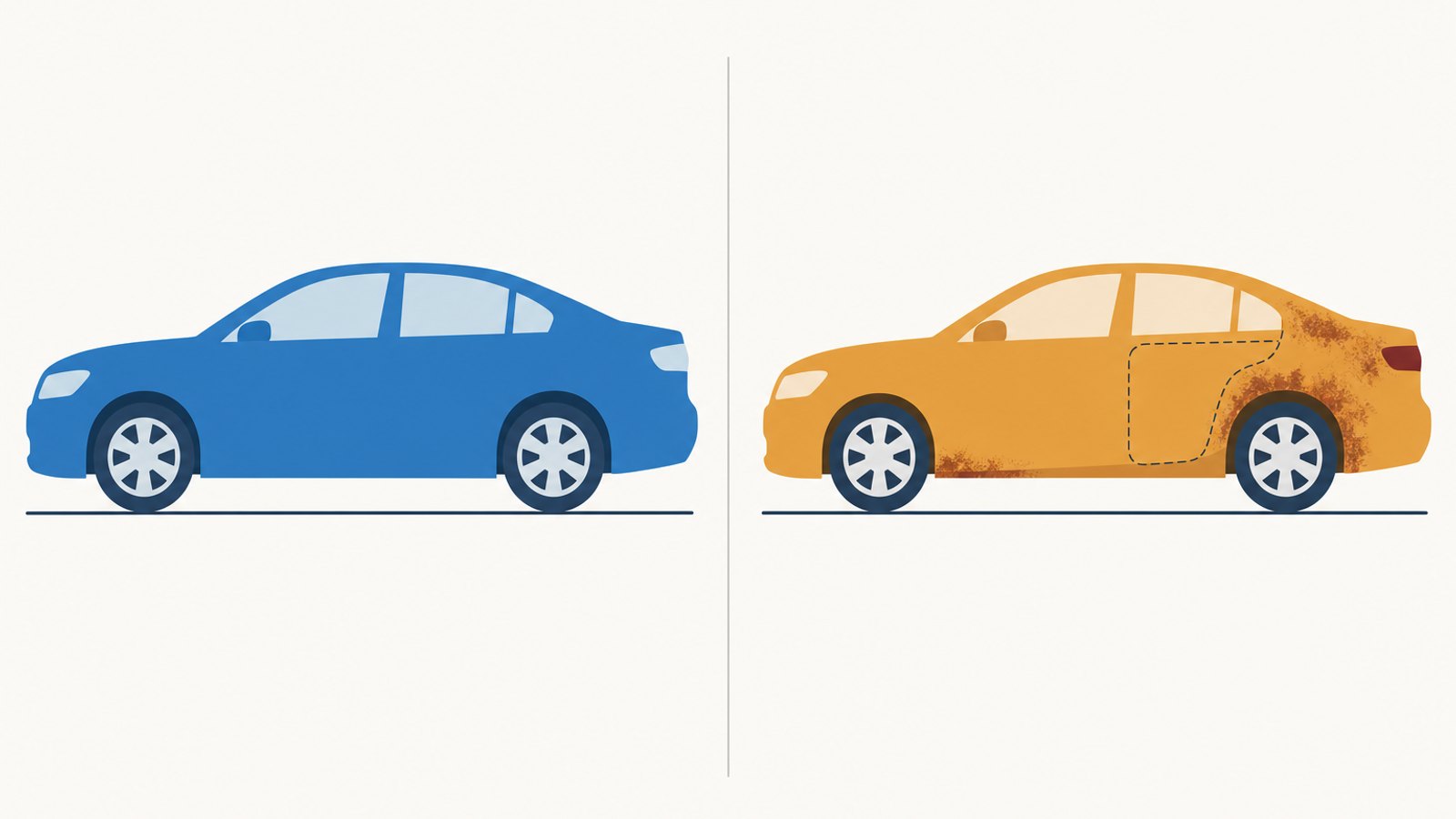
Flat illustrated diagram comparing a generic factory floor vehicle against a damaged real vehicle with corrosion marks
The database stores an average vehicle. Your repair order documents the one on the lift.

What Trusting the Default Labor Time Is Costing You

Here's the self check. Pull your last ten estimates. Count how many line items you accepted at the system default without checking them against an OEM procedure specific to that VIN or model year. Eight or more out of ten puts you in red territory, you're billing off an average instead of your car. Two or fewer means you're already doing the manual verification that catches the gap before it costs you. Most shops land somewhere in the middle, and the middle is exactly where the money disappears.

The same formula problem hits paint and materials, not just labor time. Most shops rely on a simple multiplier, refinish hours times a flat rate, usually $40 to $60 an hour, to calculate P&M reimbursement. One documented example from the industry: a 10 hour paint job generated a $940 material invoice. The insurance company capped reimbursement at $450 and refused to individually cover paint, primer, sealer, masking tape, razor blades, and gloves. The formula doesn't know what your job used. It knows refinish hours, and nothing else.

Paint and material costs climbed 7.4% in the first quarter of 2025 alone and nearly 60% cumulatively since 2020. Reimbursement formulas built on refinish hours don't move at that pace. Between 2017 and 2022, material costs rose 43.9% industry wide while reimbursement rose only 18.5%. That gap compounds on every car that rolls through your bay, on labor and on materials, every time the shop accepts the default instead of checking it against reality.

How to Verify What the Default Can't Tell You

The fix isn't arguing with the software. It's treating every default number as a starting point instead of a final answer, and building the file that proves the real number before you ever submit.

Start with the OEM procedure for the actual VIN, not just the model in general. Decode it, pull the specific repair procedure, and compare it line by line against what the platform defaulted to. When they don't match, the OEM document wins, because it's specific to this car and the platform's number isn't.

Document the condition the database can't see. Photos of the corrosion, the undocumented prior repair, the adhesive that has to be stripped before the OEM procedure can even start. That documentation is what turns "the system said 1.8 hours" into a supplement an adjuster can't argue with, because you're not disputing the software, you're submitting evidence specific to this vehicle.

On paint and materials, stop treating the flat multiplier as the ceiling. Build an actual cost accounting record, product by product, color code by color code, for the job in front of you. A 2021 Ford Explorer with a tri-coat refinish needs a different material cost than a single stage repaint, and the flat multiplier doesn't know the difference. Shops that submit documented material costs instead of accepting the formula get paid their actual cost far more often, because the adjuster finally has something specific to point to instead of a guess.

Every Estimate Optimizer™ audit checks your estimate against the OEM procedures for that vehicle and ties each missed operation to its procedure and a copy-and-paste line note, before the file ever leaves your shop.

Shop owner at a cluttered desk comparing a printed OEM repair procedure page against a printed estimate
The OEM procedure wins the argument the software default can't.

The Bottom Line

Your estimating software was never going to know your car. It wasn't built to. It was built to produce a fast, defensible starting point for millions of different vehicles, and it does that job fine. The mistake is treating that starting point like the finish line. The shops getting paid properly aren't running better software. They stopped expecting the platform to be honest about something it was never designed to know, and started proving the rest themselves.

Related Articles

Frequently Asked Questions

Does CCC ONE calculate labor times specific to my VIN?
No. CCC ONE labor times come from a generic database built on an undamaged, factory floor vehicle with new OEM parts, not your vehicle's actual VIN or condition. The same generic premise applies to Mitchell and Audatex. Always verify the default against OEM procedures for your specific vehicle before you submit.
Why does my estimate always underestimate labor time?
Because the number comes from an average across millions of vehicles, not an inspection of the one in your bay. Prior repairs, corrosion, and model year specific procedures the database has never seen all add real time the default doesn't include. Documenting that condition is what gets the gap paid.
How is paint and materials reimbursement calculated by insurance?
Most insurers use a simple multiplier, refinish hours times a flat rate of $40 to $60 an hour, instead of your actual material invoice. That formula has no connection to the brand, color, or volume of product your specific job required. Shops that submit a documented cost accounting record instead of accepting the multiplier get paid their actual cost more often.
Is Audatex more accurate than CCC ONE or Mitchell?
Audatex offers more transparency through its Estimate Report, which shows a detailed labor time breakdown that CCC ONE and Mitchell don't display as clearly. That transparency doesn't mean more accuracy for your specific vehicle. All three platforms still build labor times from the same generic, undamaged factory floor premise.
How do I get paid for labor time the estimating software missed?
Document the specific vehicle condition the database couldn't see: corrosion, prior repair, OEM procedure requirements, and cite the OEM source directly in your supplement. Adjusters can argue with a software default. They have a much harder time arguing with a documented OEM procedure tied to your VIN.
Share this article
labor hoursOEM proceduresCCC ONEMitchellAudatexshop ownerscollision repair
Back to Blog
Follow us