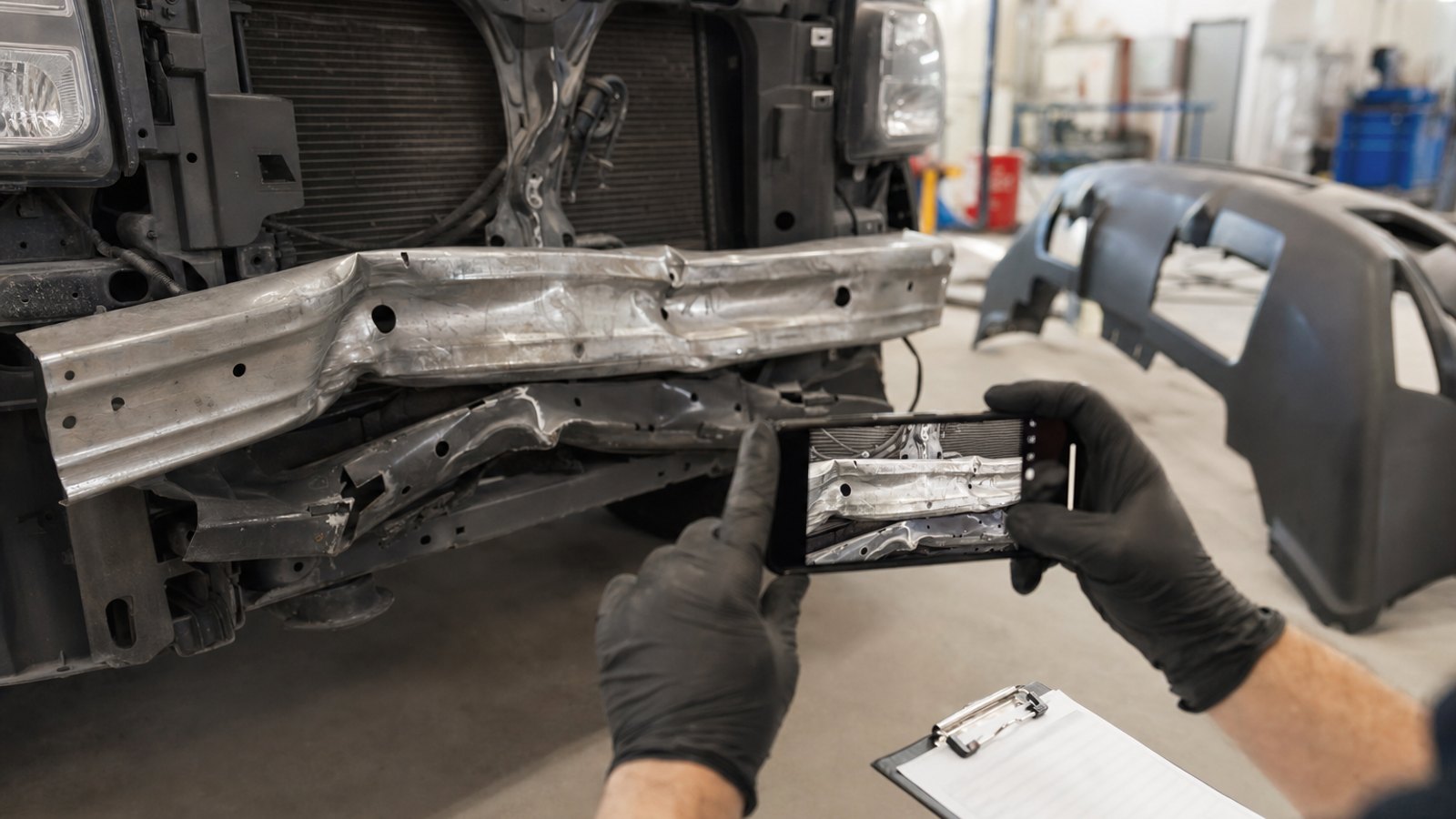
A hidden damage supplement in auto body repair starts the same way almost every time. Your tech pulls a bumper cover, finds damage nobody wrote on the original estimate, and now you have to prove something the carrier never saw. It's one of the most common line items in the business, and one of the most frequently underpaid.
Most shops handle that moment badly. They call the adjuster, describe what they found, and wait for an answer. That phone call isn't documentation. It's a request, and carriers are trained to treat every unproven request as negotiable.
Here's the part shops don't say out loud. A lot of estimators have been burned on this before, so they soften the ask. They mention the damage almost apologetically, like they're asking for a favor instead of reporting what's wrong with the vehicle. That hesitation reads as uncertainty to the person reviewing the file, and uncertainty is what gets a supplement kicked back.
Why Adjusters Treat a Hidden Damage Supplement Like Padding
Here's the uncomfortable part: adjusters aren't wrong to be skeptical by default. Supplements are routine after teardown, and most of them are legitimate. But a carrier working through a supplement queue can't tell your real hidden damage find from a shop padding the ticket, not from a phone call and not from a vague note on the file.
Vehicle complexity is making this more common, not less. CCC's 2026 Crash Course report found total loss frequency hitting a record 23.1% of claims, with repair severity climbing right alongside it as vehicles get more complex. More complex vehicles mean more panels coming off, and more panels coming off means more damage nobody could see until they did.
Adjusters triage supplement queues the way any reviewer triages a stack of claims. They look for the pattern that lets them approve fast or deny fast. A hidden damage line with no photo and no citation doesn't give them anything to approve fast on. It gets set aside, and set aside is where supplements go to die.
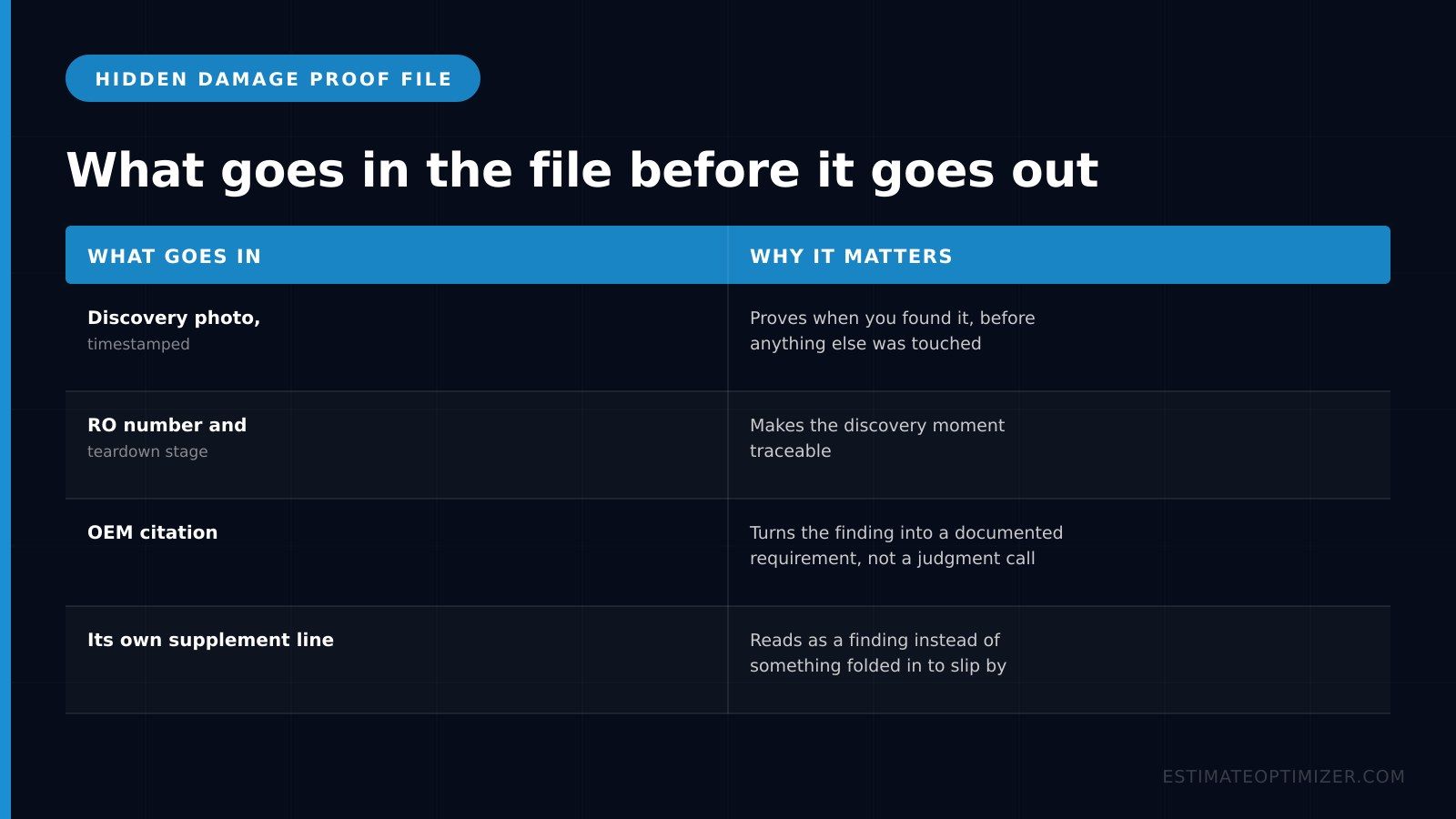
Take a Ford F-150 in for front-end work. Your tech pulls the bumper cover to finish the repair and finds a bent frame crossmember that wasn't visible in the original photos. Call that in without a photo timestamped at the moment you found it, and the adjuster's first question is some version of "why wasn't this on the original estimate." That question is the whole ballgame. You lose it if your only answer is "we found it later."
Most shops don't escalate from there. They either eat the cost themselves or spend another two weeks going back and forth over something that should have been settled on the first submission.
What the Documentation Gap Is Costing You
A "Who Pays for What?" survey from Collision Advice and CRASH Network found that only about half of shops get paid always or most of the time for the extra labor it takes to gain access through a damaged door or hood and assess what's behind it. That's the exact labor your tech performs every time hidden damage turns up. If you're not getting paid for finding it, you're already behind before you even write the supplement.
Hidden damage is one of the places supplement dollars slip away most quietly, and it compounds. One underdocumented hidden damage claim a month doesn't look like much on its own. Twelve of them in a year is a number most shop owners don't want to see written down.
Here's the test: pull your last five hidden damage supplements. Did each one include a photo timestamped at the moment you found the damage, plus the OEM citation for why that repair is required? Five for five is green territory. If you're coming up short on even one, that's not an adjuster problem. That's a documentation problem, and it's costing you every time it happens.
A Honda CR-V came in for front bumper repair and ADAS calibration prep. Mid-teardown, the tech found a cracked radar sensor bracket behind the bumper, invisible until the cover came off. The shop called it in verbally and got a partial denial. "Not on the original estimate," again. Same gap, same result.