Back to Blog
Revenue Recovery

Skeeter Has 12 OEM Certifications. That Was Never the Gap.

4 min read
Share
Twelve framed certification plaques on a body shop office wall above a desk piled with loose repair orders

141 estimates audited. $128,472 in potential additional repair dollars identified (as of Oct 24, 2026). That's a 25-person shop with twelve OEM certifications and zero DRP contracts, and every one of those certifications was on the wall before the first audit. That's what auto body shop OEM certification documentation revenue looks like: the gap was in the file, not in the compliance.

Twelve OEM Certifications. Zero DRP Contracts. Still Missing Operations.

Skeeter's Body Shop in Garden City, Kansas carries twelve OEM certifications, more than most independent shops in the country, and runs with zero DRP contracts dictating which operations get billed. It's a 25-person shop that did everything the industry tells a shop to do to get taken seriously. If certification and clean contract terms were the fix, Skeeter's estimates should have looked airtight from day one.

They didn't. The audits kept finding the same pattern: operations the shop was qualified to perform, on procedures it was certified for, that the estimate never cited or documented. Think of a frame rail repair on a heavy-duty pickup that calls for OEM-specified welding, or an ADAS calibration after a front bumper replacement. A twelve-certification shop does that work the way it's supposed to. If the estimate doesn't carry the citation and the photo, nothing tells the carrier so. The pattern wasn't predicted by a sales deck. It showed up one estimate at a time, in a shop that already had every credential a carrier could ask for.

Twelve framed certification plaques on a body shop office wall above a desk piled with loose repair orders
Twelve OEM certifications hang on the wall, but none of them travel with the estimate on their own.

Certifications Prove You Can Do the Work. They Don't Prove You Did It on This Car.

In the spring 2024 "Who Pays for What?" survey from Collision Advice and CRASH Network, 61% of shops said they research OEM repair procedures on all or most of the vehicles they repair. Research is not documentation. Certification status doesn't put that research into the file by itself. A twelve-cert shop and a two-cert shop produce the same undocumented file if neither one attaches proof to the work it already knows how to do.

Ask yourself the same question Skeeter's file had to answer. Does a twelve-cert shop's estimate look any different from a two-cert shop's estimate once it lands on a carrier's desk? Before the file changed, the honest answer at Skeeter's was no. The audits showed it. Certifications hang on a wall. They don't travel with the repair order unless something puts them there, line by line. If you can't say with confidence whether your last five OEM-required repairs have a citation and a photo attached to them right now, you're running Skeeter's pre-audit file, certifications and all.
What Changed Wasn't the Garage. It Was the File.

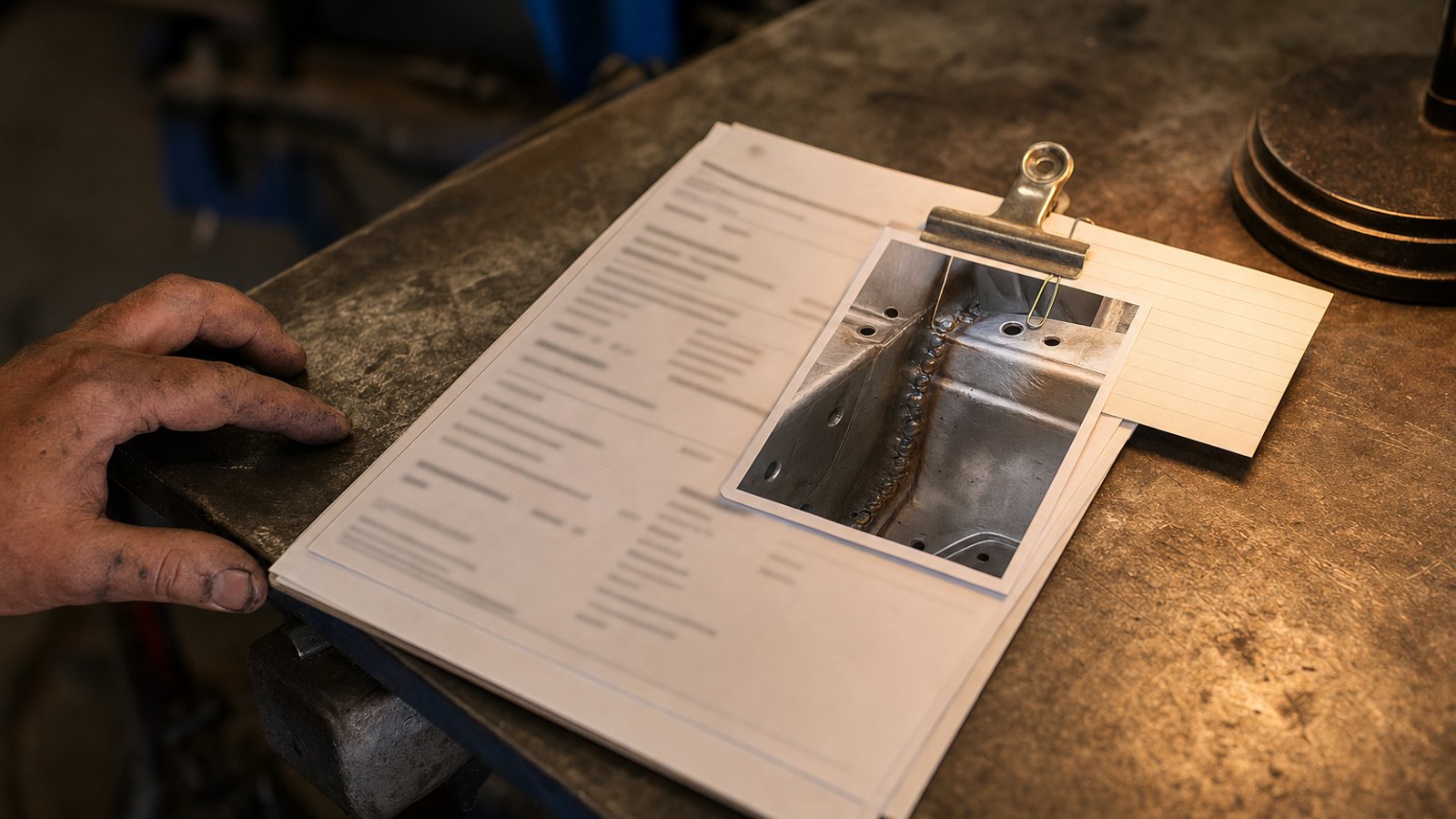
Nothing about how Skeeter's technicians worked changed. What changed was what left the building with each estimate. Every OEM procedure the shop was already certified to perform got a citation attached to it. Every citation got a photo. Every photo got a line note tying it to the billed operation, the same three-part structure that turns compliance into proof.

The audits are where the dollars got counted. As of Oct 24, 2026, Skeeter's has had 141 estimates audited, with $128,472 in potential additional repair dollars identified: operations the shop was qualified to perform that the original estimates never captured. Skeeter's sent its first supplement with full OEM documentation attached and, by Skeeter's account, it was approved in under 10 minutes. That wasn't a lucky adjuster. It was a file that answered the carrier's questions before anyone had to ask them. Skeeter's internal approval rate now sits at 99%. Supplements are a routine part of collision repair, which means the negotiation is too. Skeeter's file starts that negotiation with the proof already attached.

A printed repair order with a procedure page, a photo of a welded panel seam and a note card clipped together as one packet on a workbench
The citation, the photo, and the line note are what travels with the bill.

The Bottom Line

Skeeter didn't need a thirteenth certification, and your shop doesn't need one either. Every Estimate Optimizer™ audit ties each recommended operation to its OEM procedure and a copy-and-paste line note, so the citation part of the file is in the shop's hands before the estimate reaches a carrier. The photo still comes from the bay. The certifications were never the gap. The file was, and for a lot of independent shops carrying a wall full of training records, it still is.

Related Articles

Frequently Asked Questions

Does having OEM certifications mean my shop gets paid for OEM procedures?
No. Certifications prove your shop is trained to perform OEM-required procedures, but they don't travel with the estimate unless a citation, photo, and line note are attached to the specific repair. Skeeter's Body Shop carries twelve OEM certifications, and its audits still found operations its estimates never captured: as of Oct 24, 2026, 141 estimates audited and $128,472 in potential additional repair dollars identified.
How much has Estimate Optimizer identified for Skeeter's Body Shop?
As of Oct 24, 2026, Skeeter's Body Shop in Garden City, Kansas has had 141 estimates audited, with $128,472 in potential additional repair dollars identified. Each estimate is counted once, using its latest audit. The shop already held twelve OEM certifications and runs zero DRP contracts.
What is Skeeter's first-submission supplement approval rate?
Skeeter's Body Shop runs a 99% internal first-submission approval rate. By Skeeter's account, the first supplement it sent with full OEM documentation attached was approved in under 10 minutes.
Do I need a DRP contract to get OEM procedures paid?
No. Skeeter's Body Shop runs zero DRP contracts, and its audits have identified $128,472 in potential additional repair dollars across 141 estimates (as of Oct 24, 2026). DRP status affects contract terms and volume. A properly cited and photographed OEM-required operation gives any carrier something specific to check, contract or not.
How long does it take to get a supplement approved with full OEM documentation?
There is no fixed timeline; it depends on the carrier and the adjuster's queue. When a citation, photo, and line note are attached to every OEM-required operation, the adjuster doesn't have to chase proof, which removes a common reason a line gets parked. By Skeeter's account, its first fully documented supplement was approved in under 10 minutes.
Share this article
OEM proceduresrevenue recoveryinsurance claimsstructural repaircollision repairshop owners
Back to Blog
Follow us