Back to Blog
Supplement Process

What 80% First-Submission Approval Actually Looks Like: The Pre-Submission Documentation Standard That Changes Your Relationship With Adjusters

6 min read
Share
Shop owner reviewing a thick folder of OEM position statements and labeled repair photos at a cluttered back-office desk

If you want to know how to get a supplement approved the first time, the answer isn't a better argument. It's a better file, built before the estimate ever leaves your shop.

63% of collision repairs require a supplement after the initial estimate, according to CCC's own data. That number tells you something important: most shops are sending estimates that aren't ready. They're submitting, waiting for a denial, and then fighting. Round after round. It's not that adjusters are unusually difficult. It's that the file they received didn't make denial expensive enough to bother with.

The shops hitting 80% first-submission approval rates aren't arguing better. They're building a different file. And over time, that file changes the adjuster's entire posture toward that shop.

What Your Supplement Approval Rate Is Actually Measuring

Your supplement approval rate on the first submission isn't just a billing metric. It's a record of how well your documentation holds up under scrutiny before anyone pushes back.

Here's the self-diagnostic: pull your last 20 supplements. How many cleared on the first round? If you're clearing fewer than 60%, you're in red territory. That means more than four out of ten files you're sending need at least one additional round before the carrier pays. If you're clearing 80% or more on the first submission, you're in the range where documentation is doing real work. Most shops aren't there.

The CRASH Network 2026 Insurer Report Card, which surveyed more than 1,100 shops, found that not a single top-10 national insurer by size received an overall grade above C+. Shops that rated carriers lowest cited one thing consistently: refusal to pay for procedures that are OEM-required. That's not a carrier problem that gets solved by arguing. That's a documentation problem that gets solved by proof.

What adjusters actually respond to is a file that removes the choice. When the OEM position statement is already cited, the P-page language is already quoted, and the photos are already labeled by repair zone, the adjuster doesn't have to do any verification. The work is already done. The supplement gets approved because denying it would cost more time than paying it.

Shop owner reviewing a thick folder of OEM position statements and labeled repair photos at a cluttered back-office desk
A complete pre-submission file puts the burden of verification on the carrier, not on a follow-up round.

Why Adjusters Behave Differently With Certain Shops

This is the part most shop owners miss. When you consistently send incomplete files, adjusters learn what they can get away with at your shop. They'll push back on operations they wouldn't question from a shop that always has documentation. It's not a conspiracy. It's just pattern recognition. The adjuster processes dozens of files a week. The ones that require the least work get through fastest. The ones that always fight back with proof create more work than they're worth to deny.

Shops that have built a pre-submission documentation standard report something that sounds surprising at first: after a few months, adjusters stop pushing back as hard. Not because the adjuster changed. Because the shop did. The file that always has the OEM citation, the labeled photos, and the P-page language trains the adjuster to expect it. Denial becomes more expensive than approval.

That's the real upside of an 80%+ approval rate. It's not just the money recovered on that one supplement. It's the cumulative behavioral shift that makes every future claim easier to process. You're not winning the argument every time. You're changing the argument before it starts.

Scott, a shop owner in Utah, submitted his first properly documented supplement to a carrier that had been routinely pushing back on his files. Approved in full. No pushback. $1,100 on a claim where the same carrier had previously required three rounds. The file was different. That's the only thing that changed.
What the Pre-Submission Documentation Standard Actually Contains

Getting a supplement approved the first time consistently requires building four components into every file before it goes out the door.

OEM position statement, cited to the specific document. Not a general reference to "OEM procedures." The actual position statement, with the vehicle year, make, and model called out, and the specific procedure requirement quoted verbatim. If Nissan says do not apply body filler in the rear bumper radar zone and instead requires full bumper replacement, that sentence belongs in your supplement file with the source identified.

P-page language for every not-included operation. The P-pages document what the estimating platform excludes from its calculated times. That language is publicly available and carrier-neutral. If the operation you're billing for is listed as not included in the Guide to Estimating, that citation goes in the file. The adjuster can't argue with the platform's own documentation.

Photos labeled by repair zone and operation. Not a folder of images dropped into the file. Photos labeled by panel, by damage type, and by the specific operation they support. When a photo of the rear bumper is labeled by sensor proximity zone and the OEM replacement requirement, the adjuster has no verification step left to perform.

A supplement cover note that connects the dots. One page that maps each line item to its supporting citation. Not a narrative argument. A map. "Line 14: Color sand and buff. Not included per CCC Guide to Estimating, Section 4. See attached P-page reference." The adjuster processes it, checks the attachment, approves the line.

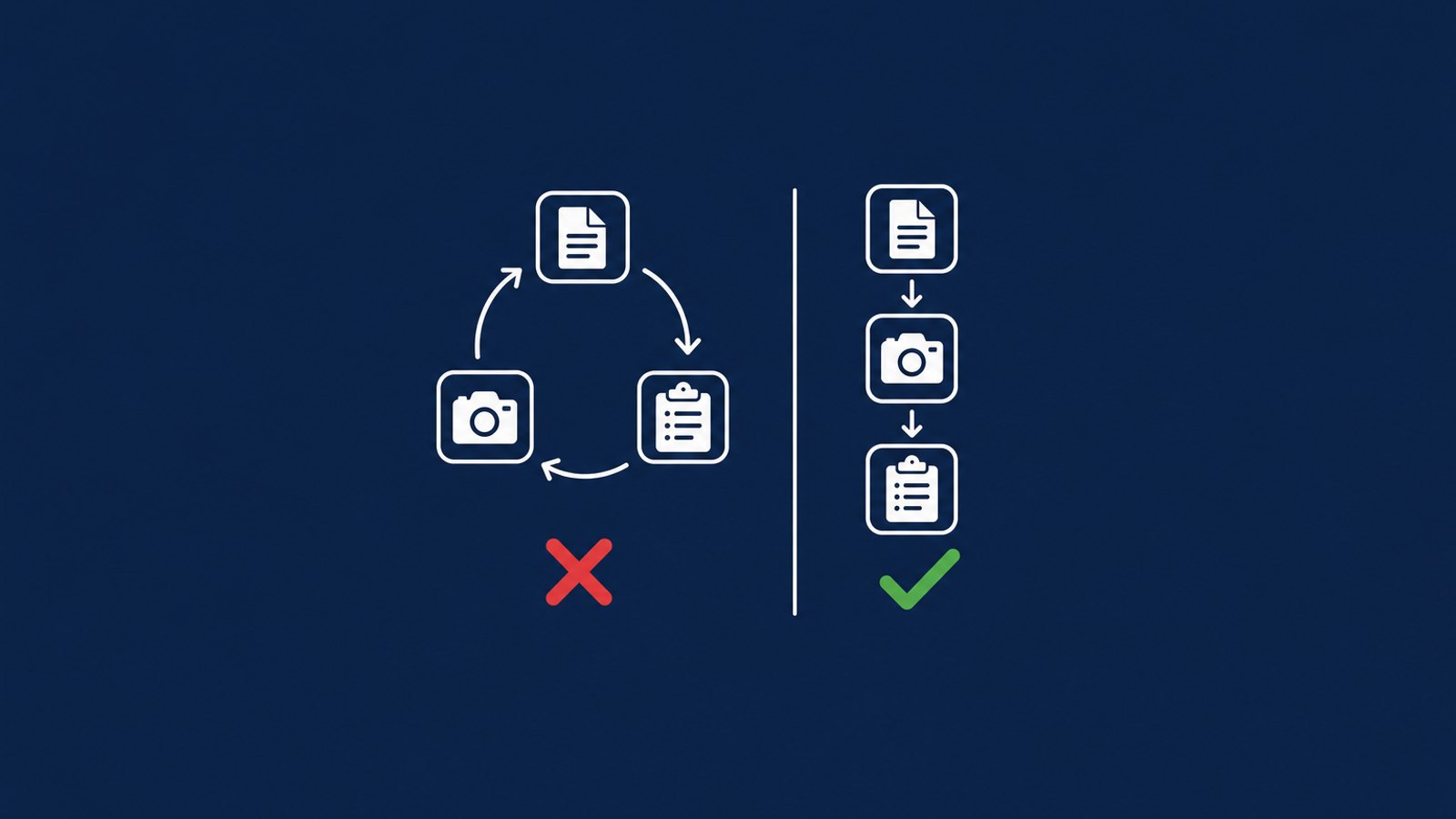
Flat illustrated graphic showing two process flows: reactive submit-deny-fight loop versus proactive documentation standard with checkmarks
The proactive file removes every verification step the adjuster would otherwise use as a reason to delay payment.

The Bottom Line

The $1,200 to $1,800 gap between an initial estimate and the final repair cost, documented by CCC across its national claims data, doesn't close by itself. Every dollar of that gap requires a supplement. And every supplement either gets approved on the first submission or enters a fight that costs your shop time, cash flow, and goodwill.

The shops that have cracked 80% first-submission approval aren't staffed differently. They built a documentation standard that makes the first submission undeniable. Tools like Estimate Optimizer scan every estimate against OEM databases and P-page documentation automatically, flagging every line item that needs a citation before the file goes out. The result is a supplement that the adjuster can process without verification rounds.

The goal isn't to win more arguments. It's to send files where there's nothing left to argue about.

Related Articles

Frequently Asked Questions

What is a good supplement approval rate for an auto body shop?
An 80% or higher first-submission approval rate is the target for shops with strong documentation. If fewer than 60% of your supplements clear on the first round, your pre-submission file is missing citations the adjuster needs to approve without a fight. Each additional round is a documentation gap, not an adjuster problem.
How do I get my supplement approved on the first submission?
Build the proof file before the estimate leaves your shop. That means the OEM position statement cited to the specific document, P-page language for every not-included operation, photos labeled by panel and repair zone, and a cover note mapping each line item to its supporting citation. Adjusters approve files that require no verification. They delay or deny files that do.
Why do adjusters approve some supplements faster than others?
Adjusters process dozens of files a week under queue pressure. A supplement that has OEM citations, P-page language, and labeled photos already in the file requires no verification step. One that doesn't forces the adjuster to research every disputed line item manually, which creates pressure to deny or reduce rather than invest the time to approve.
What should a supplement documentation standard include?
A pre-submission supplement documentation standard should include an OEM position statement for any repair restricted by the manufacturer, P-page citations for not-included operations, repair photos labeled by zone and the operation they support, and a one-page cover note mapping each billed line item to its documentary support. Every line needs a citation the carrier is already obligated to honor.
How does consistent documentation change adjuster behavior over time?
When your shop consistently sends files with complete OEM citations and P-page language, adjusters learn that denying your supplements requires more work than approving them. Over time this shifts the default toward approval. Shops report that after a few months of consistent documentation, adjusters stop challenging the same operations they routinely questioned before.
Share this article
supplementssupplement processinsurance claimsshop ownersrevenue recoveryOEM procedurescollision repair
Back to Blog
Follow us