Back to Blog
Supplement Process

Where Hidden Damage Supplements Get Flagged as Padding Inside CCC ONE

4 min read
Share
Comparison table titled Same hidden damage find, two different lines: a Chevy Silverado rail damage line with nothing pinned and the photo loose in the RO folder reads as an add-on request, while its own line with the timestamped discovery photo and OEM citation pinned to it reads as a documented finding.

Your supplement process inside CCC ONE breaks down at one exact moment. A hidden damage line item shows up with no photo tied to the second you found it, and the adjuster working that queue isn't looking at your years in the trade. They're looking at a line with nothing pinned to it, sitting next to forty other decisions due today.

That line doesn't read as a legitimate find. It reads as an add-on. And CCC ONE will let the adjuster treat it exactly that way if you haven't built the file to say otherwise.

Why Your Supplement Process Gets Flagged as Padding Inside CCC ONE

CCC ONE doesn't flag a hidden damage line as suspicious because it's hidden damage. Supplements aren't rare. They're routine after teardown, and adjusters process them all day.

What gets a line flagged is the absence of anything attached to it. A supplement line item in CCC ONE carries whatever the estimator pins to it and nothing more. No photo pinned directly to that line, no citation referenced in the note field, and the adjuster has nothing connecting your dollar amount to an actual piece of damage.

Take a Chevy Silverado in for frame rail work. Mid-teardown, the tech finds a second point of damage further up the rail that wasn't visible before disassembly. The shop adds a line for it: additional frame damage found, see tech notes. No photo pinned to that specific line, no citation. A sentence, and nothing else. That line sits in the queue looking exactly like padding would look, because nothing distinguishes it from padding inside the platform.
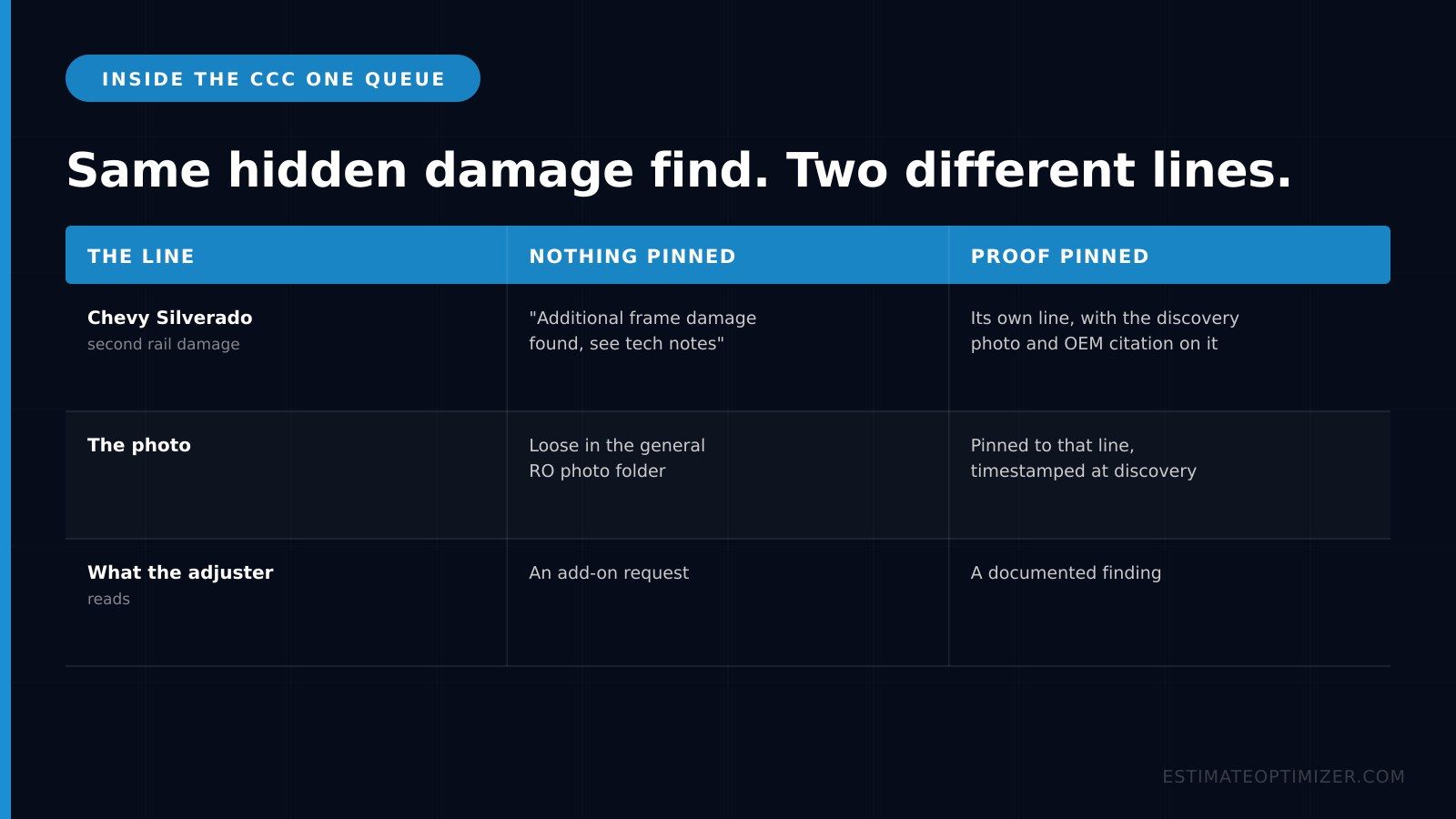
Comparison table titled Same hidden damage find, two different lines: a Chevy Silverado rail damage line with nothing pinned and the photo loose in the RO folder reads as an add-on request, while its own line with the timestamped discovery photo and OEM citation pinned to it reads as a documented finding.
A photo pinned to the specific line item, not the general file, is what separates a documented find from padding inside CCC ONE.

What Your CCC ONE Supplement Queue Odds Really Look Like

We broke down why the photo and the citation matter in this week's piece, "The Hidden Damage You Find Mid-Teardown Needs Its Own Supplement File." This one is about getting that same proof package through the CCC ONE queue without tripping the padding flag in the first place.

Here's the test. Open your last ten hidden damage supplements inside CCC ONE right now. How many have a photo attached directly to the line item itself, not sitting loose somewhere in the general RO photo file? Eight or more out of ten is green territory. Anything below that, and you're asking the adjuster to extend good faith on every line that's missing it. Good faith isn't a documentation strategy.

Every line that fails that test is sitting in exactly the wrong spot: a hidden damage find that got written correctly but attached to nothing, so it read as a guess instead of a finding. That's repair money you already earned, waiting on a second round of questions.
How to Fix the Supplement Process Inside CCC ONE So It Reads as Proof

The fix lives in how you build the line, not in how hard you argue for it afterward.

  • Attach the discovery photo directly to that specific line item inside CCC ONE. Not the shared RO folder. The line itself.
  • Put the OEM citation reference in the line note field, where the adjuster is already reading, instead of a separate document nobody opens.
  • Enter hidden damage as its own standalone line every time. Never fold it into an existing operation to save a step.
  • Timestamp the photo at discovery, before any repair work touches that area. The timestamp is what proves you found it, not manufactured it.

Do all four and the line item stops looking like a request. It starts looking like a file the adjuster can approve without a second round of questions. Tools like Estimate Optimizer™ scan every supplement line before submission and flag any hidden damage entry that's missing its discovery photo or OEM citation, the same two things an adjuster needs pinned to the line before they'll read it as proof instead of padding.

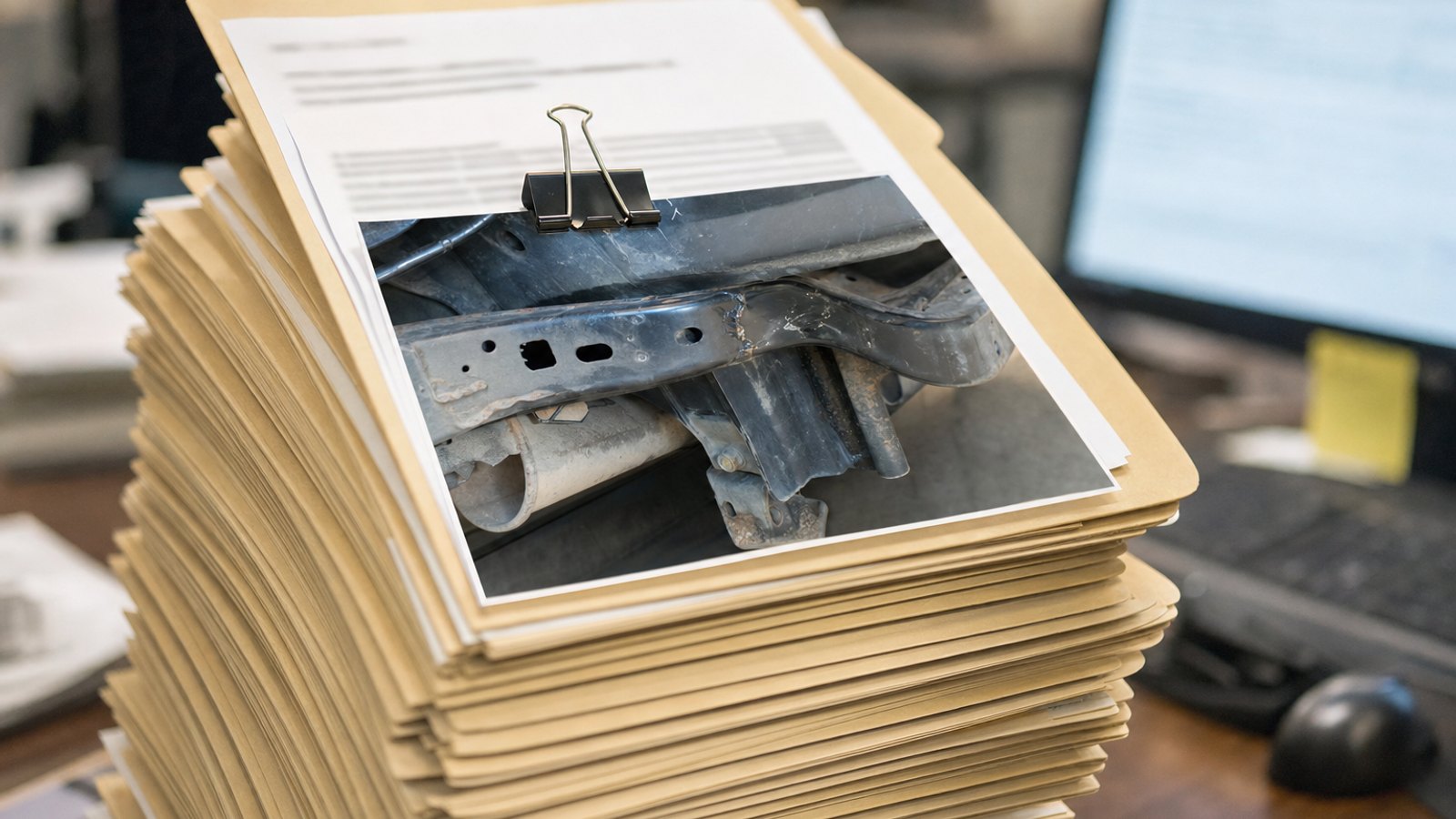
A tall stack of plain manila claim folders on an adjuster's desk, with the folder on top carrying a clipped color photo of a bent vehicle frame rail and a procedure page behind it.
In a queue full of bare files, the line with proof pinned to it is the one that reads as a finding.

The Bottom Line

CCC ONE doesn't care how long you've been writing estimates. It reads what's pinned to the line, nothing else. A hidden damage find with a timestamped photo and a citation attached directly to that line gets treated as proof. The same find described in one sentence gets treated as a request, and requests get questioned.

Build the line right the first time, and you stop finding out which category your supplement landed in after the fact.

Related Articles

Frequently Asked Questions

Why does CCC ONE flag my supplement as padding?
Inside CCC ONE, a hidden damage line reads like padding when nothing is pinned directly to that line item: no photo and no citation. The adjuster working the queue can't tell a legitimate find from an unverified add-on without proof attached to the exact line, so it gets set aside.
How do I attach a photo to a specific line item in CCC ONE?
Pin the discovery photo directly to that line item inside the supplement, not to the shared RO photo folder. A photo sitting in the general file doesn't connect to any specific dollar amount, which is why adjusters question lines that look otherwise identical to a documented one.
Does a hidden damage supplement need an OEM citation in CCC ONE?
Yes. Put the citation reference directly in the line note field where the adjuster is already reading, not in a separate document. A line with a photo but no citation still reads as a request instead of a documented OEM requirement.
What's the right way to submit a hidden damage supplement found during teardown?
Enter it as its own standalone line, never folded into an existing operation. Attach a photo timestamped at the moment you found the damage, and put the OEM citation in the line note. That combination is what reads as proof instead of padding.
Why do adjusters deny supplements that seem obviously legitimate to the shop?
Because the adjuster isn't working from what you know happened, they're working from what's attached to the line. A legitimate find with no photo and no citation looks identical inside the queue to padding, so it gets treated the same way until the documentation says otherwise.
Share this article
supplementsCCC ONEinsurance claimsstructural repairshop ownerscollision repair
Back to Blog
Follow us